
Why we built the world’s first Deep Sensing planning system
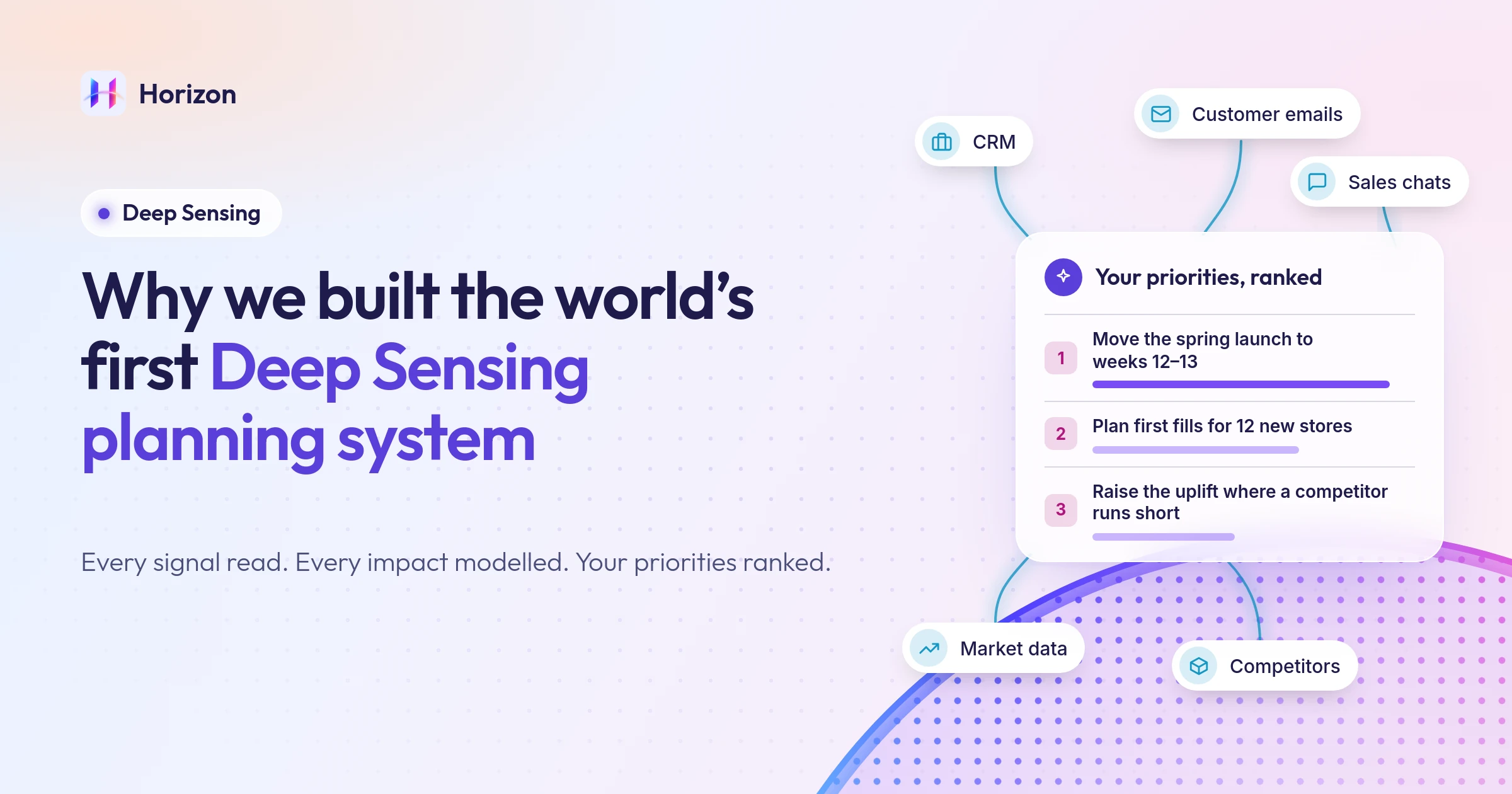
Deep Sensing gives planning teams the few crucial decisions they need to make, based on all of the information, already fully modelled.
With AI, planning is moving away from data transformation and model building, towards decisions. But to make those decisions, planners need all the information. And they need to know the impact of every source of information.
That’s exactly what has been missing.
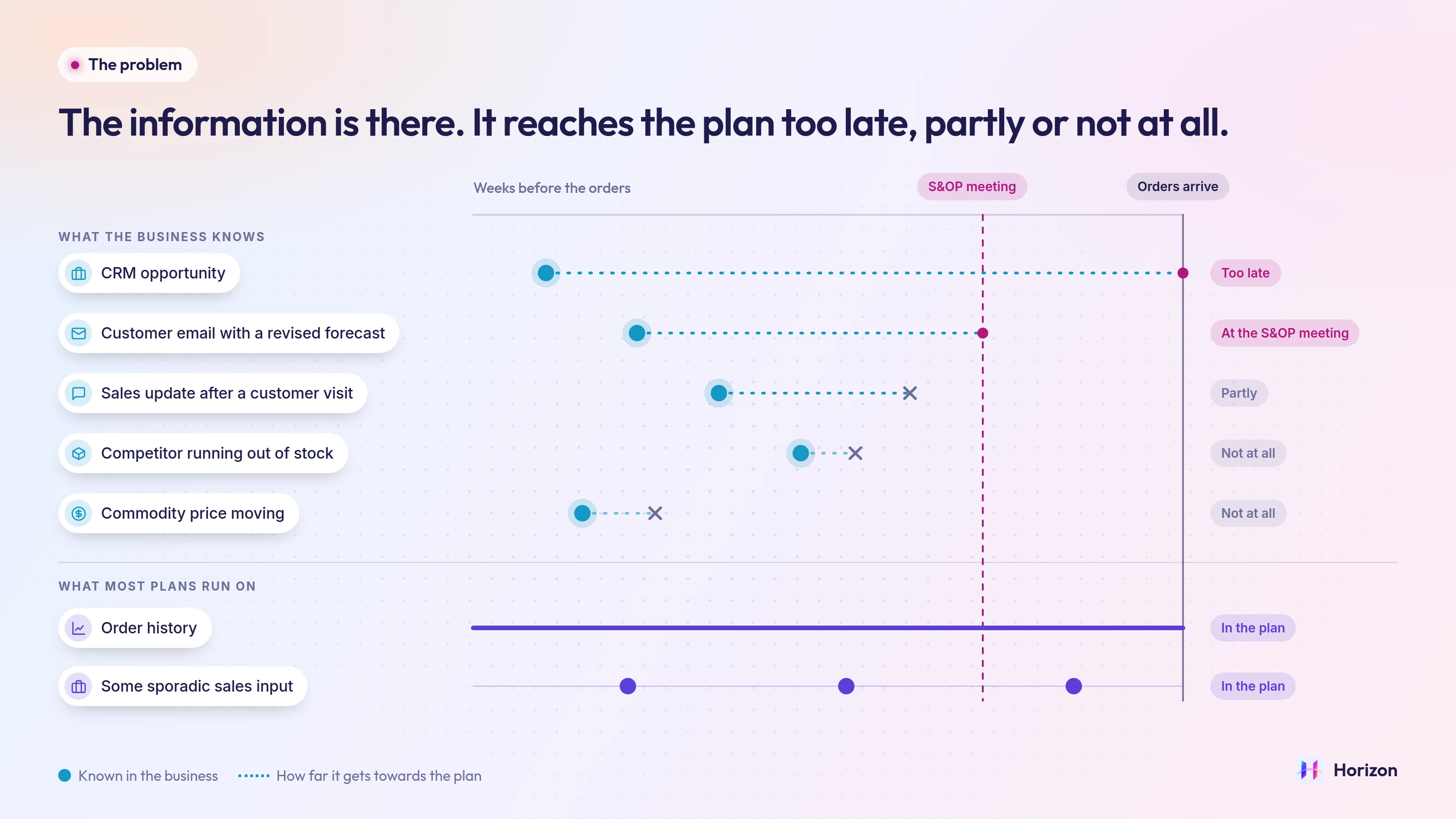
Most plans still run on order history and some sporadic sales input. Everything else sits somewhere else: an opportunity in the CRM, a customer email with a revised forecast, an update from a salesperson after a customer visit, a competitor running out of stock, a commodity price moving… It reaches the planner too late, partly or even not at all.
Very often, supply chain gets this information like a Christmas surprise only in the S&OP meeting, which should be about decisions and trade-offs, not about passing on information.
Outside-in planning: talked about for years… done only very partially and occasionally
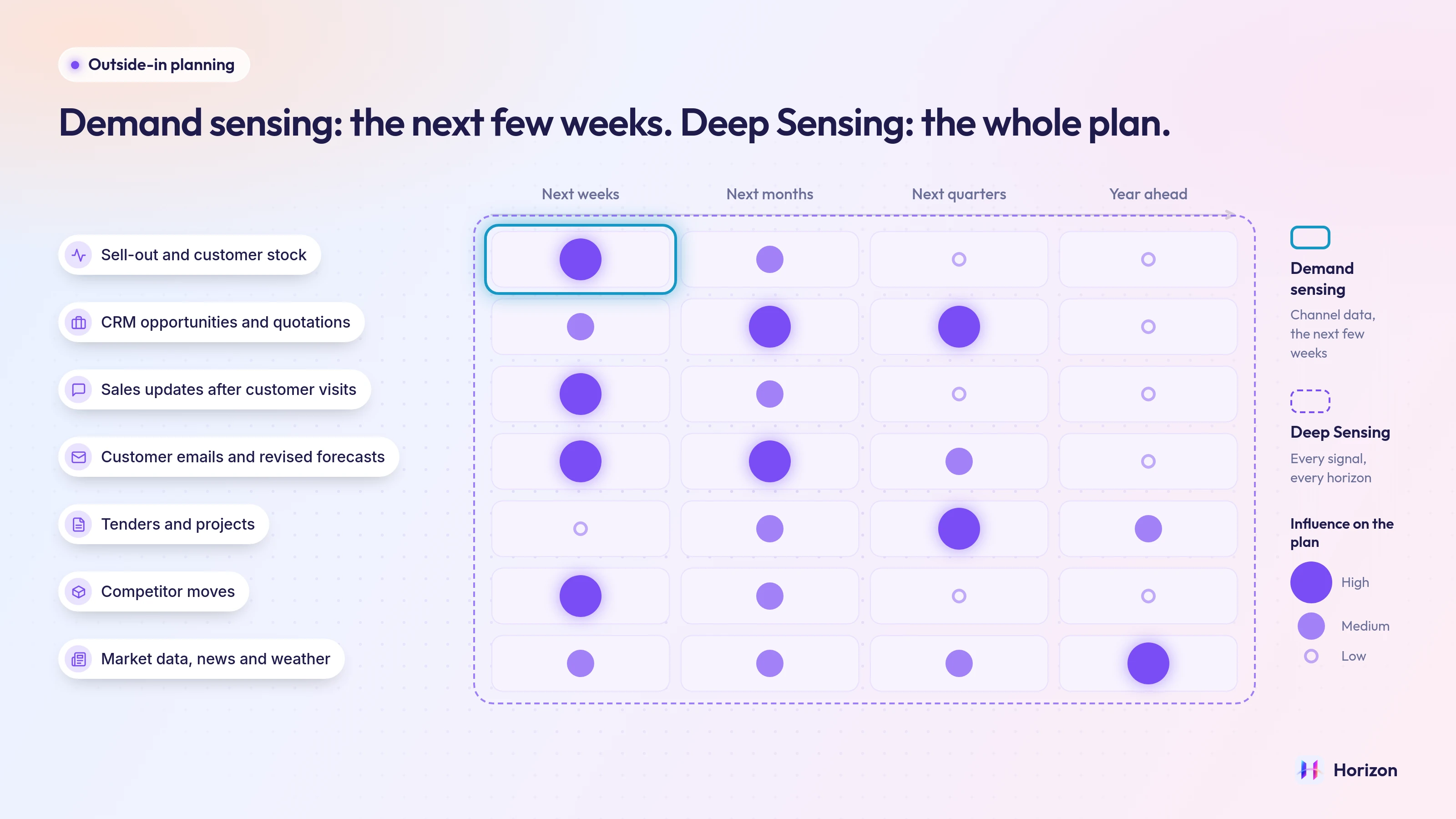
Planning with much more information in isn’t a new idea. It’s been talked about for years: plan on what’s happening in the market and at your customers, not only on your own history.
Demand sensing did part of it. It brought in channel data, sell-out and customer stock, and sharpened the next few weeks. But only for businesses that get channel data, and only for the short term. Nothing for project-driven businesses, for instance. Nothing from sales. Nothing from what a customer writes in an email or what a competitor does.
Deep Sensing goes much further. It doesn’t just pull in more information. It reasons on every signal, models the impact on the plan, and turns it into the few decisions that matter, ranked for the planner.
Then why has nobody done this before?
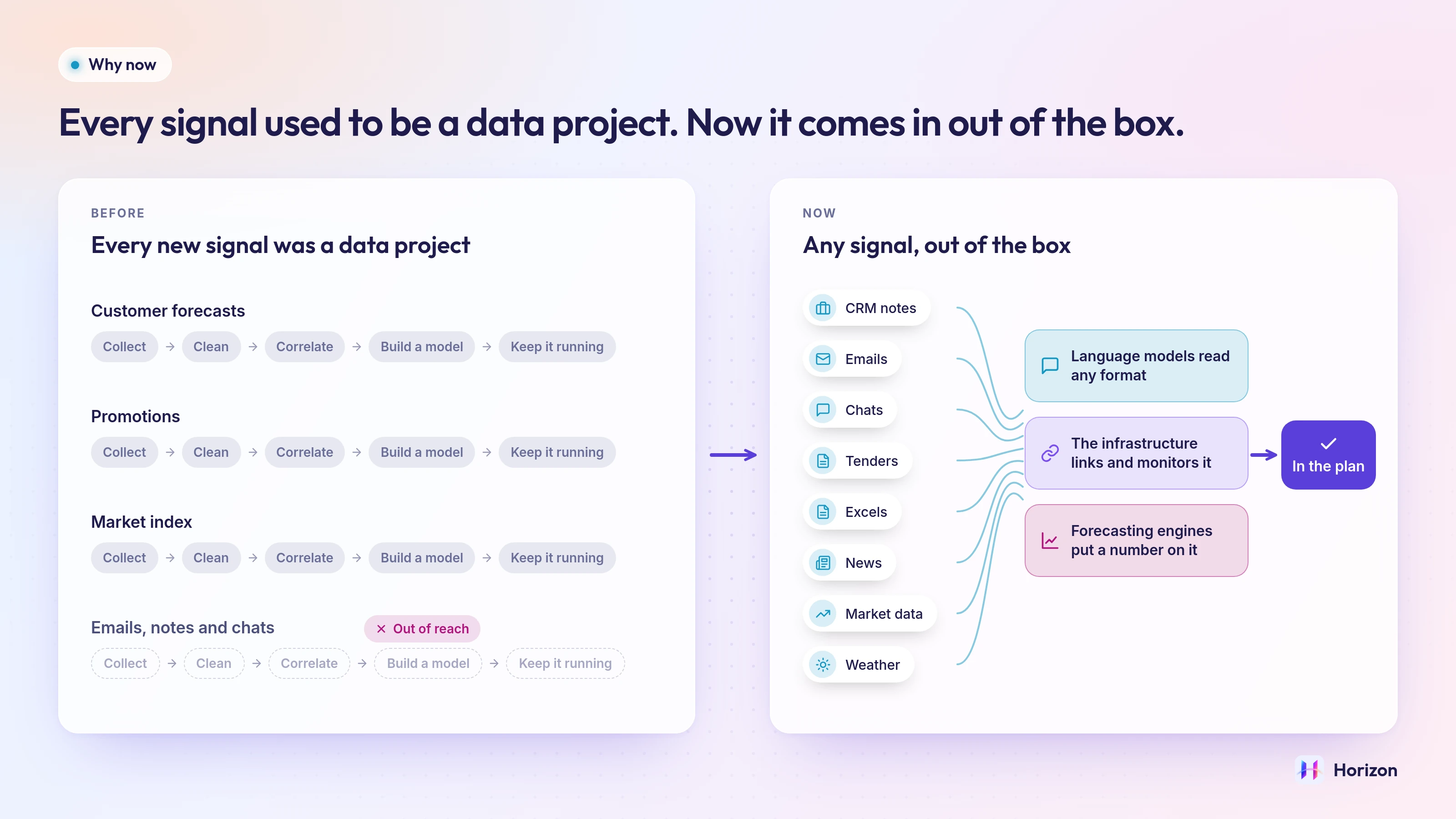
Because every new signal was a data project: collect it, clean it, run a correlation analysis, build a model, keep it running when things change… Text and any other format were out of reach altogether.
So most companies stuck with history, orders and a few fixed inputs.
These last few years, two things changed. Language models can now read text reliably and at scale: emails, CRM notes, chats, tenders, the news. Literally any format.
And the infrastructure underneath can take in any signal, structured or unstructured, out of the box, link it to the right items and customers, and monitor it continuously.
Add forecasting engines that put a proper number on all of these signals, with a scalable infrastructure behind… and what people talked about for years is finally possible.
What Deep Sensing really is
In one sentence: Deep Sensing combines all relevant information, structured and unstructured, with advanced reasoning and modelling, and turns it into the few decisions that matter, ranked by impact, for the planner.
In practice, it comes down to three steps.
Every signal read. Structured and unstructured, inside the company and out: CRM opportunities and quotations, sales updates in chat, customer emails and Excels, tenders, revised customer forecasts, competitor moves, market data, news and weather. Each signal is linked to the items, customers and locations it touches.
Every impact modelled. HZN-1, Horizon’s proprietary AI engine, and the Scenario engine put a number on every signal: how much, where and when. Every number traces back to its source. Same data, same answer.
Your priorities ranked. Planners see the decisions that matter, ranked by impact, with the reasoning and the impact already modelled. Within agreed boundaries, the routine is handled on its own.
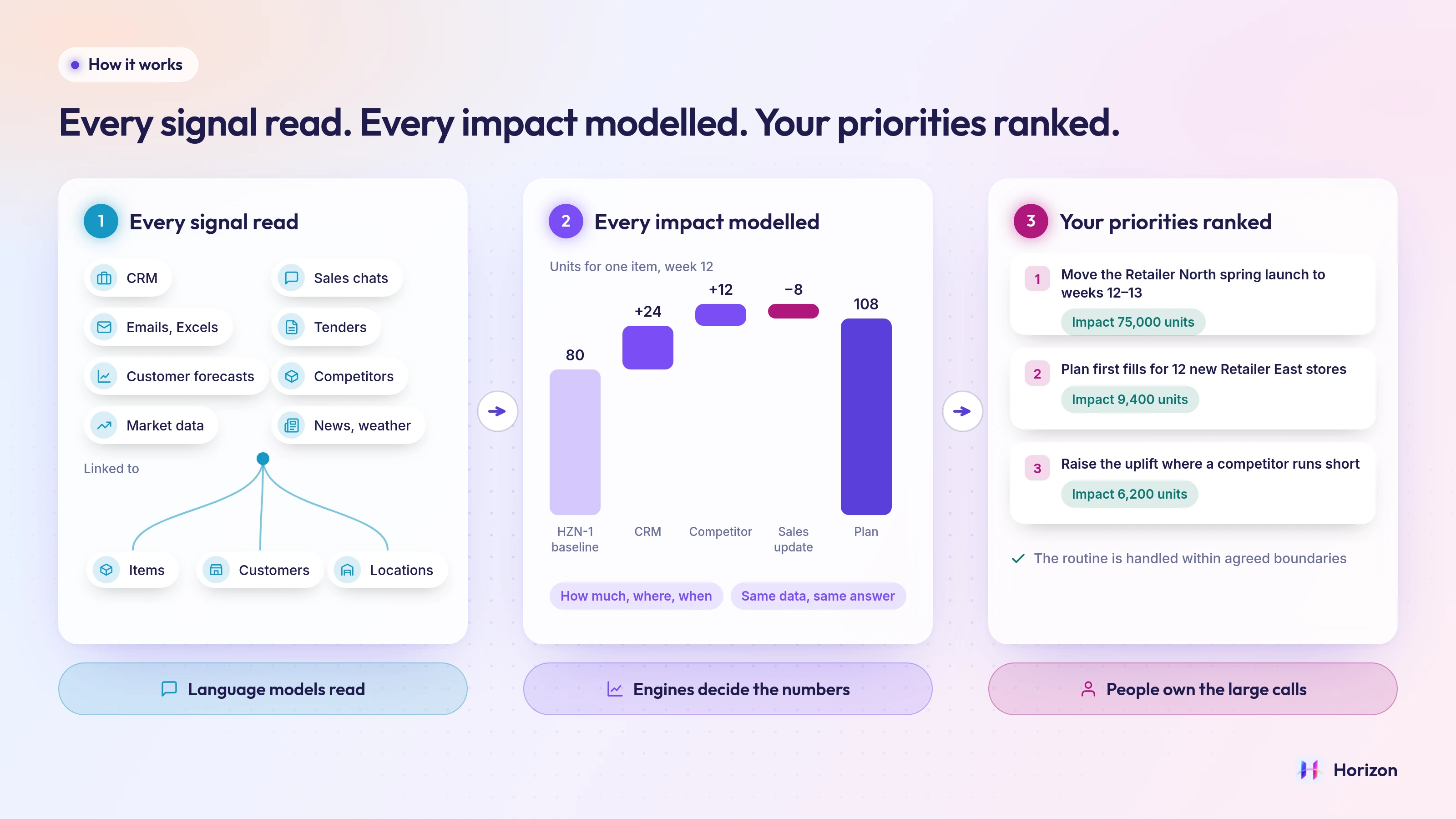
Language models read. Engines decide the numbers. People own the large calls.
What this looks like at several companies
A few examples from live cases, anonymised:
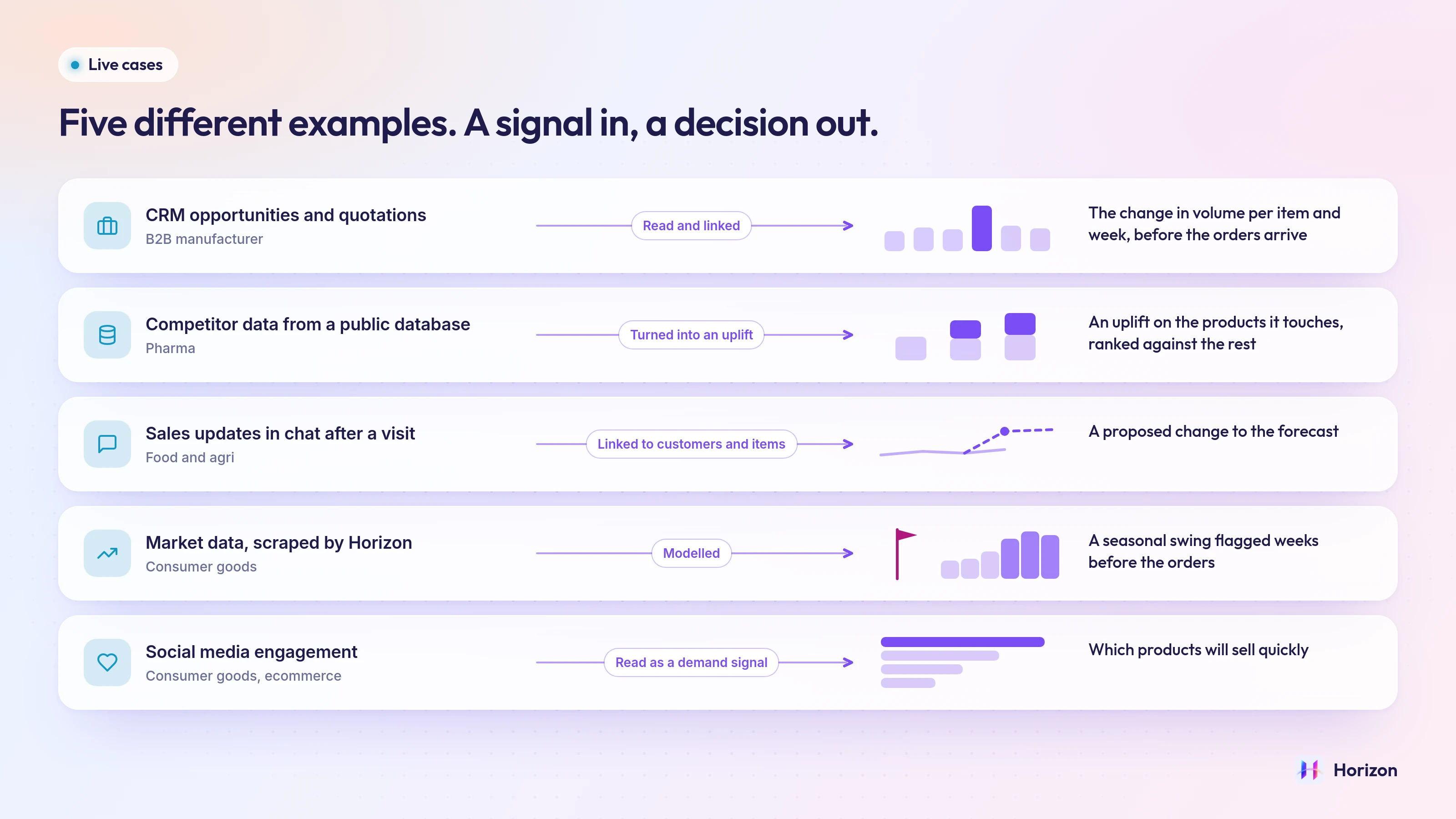
- CRM at a B2B manufacturer. Opportunities and quotations go straight into the forecast. When a large project moves or firms up, the planner sees the change in volume per item and week, instead of finding out when the orders arrive. This used to come up in S&OP meetings; now supply chain can say what they included in the plan and what not, and especially why not.
- Competitor data at a pharma company. When a competitor runs short or changes course, it’s picked up and turned into an uplift on the products it touches, ranked against everything else on the planner’s list. This information is pulled from a public database.
- Sales updates at a food and agri producer. What salespeople post in chat after a customer visit is read, linked to the right customers and items, and turned into a proposed change to the forecast.
- External and social media signals at a consumer goods company. Market data are pulled in and modelled, so a seasonal swing shows up as a priority weeks before the orders. Automatically scraped by Horizon.
- Social media data: for the ecommerce part of that same consumer goods business, the engagement on their social media is a huge signal for which products will sell quickly.
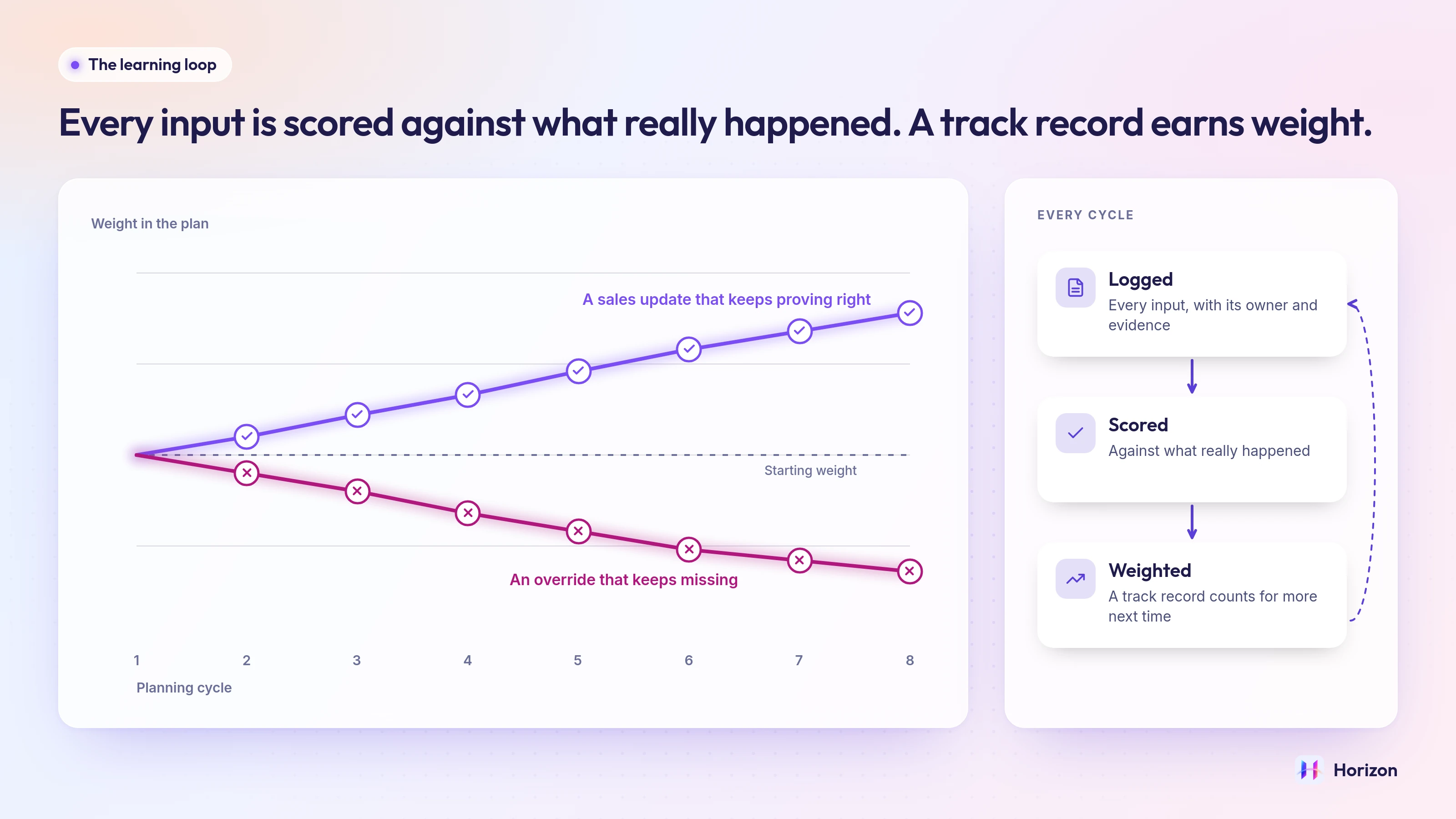
Every input is scored against what really happened; inputs with a track record carry more weight. So a sales update that proves right counts for more next time.
In every case, the result isn’t another dashboard. It’s a short list of decisions for the planner: what changed, what it does to the plan, and what to do about it.
Where it fits
Deep Sensing works in two ways.
If companies already have an existing planning system, then Deep Sensing sits on top of it. The signals, the modelling and the priorities come from Horizon; the existing system keeps running the base plan. No need to replace a system they’ve invested time and effort in.
At smaller and mid-sized companies that don’t have a system yet, it runs entirely on its own. Horizon connects directly to the ERP and creates the base plan with Deep Sensing built into it directly.
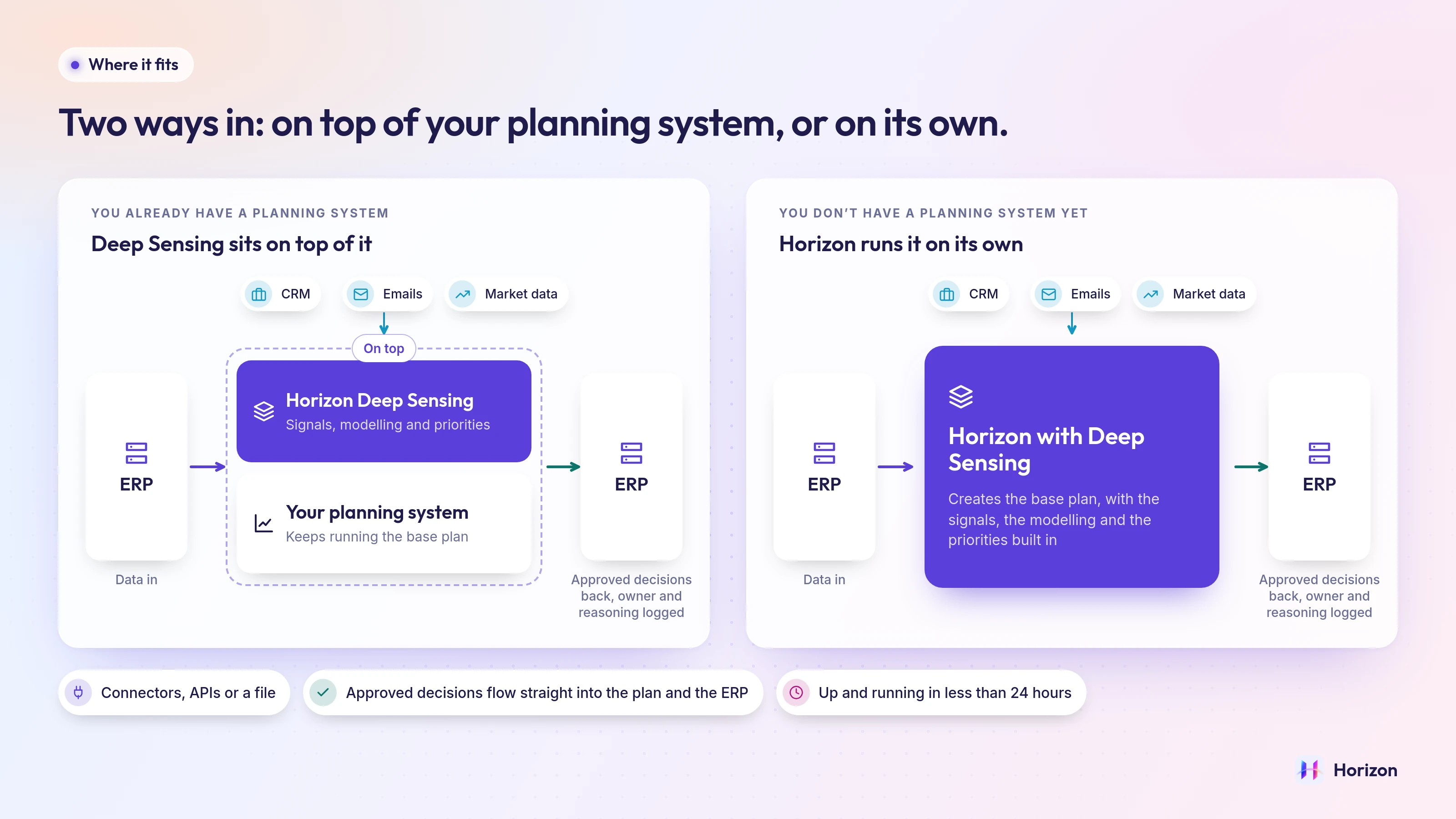
Either way, it can connect directly to the ERP, through our connectors, APIs or a file. Approved decisions flow straight into the plan and the ERP, with the owner and its reasoning logged. And data everywhere and never cleaned is yesterday’s problem: start with the data you have, in less than 24 hours.
What’s different from other solutions?
Almost every planning vendor talks about being AI-native and focused on decisions, but very few have the infrastructure and system to back this up.
The real question is what makes those decisions possible at all.
A decision is only as good as the information behind it: every signal, read and modelled. That only happens with Deep Sensing.
Compared with the usual way in demand planning systems today:
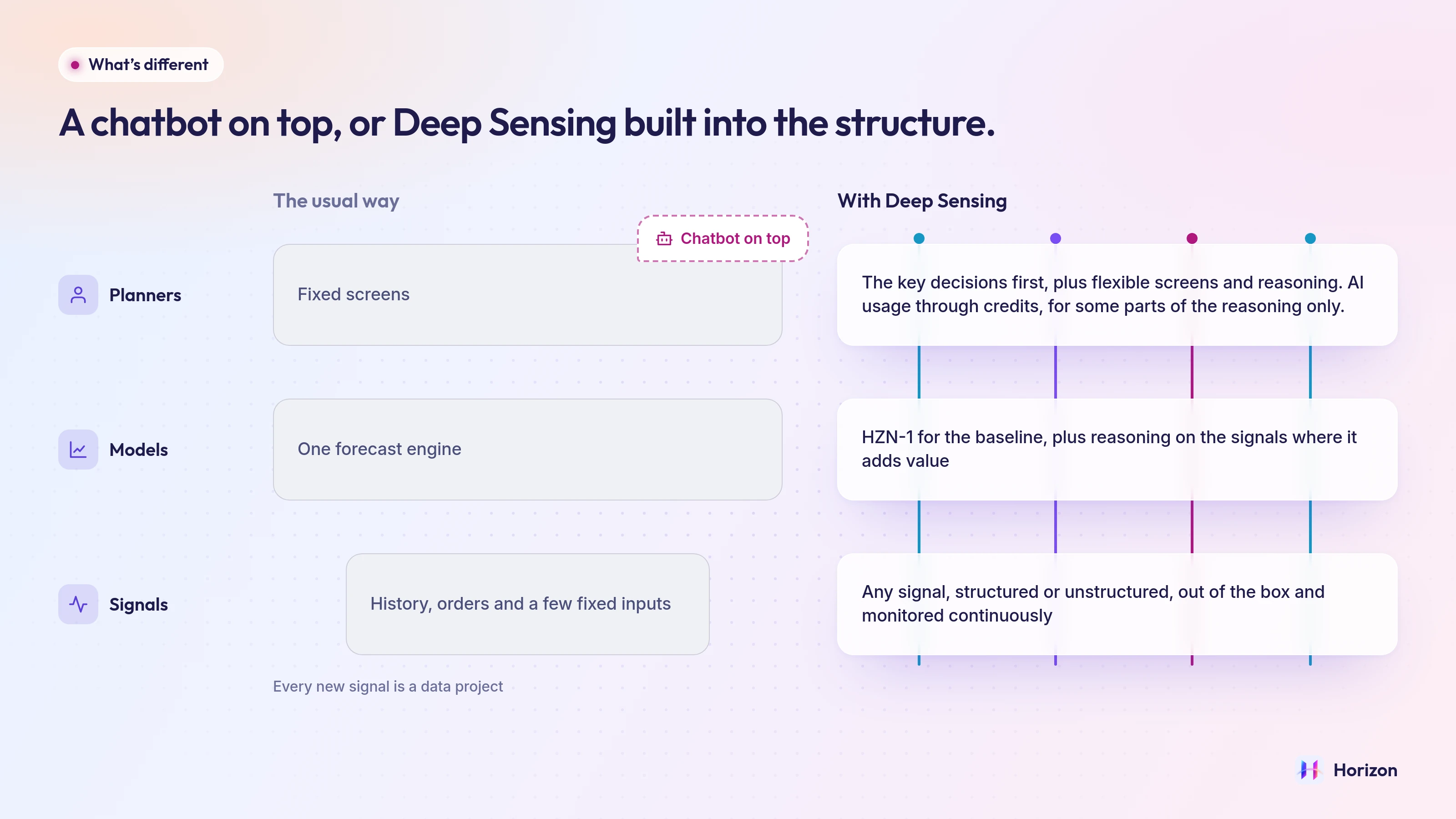
What it’s worth
18–45% lower forecast error than traditional systems. Up to 90% of planning time back. Typically 1–2% of revenue added to EBITDA.
Trusted by 120+ planners already.
Want the full picture?
Get the whitepaper, The world’s first Deep Sensing planning system.
Or go straight to it: up and running in less than 24 hours. Start with Horizon Instant and become the first to see what’s beyond the horizon.
