
Optimise inventory. Improve service.
Model safety stocks and coverages, balance service and cost, and replenish in real time.
Horizon Inventory Optimization
Reduce excess inventory by millions in working capital while improving service levels.
.svg)
Safety stock Scenario Planning
Plan safety stocks, balance service and cost, and replenish in real time.

Inventory segmentation
Classify Items by margin, variability, or demand pattern
.svg)
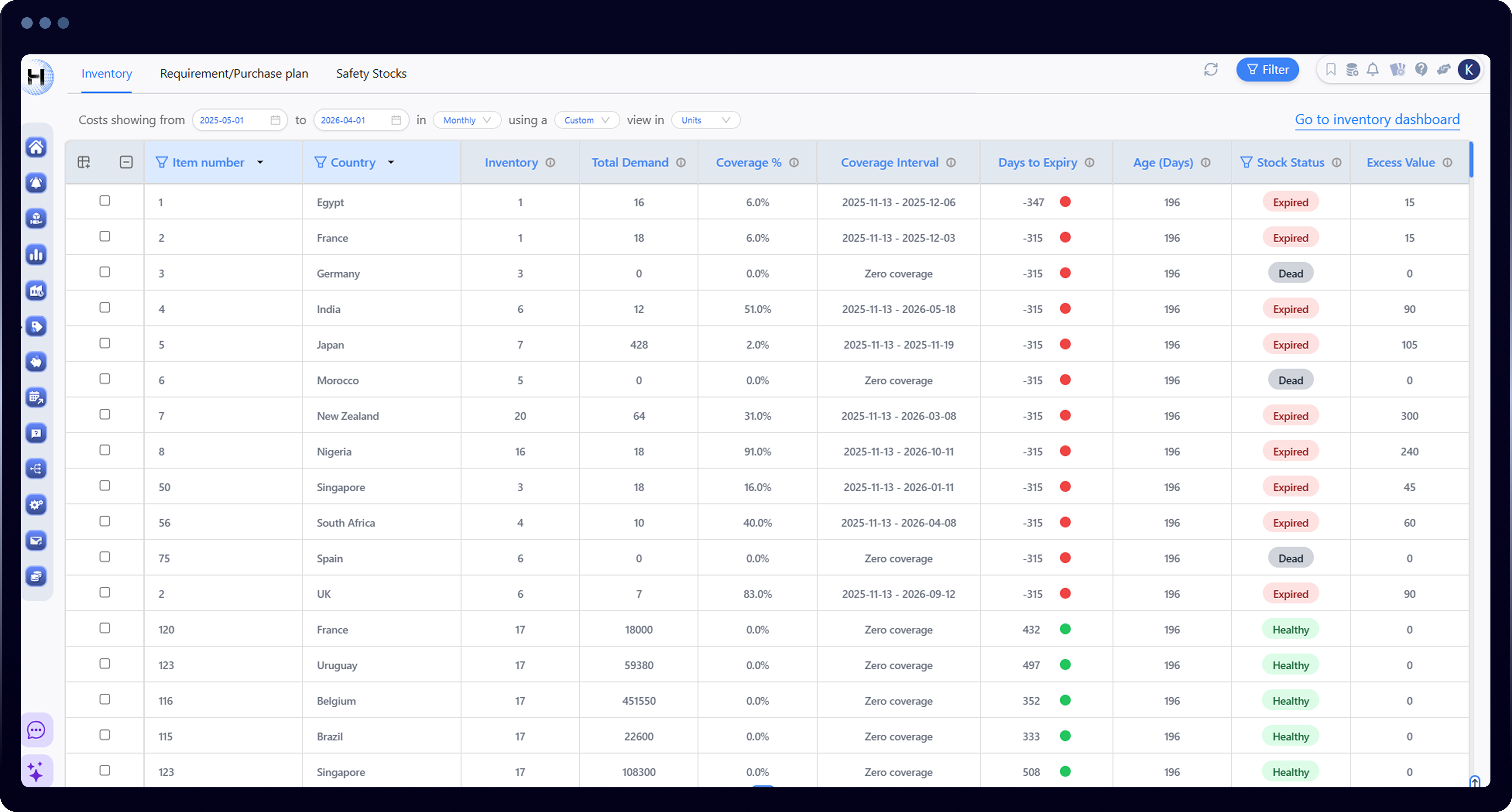
Overstock & coverage tracking
Spot dead stock, excess, and low coverage instantly with live alerts.

Real-time replenishment planning
Calculate raw material and finished goods needs automatically using Procurement Planning and Inventory Optimization.
Purchase order proposals
Generate Purchase Requisitions and Purchase Orders instantly and track confirmations from suppliers.

Supplier collaboration workspace
Share visibility, gather inputs, and track supply feedback in one connected view.
Smarter features, built for planners
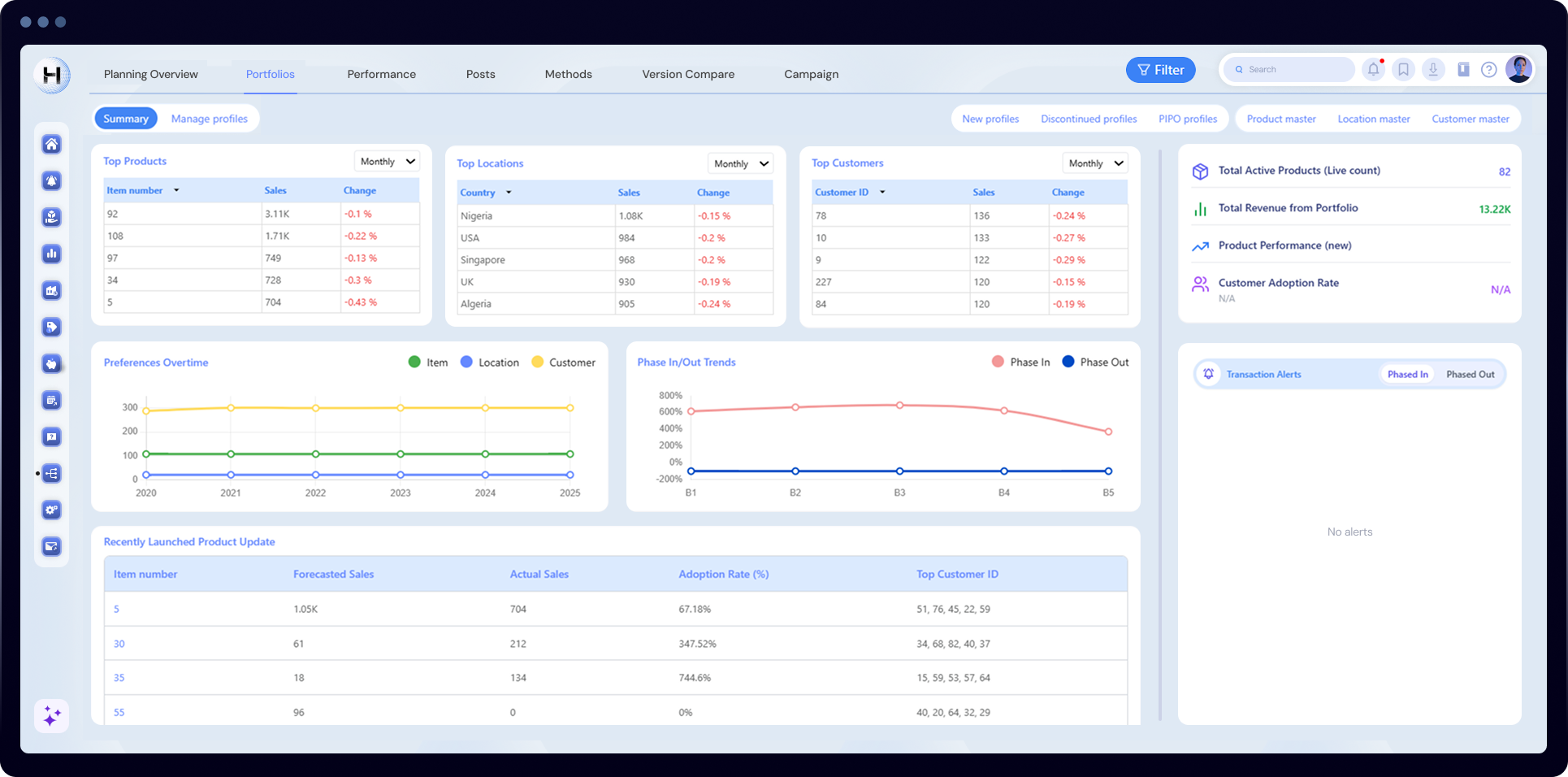
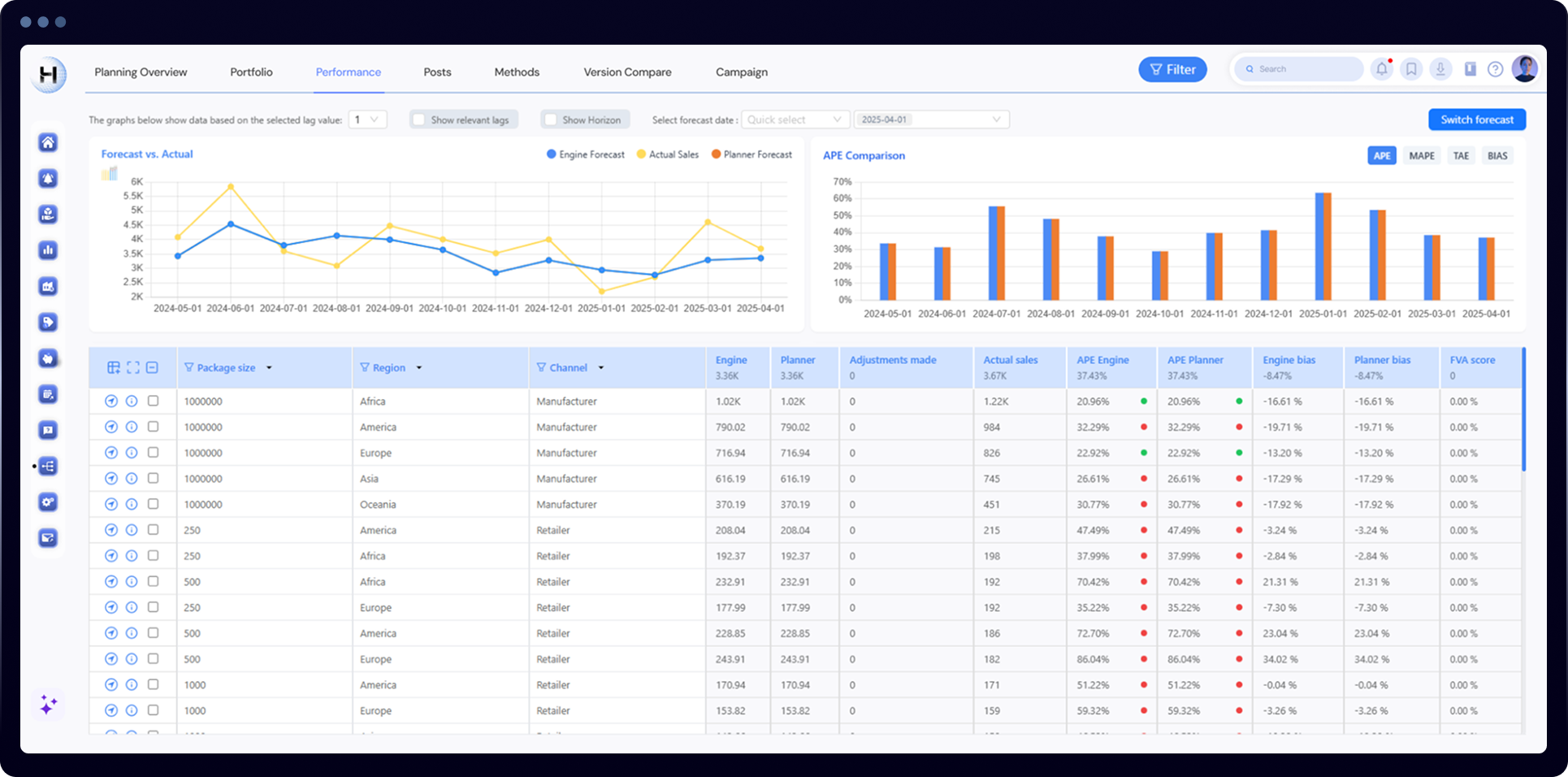
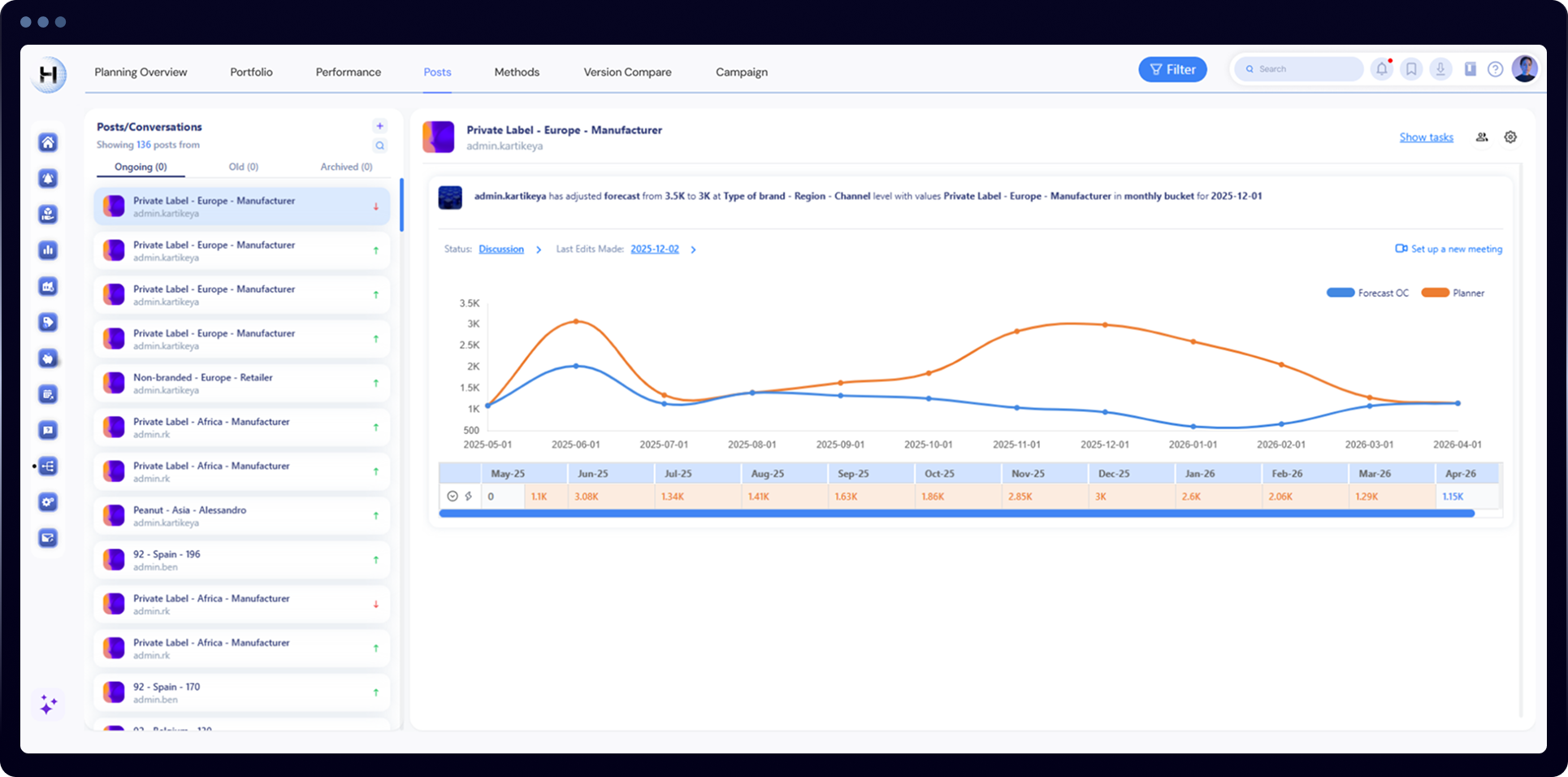
Inventory details, simulations, and replenishment proposals.

Why supply chain planning leaders recommend us
Real stories from supply chain planning leaders who've faced the same stockouts, inventory waste, and manual workarounds you have.

Furniture Manufacturer
“Impressed by the knowledge and fast results of Horizon. Together we turned plans into action in no time.”

Olivier Van HoefSupply Chain Manager at Ahrend

Business Consulting and Services
“After 40+ years of implementing different planning tools, Horizon is by far the easiest to set up and adapt. It combines strong models with a flexibility we haven't seen elsewhere.”

Alex YoungDirector at Demand Integration

Urban Gardening Retailer
“What stood out was how quickly our team could use Horizon and how easily it was integrated with our current systems: the planning team saw the impact on their day-to-day immediately, and it improved collaboration and decision-making from a management perspective.”

Siddhant BhalingeCEO at Ugaoo
Frequently Asked Questions
Find quick answers to the most common questions about Inventory Optimization.
How does inventory optimization help businesses manage stock more efficiently?

Inventory optimization is all about finding the balance between having enough stock to meet demand and not tying up too much capital.
It ensures that the right products are available at the right time and place without overstocking or running out.
A well-optimized inventory plan:
Minimizes carrying costs and waste.
Reduces stockouts that lead to lost sales.
Accounts for factors like demand variability, lead times, and shelf life.
In short, inventory optimization aligns production and procurement decisions with what the market actually needs freeing up capital while improving service levels.
It ensures that the right products are available at the right time and place without overstocking or running out.
A well-optimized inventory plan:
Minimizes carrying costs and waste.
Reduces stockouts that lead to lost sales.
Accounts for factors like demand variability, lead times, and shelf life.
In short, inventory optimization aligns production and procurement decisions with what the market actually needs freeing up capital while improving service levels.
What are the most effective inventory management strategies for modern supply chains?
There's no one-size-fits-all approach to inventory management it depends on your products, demand patterns, and service goals.
However, most companies follow one of these three strategic models:
Traditional control methods: Use safety stock, reorder points, or min-max levels to trigger replenishment.
Optimization-driven planning: Balance working capital and service level trade-offs using mathematical and statistical models.
Multi-echelon inventory optimization (MEIO): Manage inventory across multiple locations or warehouses, ensuring stock is placed where it's most needed. By combining these strategies, businesses can reduce total supply chain cost while maintaining a consistent customer experience.
However, most companies follow one of these three strategic models:
Traditional control methods: Use safety stock, reorder points, or min-max levels to trigger replenishment.
Optimization-driven planning: Balance working capital and service level trade-offs using mathematical and statistical models.
Multi-echelon inventory optimization (MEIO): Manage inventory across multiple locations or warehouses, ensuring stock is placed where it's most needed. By combining these strategies, businesses can reduce total supply chain cost while maintaining a consistent customer experience.
How do AI and machine learning improve inventory optimization?
AI doesn't just forecast demand it helps planners make smarter inventory decisions every day.
Here's how:
Adaptive safety stock: Machine learning identifies demand shifts and adjusts safety stock dynamically.
Anomaly detection: AI flags irregular stock movements or forecasting errors before they cause disruption.
Data translation: AI transforms real-world business constraints (like supplier limits or working capital goals) into structured inputs for optimization models. While mathematical optimization (like linear and mixed-integer programming) remains the backbone of inventory planning, AI enhances it with real-time learning and faster decision support.
Here's how:
Adaptive safety stock: Machine learning identifies demand shifts and adjusts safety stock dynamically.
Anomaly detection: AI flags irregular stock movements or forecasting errors before they cause disruption.
Data translation: AI transforms real-world business constraints (like supplier limits or working capital goals) into structured inputs for optimization models. While mathematical optimization (like linear and mixed-integer programming) remains the backbone of inventory planning, AI enhances it with real-time learning and faster decision support.
How can inventory optimization software improve planning accuracy and efficiency?
Inventory optimization software takes the guesswork out of planning by turning data into actionable insights. It automates the heavy calculations and continuously updates recommendations as new forecasts come in.
Here's what a good solution should deliver:
Real-time tracking: Always know your current stock position and what's on order.
Dynamic replenishment: Automatic reorder triggers based on optimized levels.
Scenario modeling: Simulate different stocking strategies and evaluate cost vs. service trade-offs.
Integration: Sync seamlessly with ERP and demand planning tools for a single source of truth. With software support, planners spend less time firefighting and more time optimizing.
Here's what a good solution should deliver:
Real-time tracking: Always know your current stock position and what's on order.
Dynamic replenishment: Automatic reorder triggers based on optimized levels.
Scenario modeling: Simulate different stocking strategies and evaluate cost vs. service trade-offs.
Integration: Sync seamlessly with ERP and demand planning tools for a single source of truth. With software support, planners spend less time firefighting and more time optimizing.
How does Horizon help with inventory optimization and replenishment?
Horizon is designed to make inventory planning proactive, data-driven, and business-aligned. It gives companies the tools to balance cost, service level, and working capital with ease.
Here's what sets Horizon apart:
Intelligent recommendations: Optimization models that consider your service targets, costs, and supply constraints.
Dynamic replenishment planning: Automatically generates replenishment proposals for raw materials and finished goods.
Real-time adaptability: When forecasts change, Horizon instantly updates stocking and replenishment plans.
Custom optimization goals: Whether your focus is service level, cost reduction, or cash flow.
Seamless integration: Works directly with demand planning and ERP systems for end-to-end visibility. In essence, Horizon ensures you always have the right stock at the right place and time without overinvesting in inventory.
Here's what sets Horizon apart:
Intelligent recommendations: Optimization models that consider your service targets, costs, and supply constraints.
Dynamic replenishment planning: Automatically generates replenishment proposals for raw materials and finished goods.
Real-time adaptability: When forecasts change, Horizon instantly updates stocking and replenishment plans.
Custom optimization goals: Whether your focus is service level, cost reduction, or cash flow.
Seamless integration: Works directly with demand planning and ERP systems for end-to-end visibility. In essence, Horizon ensures you always have the right stock at the right place and time without overinvesting in inventory.
