
Sandra Patino - Planning in flux: management consulting mindset & transformations
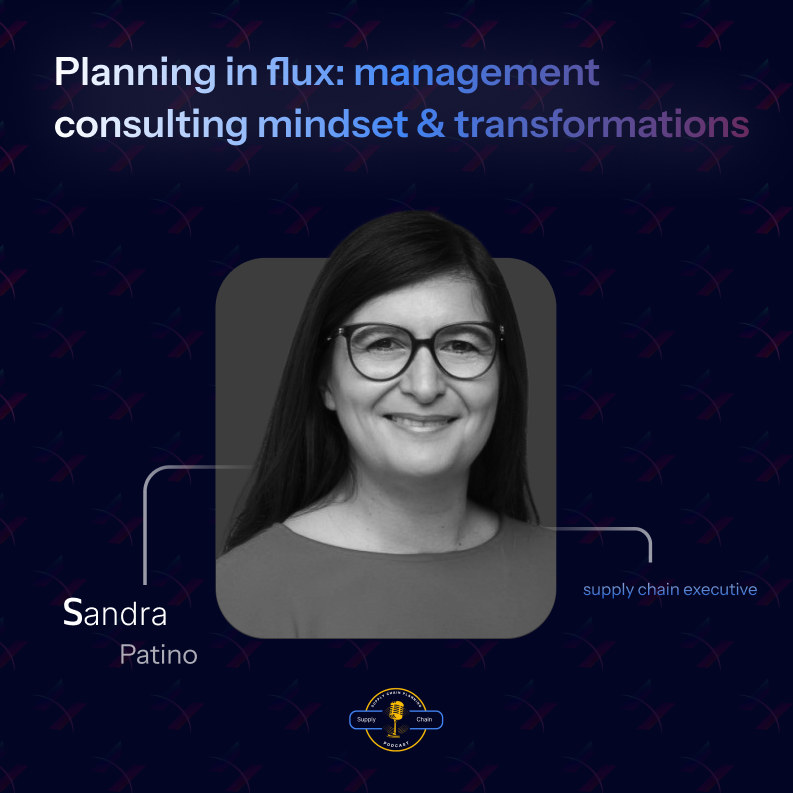

In this episode, Ben and Wim talk to Sandra Patino, whose career has three parts: engineering, production and project roles at Danone in France and the US; four years at McKinsey in Canada after an INSEAD MBA; and then supply chain leadership through a Russian acquisition at Danone, the Coty and P&G Beauty merger in Dubai, and the private equity carve-out of Upfield in the Netherlands.
Sandra explains the three things she kept from consulting (data rigour, sharp communication, a business case reflex), how to work with incomplete data using proxies and shared definitions, why strong projects still don't get approved, how credibility, strategic fit and allies change the odds, how local initiatives gain traction in a multinational, what integrating a brand-only acquisition in Russia involved, the culture clash of an entrepreneurial company merging with a process machine, what private equity ownership does to pace and people, and why post-go-live change management has to be dialogue rather than tickets.
In this episode
- (01:00) Sandra's career: Danone, INSEAD, McKinsey, Danone Russia, Coty, Upfield
- (01:40) Three consulting lessons: data consistency, sharp communication, business case thinking
- (04:20) Incomplete or conflicting data: decide what you need, use proxies, agree definitions
- (08:14) Nothing is obvious: reformulation as the communication method
- (10:00) Why even strong projects don't get approved: the basket of projects, timing, context
- (12:00) Credibility, strategic fit and a partner in crime
- (14:00) How local initiatives gain traction in a global company
- (16:26) Danone's acquisition of Russia's number two dairy producer: brands merged, nothing else
- (19:19) Planning before SAP, and why the SAP implementation waited until year four
- (20:00) Merging Coty and P&G Beauty: entrepreneurial versus process culture
- (22:00) Rebuilding planning teams: local demand planning, hubs for mid- and long-term supply
- (24:00) Upfield under private equity: no reward for effort, results and pace
- (26:12) Nine months of post-go-live change orders: human feedback over tickets
- (28:28) There is no magic wand, only work, and understanding why your process is what it is
- (29:09) Sandra's reading: McKinsey change articles, The Goal, How Big Things Get Done, Drive
Three quotes
"Nothing is obvious. Never assume that everybody has the same understanding as you of a topic."
"A project is never good just on a standalone basis in a company."
"The only magic wand I have found is work, hard work and more work."
Questions this episode answers
How do you build a business case with imperfect data? Decide which data you need and why, capture what is easy, use the closest correlated proxy for the rest, drop false precision, and check that every KPI means the same thing to every team before you compare numbers.
Why do good supply chain projects get rejected? Because they are judged in context: the whole value chain, the strategic agenda, and what else is on the executive table this year. Credibility from past delivery, fit with stated strategy, and allies in other functions change the outcome.
How do you keep people through a system implementation? Ask for every obstacle from day one, sort them honestly into "never coming back" and "we missed it", run a weekly then monthly review through team leaders, and keep it a live conversation rather than a ticket queue, for as long as it takes.
Resources Sandra mentions: McKinsey's publicly available change management articles · The Goal by Eliyahu Goldratt · How Big Things Get Done by Bent Flyvbjerg and Dan Gardner · Drive by Daniel Pink.
Read the companion article: How to get a supply chain project approved: data, business case and context.
Related Articles

