

Plan Smarter in Simple Steps
Improve service levels and reduce stockouts across your network while cutting transport time and manual planning effort.
How It Works
Horizon Distribution planning
Optimize flows across plants, warehouses, and customers.
.svg)
Multi-location optimization

Use ML, statistical, and ensemble models with full visibility into how forecasts are built.

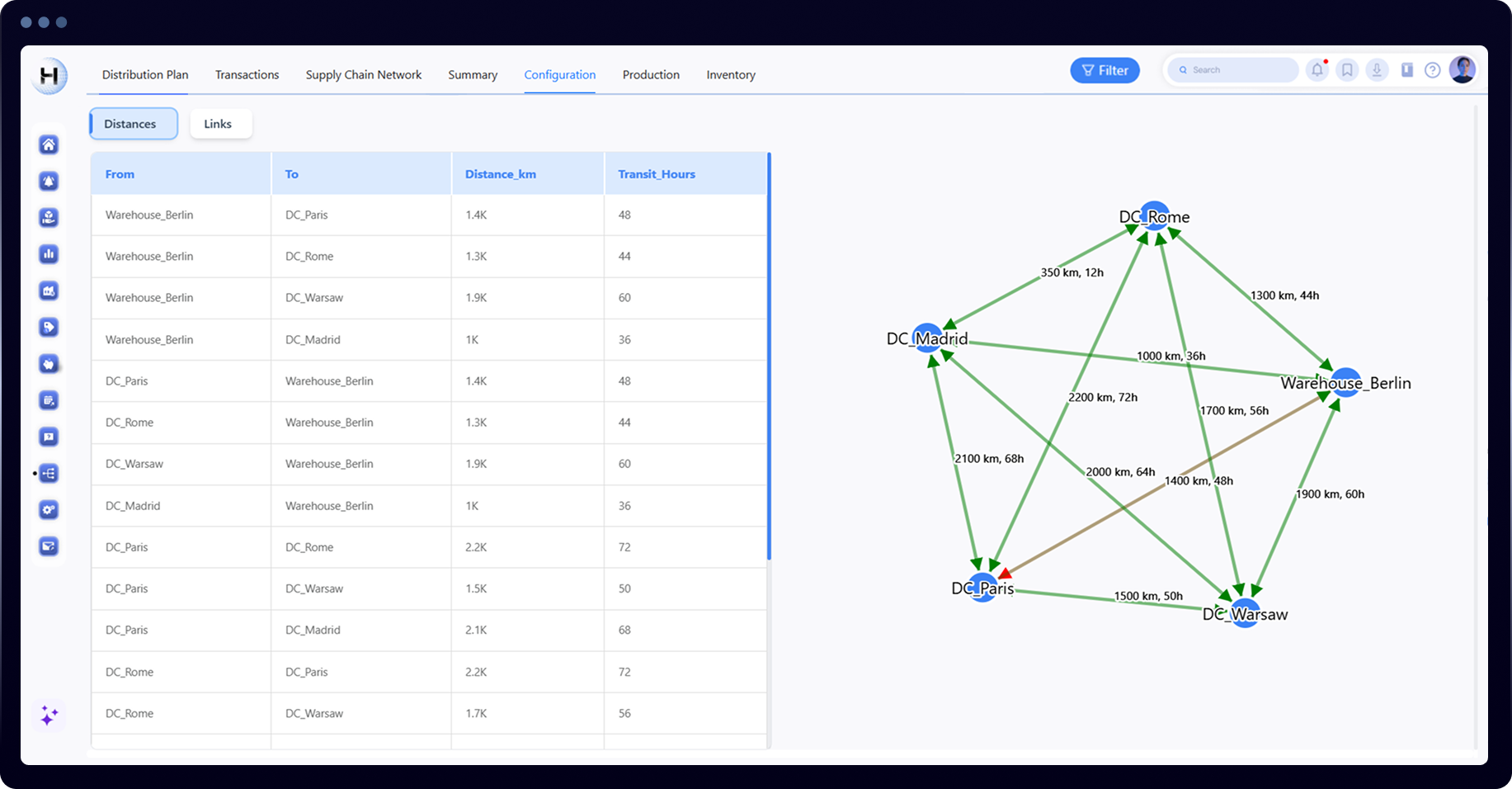
Network visualization
React to shifts in demand and learn automatically from past events and promotions.
.svg)
Transport and mode planning
Collect and track inputs from all departments with full change history.

Allocation and transfer rules
Manage phase-ins and phase-outs easily at any product or brand level.

Service-level optimization
Measure forecast value add (FVA) and see where overrides improved accuracy.

Transfer proposals
Use text or voice to explore drivers, adjust forecasts, or get instant insights.
Next-Gen Planning
Smarter features, built for planners
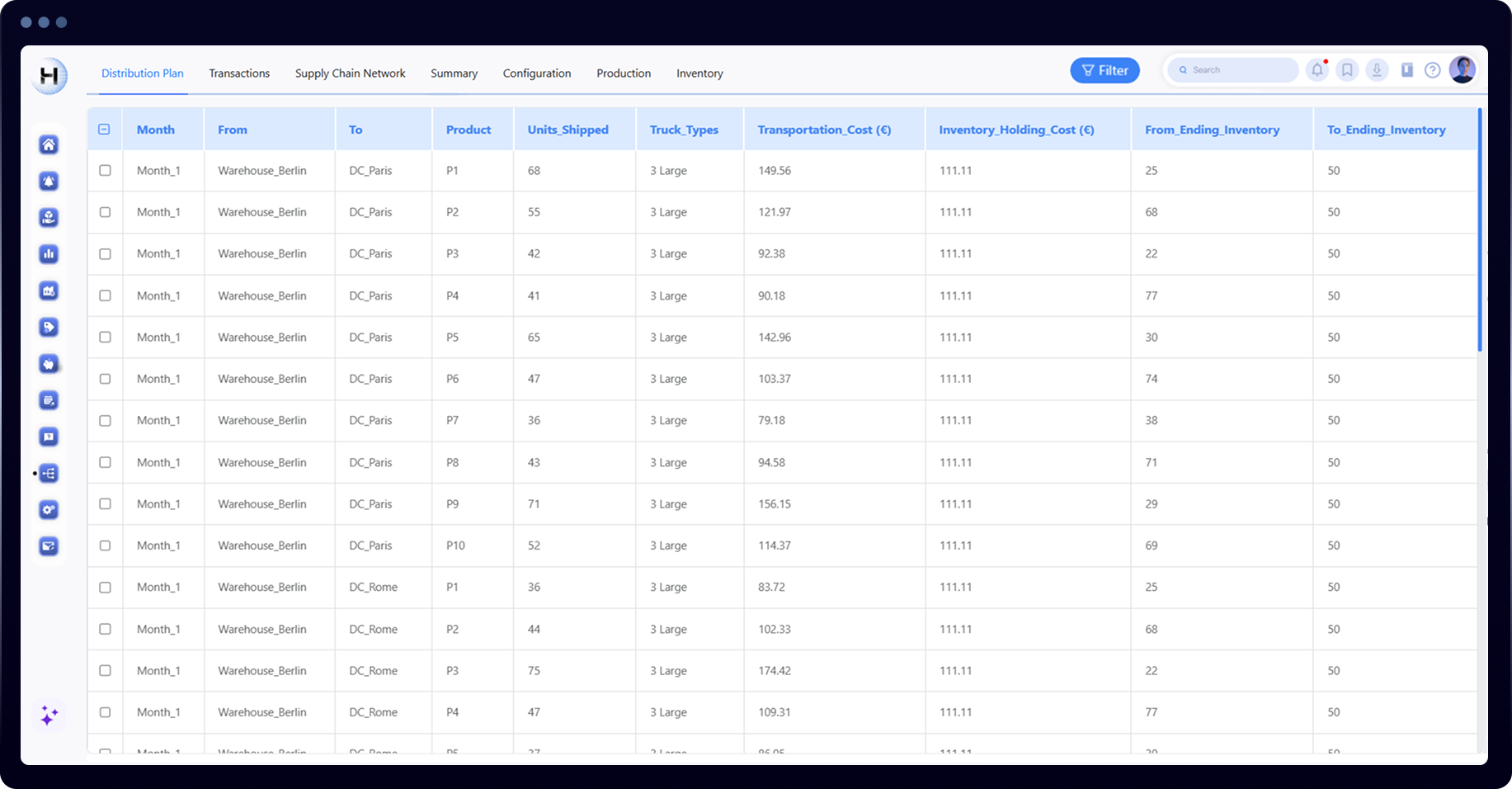
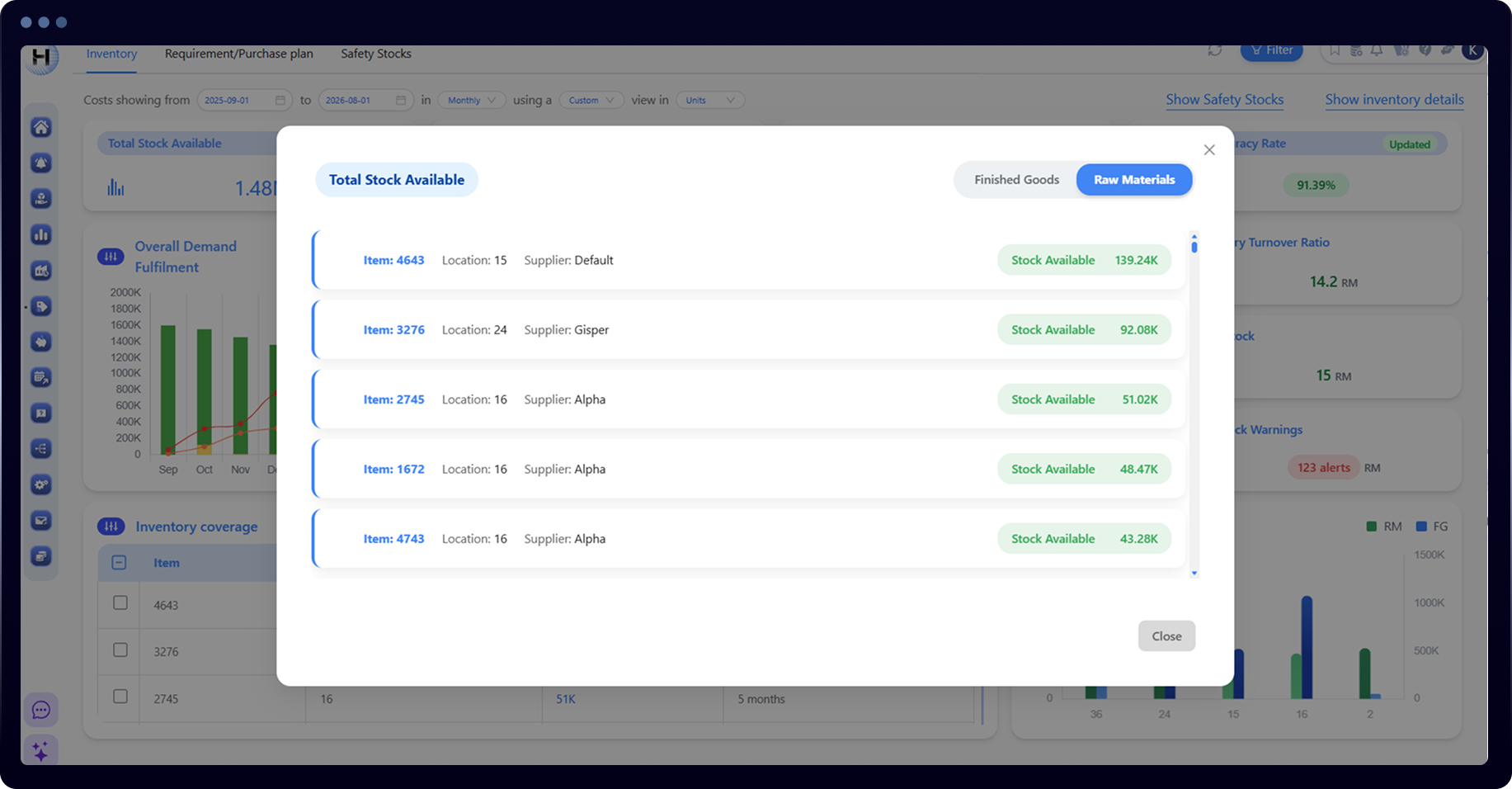
Detailed configuration and distribution views



Planner's Voices
What planning leaders say
Real experiences from planners and leaders.
"Impressed by the knowledge and fast results of Horizon.
Together we turned plans into action in no time."
Together we turned plans into action in no time."

Olivier Van Hoef –
Supply chain manager at Ahrend
Supply chain manager at Ahrend
"After 40+ years of implementing different planning tools, Horizon is by far the easiest to set up and adapt. It combines strong models with a flexibility we haven’t seen elsewhere."

Alex Young –
Director at Demand Integration
Director at Demand Integration
“What stood out was how quickly our team could use Horizon and how easily it was integrated with our current systems: the planning team saw the impact on their day-to-day immediately, and it improved collaboration and decision-making from a management perspective.”

Siddhant Bhalinge –
CEO at Ugaoo
CEO at Ugaoo
FAQ
Frequently Asked Questions
Find quick answers to the most common questions about Distribution Planning.
What is distribution planning and why is it important?

Distribution planning determines how many units of each item should be delivered to each location or customer, based on demand, capacity, and cost.
It ensures the right products reach the right place at the right time without overspending on transportation or holding unnecessary inventory.
A strong distribution planning process improves service levels, lowers logistics costs, and keeps the entire supply chain synchronized.
It ensures the right products reach the right place at the right time without overspending on transportation or holding unnecessary inventory.
A strong distribution planning process improves service levels, lowers logistics costs, and keeps the entire supply chain synchronized.
How do companies decide how much inventory to ship to each location?
Most businesses use a combination of forecast data, safety stock requirements, transportation constraints, and service-level targets to determine optimal allocations.
Modern distribution systems also run optimization models that consider costs, warehouse capacity, and customer priorities.
The goal is simple: ensure every location has the right quantity not too much, not too little while minimizing logistics cost.
Modern distribution systems also run optimization models that consider costs, warehouse capacity, and customer priorities.
The goal is simple: ensure every location has the right quantity not too much, not too little while minimizing logistics cost.
What role does optimization play in distribution planning?
Optimization models help planners decide the best way to distribute limited inventory across multiple locations.
Using techniques like linear programming and mixed-integer optimization, the system evaluates thousands of possible allocation scenarios to minimize costs, avoid shortages, and respect constraints like truck capacity or warehouse limits. It replaces guesswork with data-driven decisions.
Using techniques like linear programming and mixed-integer optimization, the system evaluates thousands of possible allocation scenarios to minimize costs, avoid shortages, and respect constraints like truck capacity or warehouse limits. It replaces guesswork with data-driven decisions.
How does AI or machine learning improve distribution planning?
AI supports distribution planning by predicting demand shifts, spotting anomalies, recommending priority shipments, and identifying the most efficient distribution routes. It enhances planners’ decisions by analyzing historical patterns, customer behavior, and seasonality. While optimization decides what to ship where, AI helps predict why and when adjustments are needed.
How does Horizon support distribution planning and product allocation?
Horizon uses AI-supported optimization models to determine exactly how many units of each item should be delivered to each location or customer.
It considers demand forecasts, transportation limits, warehouse capacity, and fulfillment priorities then generates the Stock Transfer Orders.
With real-time updates, scenario Planning, and ERP integration via Horizon Integration, Horizon ensures businesses always ship the right products to the right place at the lowest possible cost.
It considers demand forecasts, transportation limits, warehouse capacity, and fulfillment priorities then generates the Stock Transfer Orders.
With real-time updates, scenario Planning, and ERP integration via Horizon Integration, Horizon ensures businesses always ship the right products to the right place at the lowest possible cost.
Learn more about Distribution Planning

Horizon Solutions empowers you to plan smarter, stay in control, and drive confident supply-chain decisions.



© 2026 Horizon Solutions. All rights reserved.