
Martijn Lofvers - IT vs. supply chain, magic quadrants, market trends, and selecting planning software
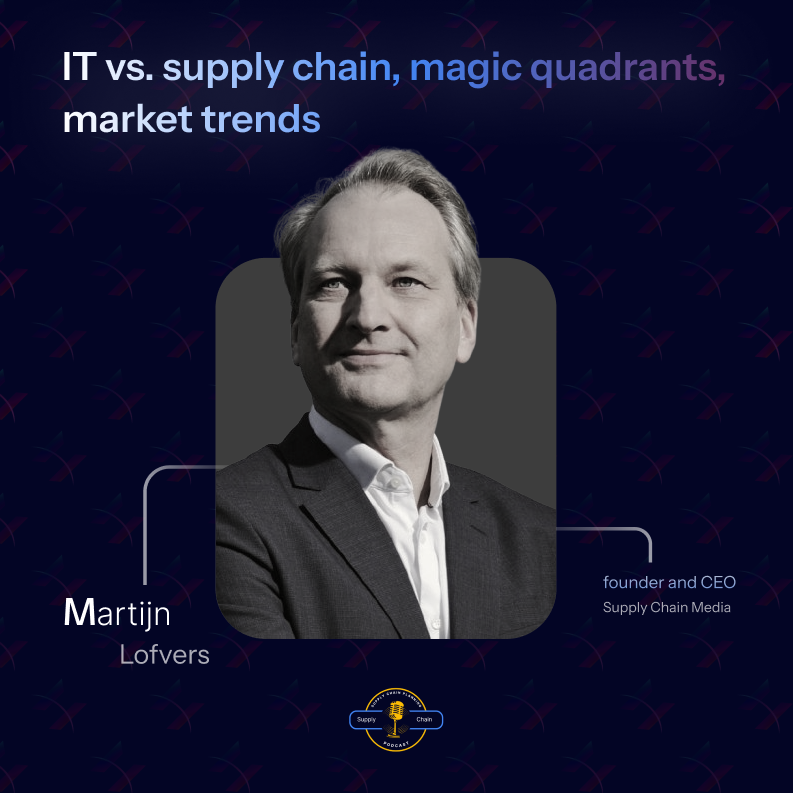

In this episode, Ben and Wim talk to Martijn Lofvers, founder and CEO of Supply Chain Media, known for the IT Subway Map and his in-depth research into the planning tech landscape.
Martijn shares what he’s learned from 15+ years of publishing, analyzing, and connecting the dots between supply chain practitioners and technology vendors.
He reflects on how planning software is selected, why RFPs often miss the point, and how the role of IT vs. business should shift.
The conversation also dives into AI trends (and the hype), the emergence of decision intelligence, and the rise of cloud-native planning startups.
Martijn offers practical advice on building a business case for planning software, reducing implementation risk, and thinking beyond your company’s internal view.
Key topics covered include:
- The evolution of planning tools and why most companies still rely on Excel
- Why magic quadrants are misused, and what to do instead
- The business vs. IT discussions and the rise of data lakes
- How to run a smarter software selection process
- The importance of implementation partners and change management
- How to convince your CFO: working capital, not headcount
- Planning trends: decision intelligence, probabilistic planning, and GenAI
- Collaboration beyond your company: sharing planning with suppliers
- Startups, scale-ups, and what the next generation of planning software looks like
- Key timestamps:
- (00:50) – Martijn’s career: from operations research to founder of Supply Chain Media
- (01:44) – Launching the IT Subway Map and shift to analyst work
- (03:00) – Why companies don’t know their own IT landscape
- (04:50) – The problems with using Gartner quadrants for software selection
- (06:00) – IT’s influence and the rise of the data lake
- (08:30) – Why planners must define their own requirements
- (09:20) – Self-assessment tools to find white spots in your process
- (10:30) – Where most RFPs fail: ignoring implementation
- (12:00) – Mid-sized vs large companies: what really differs in planning tools
- (15:00) – Prioritizing speed over perfect functional fit
- (17:00) – Cost estimates, references, and board-level business cases
- (18:10) – Talking to CFOs about working capital, not planners
- (19:10) – Planning as an enabler for business growth
- (19:50) – Trends: AI layers, decision intelligence, agents, and probabilistic planning
- (22:00) – Planning collaboration with tier 1 and 2 suppliers
- (24:30) – Why large companies are experimenting with planning startups
- (26:00) – Final reflections and resources
Related Articles
