Rolling out SAP IBP, standardizing globally, and building a Center of Excellence
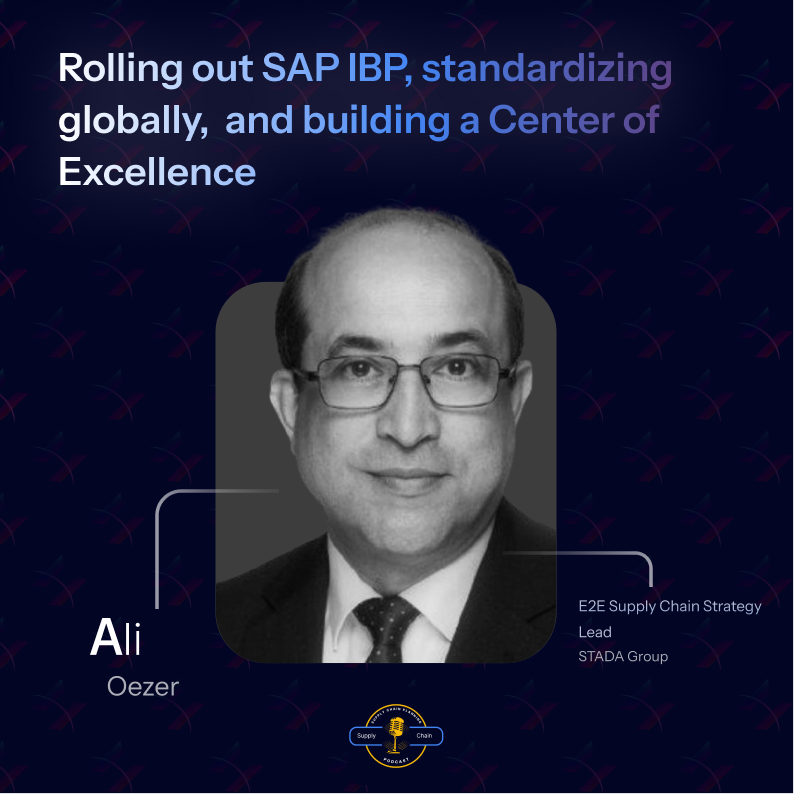

In this episode, Ben from Horizon Solutions and Wim from Lanark speak with Ali Oezer, E2E Supply Chain Strategy Lead at STADA Group and a supply chain leader with over 30 years of experience, the majority of which at Procter & Gamble in senior supply network and planning roles.
Ali walks us through STADA's ongoing transformation from APO and ECC to SAP IBP and S/4HANA, covering how the decision was made, why they chose a wave-based rollout over a big bang approach, and what it takes to standardize planning processes across 15 in-house production sites and around 500 contract manufacturing organizations.
Ali shares his honest view on AI in planning. He also opens up on the demand vs. supply planning debate: split today out of necessity, but merged end-to-end ownership as the ideal future state.
The episode closes with practical advice for anyone building a career in supply chain planning, including three book recommendations and why change management has become, in Ali's view, the single most critical skill in any planning transformation.
Key topics include:
- The APO to IBP migration: why it happened, how the vendor decision was made, and how integration with ECC and S/4HANA works in practice
- Wave-based rollout vs. big bang: how STADA structured the project across a complex, multi-site pharmaceutical environment
- Standardizing planning roles across in-house and CMO operations: what changed and why it had to come before the system
- The Center of Excellence model: pyramid support structure, key users, subject matter experts, and the path to self-sufficiency
- When to fully standardize and when not to: a practical framework based on business complexity and similarity
- Planning as a service and service centers: the long game, and what level of maturity you need before it makes sense
- AI in planning: Joule, co-pilots, and why Ali expects automation to reshape repetitive planning work within 3–5 years
- Demand planning vs. supply planning: the case for splitting today and merging tomorrow with AI support
- Supply network design: what comes after tactical planning is stabilized
- Book recommendations: Executive's Guide to MRP2 (Oliver Wight), Integrated Business Planning (Kapczynski et al.), The Toyota Way (Liker), Seven Habits of Highly Effective People (Covey)
TIMESTAMPS:
(0:03) – Welcome and intro(0:43) – How Ali got into supply chain and his career at P&G(2:20) – Why Ali moved to STADA and what attracted him to the role(4:20) – The three legs of supply chain: systems, processes, organization design(5:26) – APO end of life and the decision to move to SAP IBP(6:47) – Why STADA chose IBP response & supply and Digital Supply Chain (DSC)(8:32) – Was SAP the default choice? How the vendor decision was made(11:00) – Rollout approach: pilot, waves, and the timeline to completion(15:43) – What IBP actually changes organizationally: standardizing roles across 15 sites and 500 CMOs(18:19) – When to fully standardize vs. partially standardize — the framework(22:21) – The long game: planning service centers, Centers of Excellence, and what comes after standardization(24:04) – AI in planning: Joule, co-pilots, and Ali's view on the next 3–5 years(27:29) – Strategic planning and supply network design: what's next on Ali's roadmap(30:00) – Demand planning vs. supply planning: split roles today, merged roles as the ideal future state(33:09) – Building a Center of Excellence: the pyramid support model and becoming self-sufficient(35:41) – Advice to a young Ali: think end-to-end, master change management(38:02) – Book recommendations: Oliver Wight, Integrated Business Planning, The Toyota Way(40:16) – Stephen Covey's Seven Habits and Pathways to Leadership
Related Articles