Anaplan versus SAP IBP is fundamentally a question about who owns planning. Anaplan optimizes for finance-led connected planning across functions (finance, supply chain, sales, HR); SAP IBP optimizes for supply-chain-led planning with native SAP financial integration. The comparison often reveals organizational realities about planning ownership rather than just software preferences.
Both platforms work in supply chain planning, but they're built around different ownership models. Picking the wrong one for your organization's actual planning ownership leads to misfit deployments where the platform fights the organizational reality. This page covers the comparison honestly with attention to ownership model as the primary decision factor.
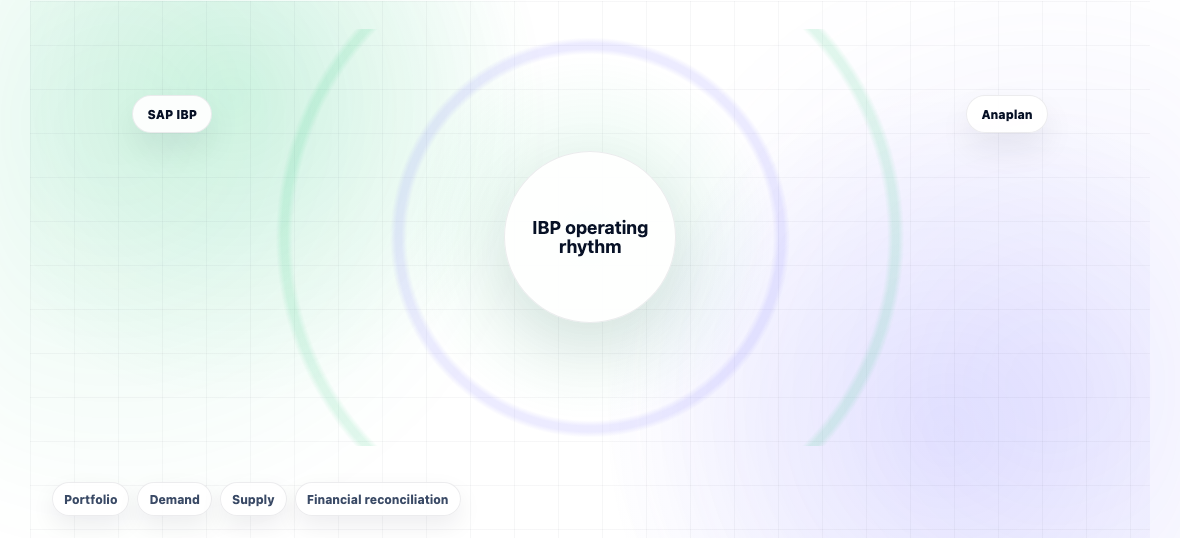
Many companies actually run complementary platforms — Anaplan for finance-led connected planning across functions, supply-chain-native platform for operational supply chain. This works well when both teams have clear scope and integration governance is set up properly.
For mid-market manufacturers ($100M-$3B) considering Anaplan vs SAP IBP for supply chain planning, Horizon often fits better than either. Anaplan's modeling-first approach requires building supply chain operational logic from scratch — months of analytical work and ongoing maintenance. SAP IBP's enterprise architecture is over-scaled for mid-market — 12-24 month implementation and seven-figure TCO disproportionate to mid-market scale. Horizon's mid-market supply-chain-native architecture delivers operational depth out-of-box at mid-market scale.
For enterprise buyers with the right scale, this two-way comparison is genuinely between Anaplan and SAP IBP based on planning ownership model. For mid-market buyers, consider whether finance-led (Anaplan) or supply-chain-led (mid-market integrated platforms) fits your organizational reality.
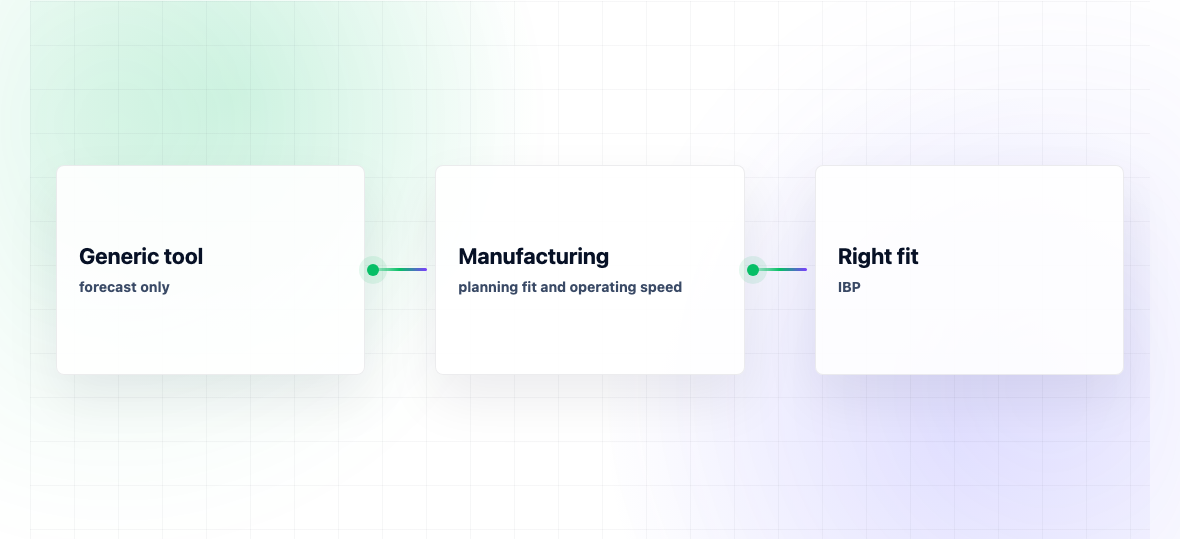
The biggest predictor of success between Anaplan and SAP IBP is who actually owns planning in your organization. Finance-led organizations (CFO or VP of Finance chairs planning meetings, planning output is financial forecasts, action items go to finance teams) typically gravitate toward Anaplan because the platform fits the finance-led operating model. Supply-chain-led organizations (COO or VP of Supply Chain chairs planning, output is operational plans, action items go to supply chain teams) typically fit SAP IBP better.
Companies that haven't resolved who owns planning struggle in either platform. Anaplan deployments fail when supply chain operations need depth Anaplan doesn't provide natively. SAP IBP deployments fail when finance wants connected planning across non-supply-chain functions. The honest framing: identify ownership model first, then pick the platform that fits.
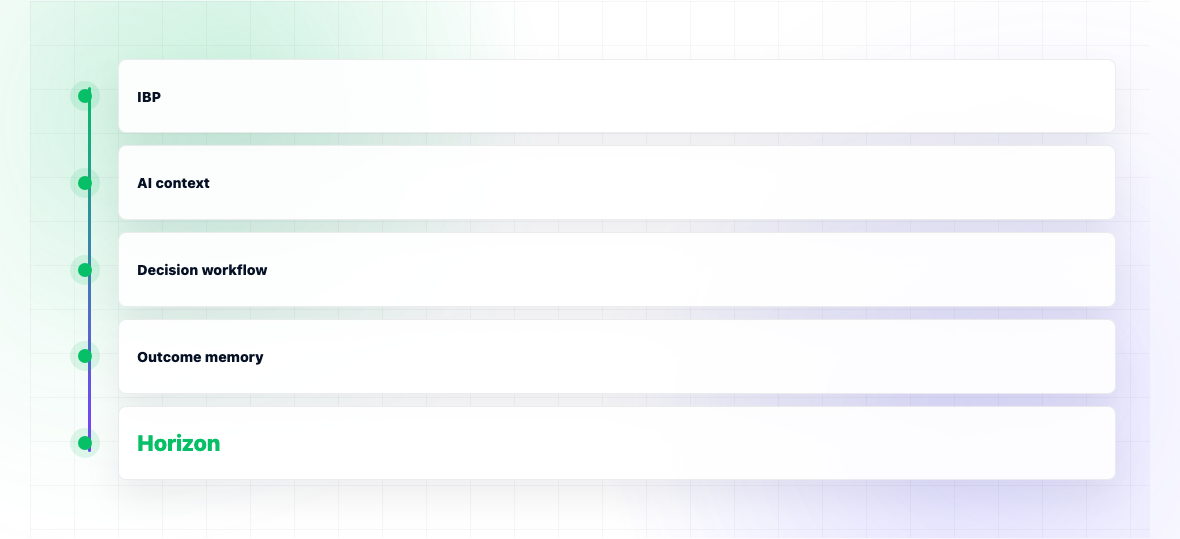
Best fit: finance-led planning organizations across enterprise and upper mid-market. Companies where finance owns planning rhythm and connected planning across multiple functions (finance, supply chain, sales, HR) delivers more value than operational depth in any single function.
Best fit: $3B+ SAP-centric enterprises with supply-chain-led planning and deep SAP ecosystem investment. Particularly strong in pharma, chemicals, CPG industries.
Hyperblock calculation engine for real-time multi-dimensional modeling. Modeling-first architecture — customers build planning structures matching their operating model. Strong flexibility for unusual planning structures and cross-functional connections.
Enterprise supply chain planning with native SAP integration. Mature capability across demand planning, supply planning, inventory optimization, S&OP, IBP. Financial integration through SAP financial ecosystem.
High modeling flexibility, lower native operational depth. Demand forecasting algorithms, multi-echelon inventory math, and finite capacity scheduling logic typically need to be modeled by customer rather than provided natively. Time-to-value for supply chain operational use cases is longer because logic needs to be built.
Mature native operational depth across demand planning, supply planning, inventory optimization. Standard supply chain math built into platform rather than requiring customer modeling. Lower modeling flexibility for unusual planning structures.
Designed for finance-led connected planning. Best when finance owns S&OP, IBP rhythm, and planning extends across non-supply-chain functions (FP&A, headcount, sales planning, corporate performance).
Designed for supply-chain-led planning with finance integration. Best when supply chain owns operational planning and connects to finance through native SAP integration rather than connected modeling.
Highly variable. Simple connected planning 3-6 months. Complex supply chain models built from scratch 9-18 months. Each connected functional model adds time.
Typical full deployment 12-24 months. Single module 6-9 months.
Three-year TCO for mid-market: $1.5-3.5M. For enterprise: $3-10M depending on connected planning scope.
Three-year TCO for mid-market: $2-4M. For enterprise: $5-15M+.
Neither Anaplan (for supply chain ops) nor SAP IBP (for mid-market scale) typically fits well. Mid-market integrated platforms (Horizon, Logility, RELEX) deliver supply-chain-led operational planning at scale-appropriate cost. See how these stack up against the rest of the market in our Best IBP Software 2026 comparison. Some companies run Anaplan for finance-led connected planning AND a supply-chain-native platform for operational supply chain — complementary deployment.