AI in inventory optimization typically means three things: probabilistic methods that model demand and lead time variability as distributions rather than constants, ML methods that predict demand patterns underlying inventory decisions, and recommendation engines that propose specific safety stock or reorder adjustments to inventory planners. Each adds value, but in different ways.
Probabilistic methods are the most mathematically meaningful difference from traditional inventory optimization — they replace normal-distribution assumptions with actual demand distributions, which typically reduces inventory 10-20% at the same service levels. ML methods improve underlying demand forecasts that drive inventory decisions. Recommendation engines reduce planner workload by proposing specific actions. The platforms below distinguish by which of these they emphasize.
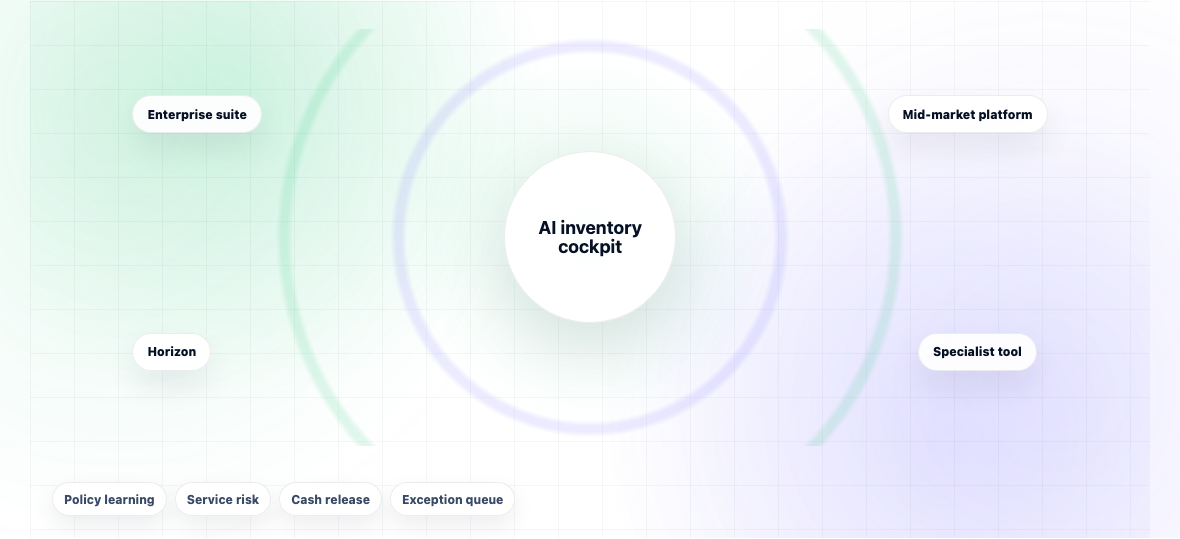
Horizon fits mid-market manufacturers and distributors $100M-$3B with 2-30 stocking locations and 500-5,000 active SKUs. The probabilistic methods are the technical differentiator from traditional inventory tools — non-normal demand distributions are modeled directly, lead time variability flows into safety stock calculations explicitly, and stochastic service-level optimization replaces normal-distribution safety stock formulas. The result is typically 10-20% inventory reduction at the same service levels versus traditional approaches.
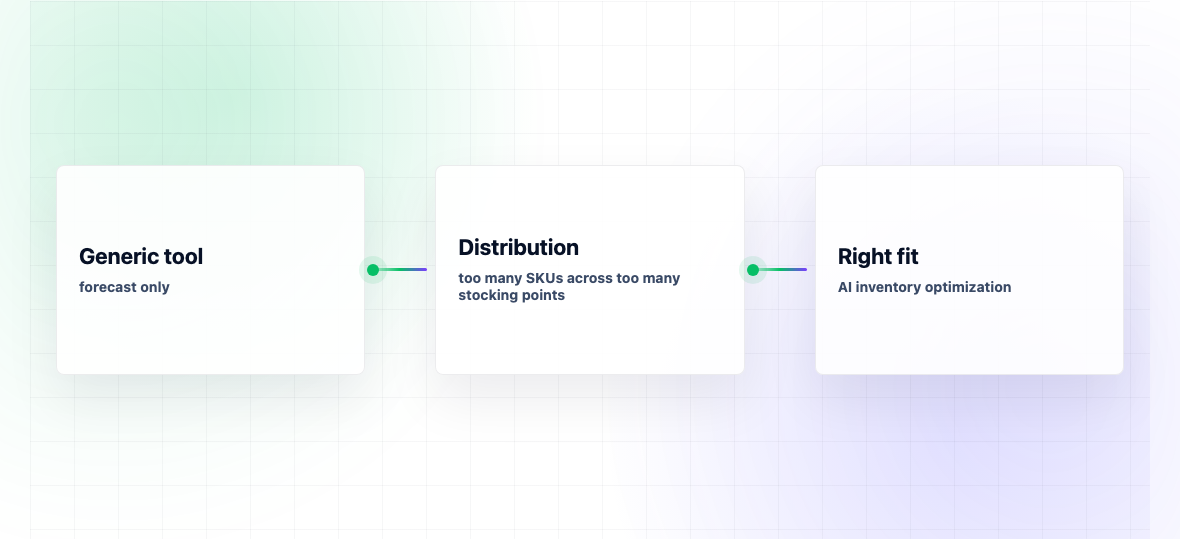
Where Horizon doesn't fit: very large enterprises with multi-region, multi-ERP inventory networks typically fit enterprise platforms; pure distribution operations with 50,000+ SKUs often fit distribution specialists (Slimstock, ToolsGroup at the high end of mid-market) better; SMB operations under $50M often fit lighter specialists (Netstock, EazyStock) more efficiently. We'll be specific about fit in early conversations.
Traditional inventory optimization assumes normal demand distributions and constant lead times. These assumptions are convenient mathematically but rarely match reality. Most real demand patterns aren't normal — they're skewed, fat-tailed, or intermittent. Most real lead times aren't constant — they vary by supplier, by season, by other factors. Using normal-distribution math on non-normal patterns systematically over-recommends safety stock.
Probabilistic AI methods replace normal-distribution assumptions with actual distributions derived from history. The result is typically 10-20% inventory reduction at the same service levels — sometimes more for portfolios with significant non-normal demand. This is the most quantifiable AI benefit in inventory optimization. ML for demand pattern prediction and recommendation engines add value beyond this but are typically smaller in magnitude.

Built for: Mid-market and enterprise operations wanting probabilistic methods.
Strengths: Mature probabilistic forecasting integrated with inventory optimization. Strong on intermittent and slow-moving items. Established reference base.
Built for: Mid-market operations wanting probabilistic AI planning.
Strengths: Probabilistic approach across demand and inventory. Fast deployment. Modern interface.
Limitations: Newer entrant, smaller reference base.
Built for: SAP-centric enterprises.
Strengths: Mature inventory math with AI extensions. Native SAP integration.
Built for: Large enterprises using concurrent planning with AI inventory.
Strengths: Inventory integrated with concurrent demand and supply planning. AI enhancements through Maestro AI.
Built for: CPG and retail-heavy enterprises.
Strengths: Strong inventory with retail-grade demand sensing. AI-driven exception management.
Inventory optimization with embedded AI. Best for Oracle ERP customers.
Built for: Mid-market manufacturers and distributors $100M-$3B revenue, 2-30 stocking locations, 500-5,000 SKUs.
Strengths: Probabilistic MEIO with stochastic service-level optimization, non-normal demand distributions, lead time variability flowing into calculations. Decision execution layer proposes specific inventory actions to planners — adjust safety stock for this supplier change, reroute inventory between DCs, expedite this PO based on changed demand signals.
Distribution-focused with AI for demand and inventory. Strong European reference base.
Integrated inventory with AI through Logility Expert Advisor.
ML-driven inventory with strong retail-CPG focus.
Three factors drive the shortlist. First, probabilistic methods capability: platforms with genuine probabilistic forecasting and stochastic service-level optimization (ToolsGroup, Flowlity, Horizon) typically deliver more inventory value than platforms with AI bolted on traditional inventory math. Second, scale: enterprise platforms fit $3B+ operations; mid-market integrated fits $100M-$3B; SMB and distribution-specialist tiers fit smaller operations. Third, integration scope: standalone inventory works if demand planning is mature; integrated inventory (Horizon, RELEX, Logility) tracks demand changes automatically.