Capacity planning sits between supply planning and production scheduling — it answers whether the supply plan is feasible given available resources, and what capacity decisions (overtime, additional shifts, capacity acquisitions) are needed to make it feasible. Done at the right horizon (typically rolling 3-18 months), capacity planning prevents the late surprises that come from supply plans assuming resources that don't exist.
The platforms that fit capacity planning vary by manufacturing mode and integration scope. Standalone capacity planning specialists offer deep math; integrated platforms tie capacity to demand and scheduling without re-keying. This page covers both approaches with honest fit guidance.
Horizon fits mid-market manufacturers across discrete, process, and CPG modes. Capacity planning is integrated with demand and supply planning — changes propagate automatically, eliminating the re-keying that plagues many operations using separate point tools. Multi-objective optimization is configurable per customer (discrete typically prioritizes tardiness minimization, process typically prioritizes changeover minimization). The decision execution layer proposes specific capacity actions to planners rather than only producing reports.
Where Horizon is less competitive: semiconductor fab capacity planning (specialised constraints), refinery capacity (continuous-process and chemistry constraints), aerospace airframe planning (very long horizons with strict dependencies), or operations with extremely unusual constraint structures. For the last case, More Optimal's low-code approach often fits better. We'll recommend competitors honestly in early conversations when mis-fit is clear.
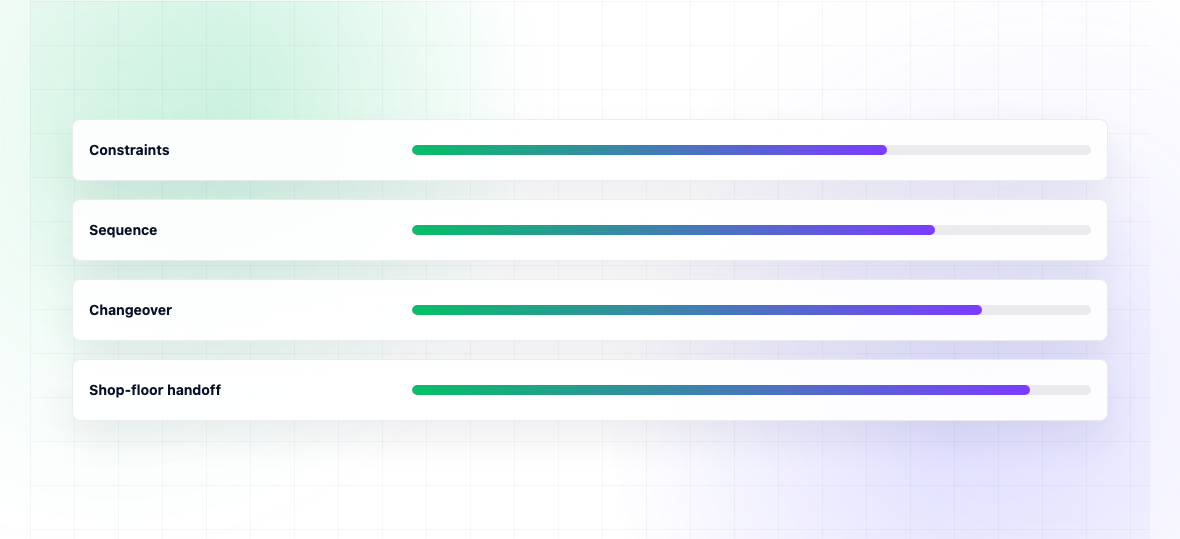
Capacity planning is one of the most commonly spreadsheet-managed planning functions even in operations that have invested in supply planning and scheduling. The reasons: capacity is conceptually simple (compare demand to available hours), the math feels like Excel territory, and many ERPs lack good capacity planning capability. The result is finite spreadsheets that work until they don't — typically failing when product mix shifts, new bottlenecks emerge, or capacity decisions need scenario analysis.
Software-based capacity planning adds value in three ways: rough-cut capacity planning at the supply planning horizon (months ahead), resource-level finite capacity scheduling (weeks ahead), and scenario evaluation for capacity decisions. The platforms below distinguish by which of these they handle well.
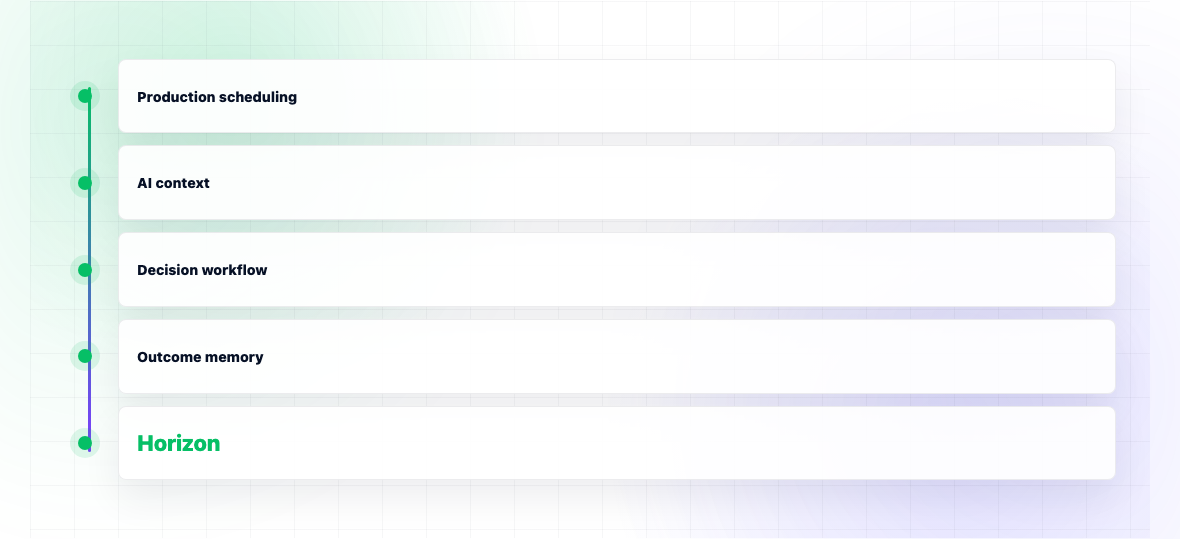
Built for: Mid-to-large discrete manufacturers needing finite capacity scheduling and planning.
Strengths: Mature finite capacity math. Strong reference base in automotive, aerospace, industrial.
Built for: Mid-market discrete manufacturers wanting dedicated APS.
Strengths: Drag-and-drop interface. Strong fit for electronics, automotive component, industrial discrete.
Built for: High-mix discrete operations, particularly automotive component manufacturing.
Strengths: Deep sequencing math. Mature in Japanese-style high-mix manufacturing.
Built for: Process industries — chemicals, pharma, food and beverage.
Strengths: Campaign planning, shared facility capacity planning, changeover sequencing. Named highest in 2026 Gartner Magic Quadrant for Process Industries.
Process and discrete capacity planning within enterprise IBP deployment.
Built for: Mid-market manufacturers $100M-$3B revenue, 1-10 plants, 500-5,000 SKUs.
Strengths: Capacity planning integrated with demand and supply planning — when demand changes, capacity implications update automatically. Multi-objective optimization configurable per customer. Decision execution layer proposes specific capacity actions to planners (add overtime here, reallocate this work, expedite this changeover). Real-time re-planning when conditions change.
Limitations: Not built for semiconductor fab complexity, refinery capacity planning, or aerospace airframe scheduling.
Enterprise concurrent planning includes capacity planning. Best fit for complex multi-region operations.
Mid-market integrated capacity planning with demand and supply.
Cloud-native architecture, configuration-driven deployment, integrated planning.
Low-code optimization platform. Customers model their own capacity constraints rather than configuring within pre-built templates. Strong fit for operations with unusual constraint structures.
APS combined with CMMS and OEE. Live machine availability integrated with capacity planning.
Three factors drive the shortlist. First, manufacturing mode: discrete favors Siemens Opcenter, PlanetTogether, Asprova; process favors OMP, SAP IBP; mixed operations favor integrated platforms (Horizon, Kinaxis). Second, integration scope: tight integration with demand and supply favors integrated platforms; standalone capacity planning works if upstream planning is already mature. Third, horizon: rough-cut capacity planning at the months-to-quarters horizon is different math than finite capacity scheduling at the weeks-to-days horizon — most platforms do both but the depth varies.