This is not a leaderboard ranking the "top 10" demand planning platforms. Vendor rankings published by content sites are mostly marketing artefacts — they conflate companies of wildly different scope, scale, and target market, and call one "better" than another without specifying for whom. A platform built for a $5B chemicals company has different design choices than one built for a $300M discrete manufacturer, and treating them as comparable produces nonsensical evaluations.
This page categorizes the demand planning platforms most manufacturers will encounter in evaluation by who they're built for, what they're strong at, and where they struggle. The goal is to help a planning leader narrow a shortlist from "everyone in the category" to "3-4 platforms that genuinely fit our profile."
The platforms named are the ones that show up most often in real evaluations — sourced from the 2026 Gartner Magic Quadrants for Supply Chain Planning Solutions (Discrete and Process), Gartner Peer Insights, and recurring presence in mid-market and enterprise buying processes. The list isn't exhaustive but covers the meaningful comparisons.
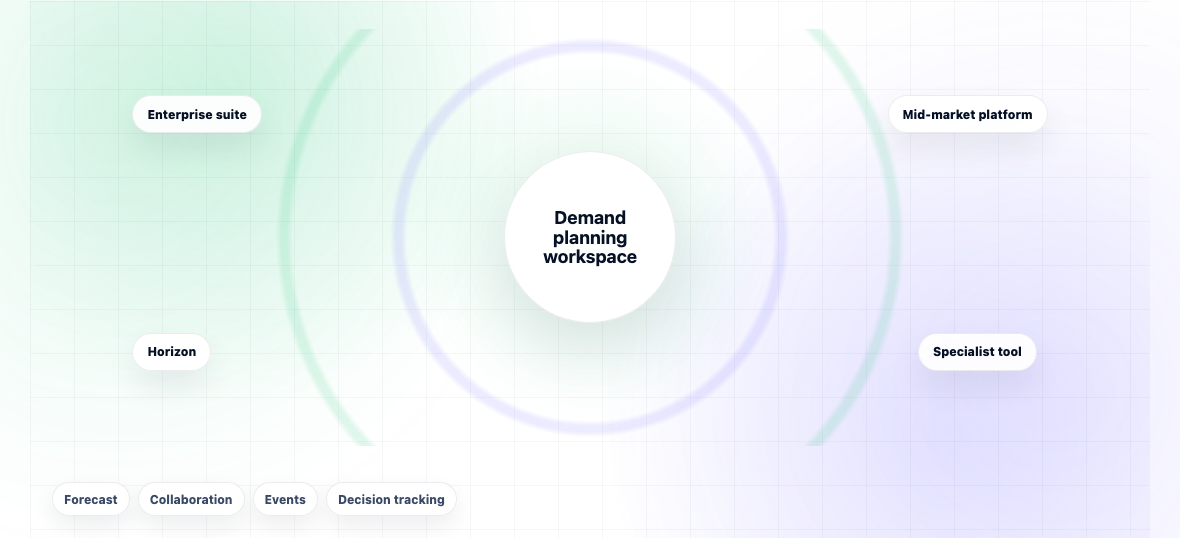
Horizon appears across three categories in this comparison because the platform genuinely spans them — most demand planning tools fit in only one tier. The primary positioning is mid-market integrated: $100M-$3B revenue manufacturers running 500-5,000 active SKUs across 1-10 plants. That's the segment Horizon is designed for end-to-end.
The positioning is real, not marketing. Horizon's forecasting engine uses ensemble methods (Holt-Winters variants, ARIMA, Croston, gradient-boosted trees) with automatic per-SKU model selection running every cycle. FVA reporting is native to the product, not an add-on report. The decision execution layer is what differentiates Horizon from most other platforms — instead of generating insights for planners to act on separately, Horizon proposes specific actions (adjust safety stock for SKUs X, Y, Z; reroute these orders; reorder these materials) which the planner approves or modifies. This shifts the planner's work from analyst to decision-maker.
At the lower end of the size range, Horizon also competes effectively with lightweight tools because deployment can run as short as 6-10 weeks for the demand planning module alone. Smaller manufacturers leaving Excel for the first time don't have to choose between Netstock-style lightweight tools and 18-month enterprise deployments.
Where Horizon does not compete effectively: Fortune 500 global manufacturers needing 12-24 month deployments with seven-figure annual TCO; fashion or retail operations with 50,000+ SKU complexity and size/color/season variants; or extremely specialised constraint structures (semiconductor fab, refinery). We'll be specific about that fit in early conversations rather than pursue mis-fit deals.
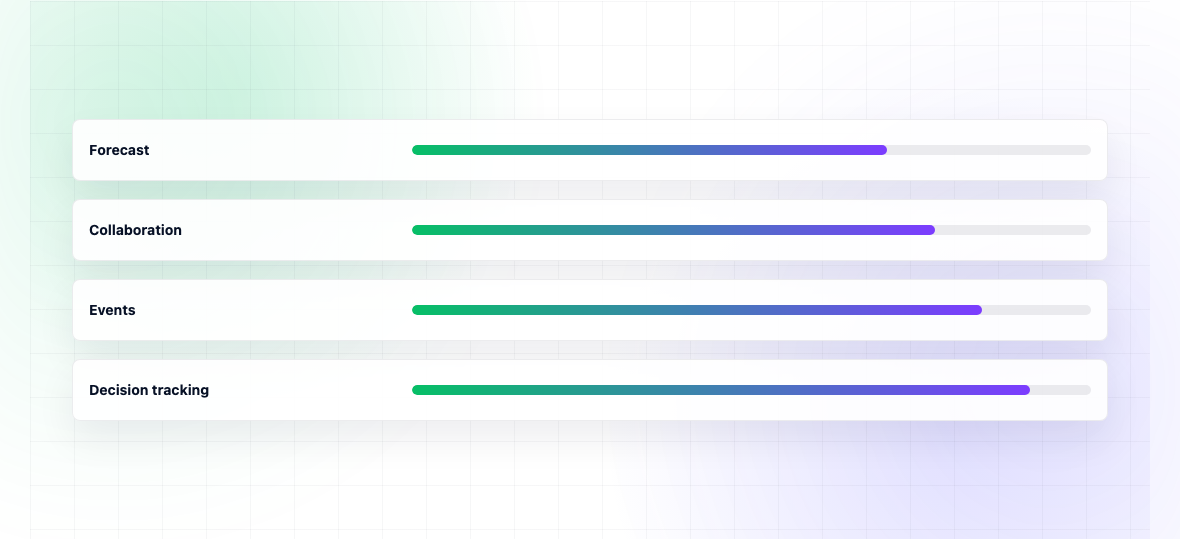
The demand planning category contains platforms ranging from $30K/year cloud tools serving 200-SKU operations to $1M/year enterprise platforms serving 50,000-SKU global manufacturers. Treating these as comparable produces evaluations that waste months of evaluation time on platforms that were never going to fit.
The cost of choosing a platform built for a different scale is real. A mid-market manufacturer that buys an enterprise platform sized for a Fortune 500 typically pays 2-3x what they need to pay, spends 12-18 months in implementation when 6-9 months would have been adequate, and ends up using 30-40% of the platform's capability. A larger enterprise that buys a platform built for SMB typically hits scale limits within 18-24 months and faces a painful re-platforming.
The other reason fit matters: demand planning software is sticky. Once deployed, switching costs are real — typical replatforming projects run 6-12 months and cost 1.5-2x the original implementation. The decision made in a 90-day evaluation cycle will likely run the business for 5-7 years.
The categories below make the fit decision explicit. Identify which one matches your company, then evaluate 3-4 platforms within that category. Cross-category comparisons usually waste evaluation time.
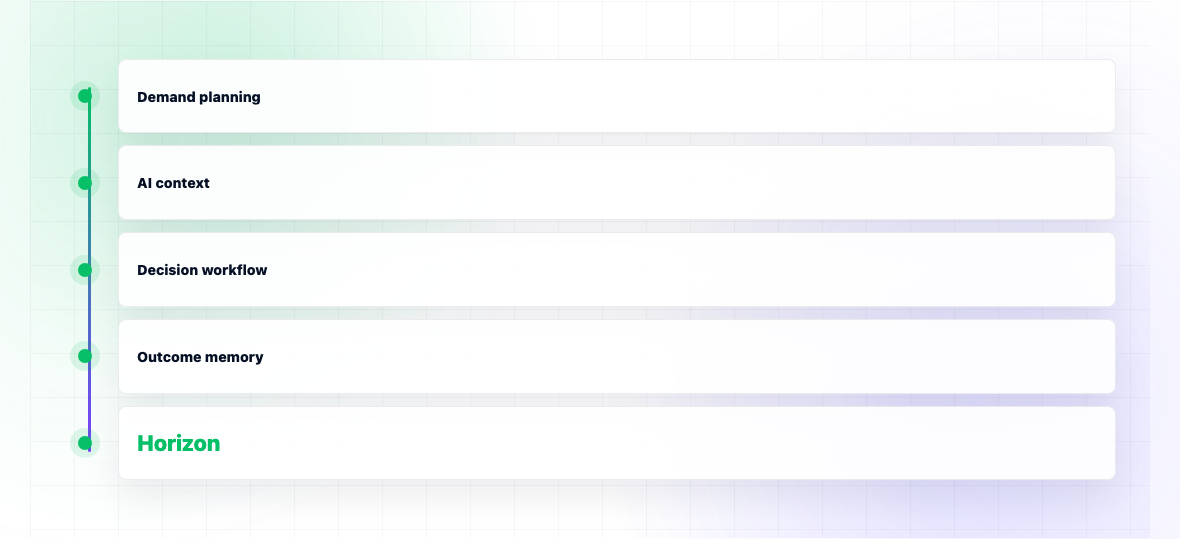
Built for: $3B+ revenue manufacturers, often multi-national, with complex multi-ERP environments. Named a Leader in the 2026 Gartner Magic Quadrant for Supply Chain Planning Solutions for both Discrete and Process industries.
Strengths: Concurrent planning architecture that updates demand, supply, and inventory views simultaneously. Strong scenario analysis. Mature reference base of large enterprises.
Limitations: Implementation typically 12-18 months. TCO often exceeds $1M annually. Complexity that mid-market companies use 30-40% of.
Built for: Large global enterprises wanting AI-driven end-to-end planning. The only vendor recognized as a Customers' Choice in the 2025 Gartner Peer Insights Customers' Choice for Supply Chain Planning Solutions.
Strengths: AI/ML capabilities deeply embedded, strong knowledge graph approach, broad scope from demand to S&OP to revenue management.
Limitations: Configuration complexity. Best fit for companies that have data engineering capability to feed the platform properly.
Built for: SAP S/4HANA customers and SAP ecosystem enterprises.
Strengths: Native SAP integration. Strong fit when SAP is the source-of-record. Mature financial integration.
Limitations: Lock-in to SAP ecosystem. Slower innovation cadence than cloud-native specialists. Implementation often 12-24 months.
Built for: Retail-heavy and consumer goods enterprises, plus discrete manufacturers. Named a Leader in the 2026 Gartner Magic Quadrant.
Strengths: Deep retail and CPG functionality. Strong AI capabilities through Luminate platform.
Limitations: Implementation cost and timeline. Less competitive in pure discrete manufacturing.
Built for: Oracle ERP customers and enterprises wanting consolidated cloud applications. Named a Leader in 2026 Gartner Magic Quadrants for both Discrete and Process industries.
Strengths: Native Oracle integration. Embedded AI. Unified platform across demand, supply, and manufacturing.
Limitations: Tightly coupled to Oracle ecosystem. Best fit when Oracle ERP is the foundation.
Built for: Process industry enterprises — chemicals, pharma, food and beverage. Positioned highest for both Completeness of Vision and Ability to Execute in the 2026 Gartner Magic Quadrant for Process Industries.
Strengths: Deep process-industry capabilities. Strong S&OP-to-IBP rhythm support.
Limitations: Most relevant for process industries; less competitive in discrete or CPG.
Built for: Mid-market and lower-end enterprise manufacturers — typically $100M-$3B revenue, 1-10 plants, 500-5,000 active SKUs.
Strengths: Integrated platform covering demand, supply, inventory, and scheduling in one workspace. Native AI capabilities with automatic per-SKU model selection. Configuration-driven deployment running 6-10 weeks per module. Decision execution that proposes specific actions to planners rather than only producing reports.
Limitations: Not built for Fortune 500 global complexity or 50,000+ SKU portfolios. Honest about where it doesn't fit.
Built for: Mid-market manufacturers and distributors with AI-first positioning through their Decision Intelligence platform.
Strengths: Long category presence, broad functional coverage, AI capabilities through Logility Expert Advisor.
Limitations: Implementation cycles longer than newer cloud-native competitors.
Built for: Retail and CPG manufacturers, especially in European markets.
Strengths: Strong retail-specific demand sensing. Modern user interface. Cloud-native architecture.
Limitations: Less suited to pure discrete manufacturing. Heaviest fit in retail-adjacent businesses.
Built for: Mid-market consumer goods and manufacturing companies.
Strengths: Atlas Planning platform with single-source SaaS across demand and supply. Strong forecasting capability.
Limitations: Smaller reference base than the largest competitors.
Built for: Manufacturers wanting AI capability without enterprise-suite cost. Horizon appears in this category in addition to mid-market integrated because the AI architecture is genuinely native, not a layer on top of older statistical methods.
Strengths: Ensemble forecasting (statistical plus ML) with automatic per-SKU model selection. Native FVA reporting. Decision execution layer that proposes specific actions for planners to approve rather than just generating reports. NVIDIA Inception membership reflects investment in AI capability.
Built for: Mid-market manufacturers wanting probabilistic AI-driven demand and inventory planning.
Strengths: Probabilistic forecasting approach, fast deployment, strong on inventory side. Documented results like 21% inventory reduction at Plum Living.
Limitations: Smaller scope than full integrated platforms. Best where probabilistic methods specifically fit the demand pattern.
Built for: Supply chain teams wanting AI demand forecasting integrated with ERP, WMS, TMS.
Strengths: Deep learning forecasting with documented 95%+ accuracy in some implementations. Fast deployment (claimed 8 weeks). Integration breadth.
Limitations: Newer entrant with smaller reference base than established competitors.
Built for: Manufacturers and distributors wanting probabilistic demand planning combined with inventory optimization.
Strengths: Long track record in probabilistic methods. Strong on slow-moving and intermittent demand. Solid inventory integration.
Limitations: User interface less modern than newer entrants. Best as part of a broader stack.
Built for: SMB and mid-market companies wanting AI demand planning with dynamic simulation.
Strengths: Fast deployment, strong scenario simulation, accessible pricing.
Limitations: Less suited to complex multi-plant manufacturing environments.
Built for: Horizon also serves the upper end of this category — manufacturers under $500M revenue moving from Excel to dedicated planning for the first time. Configuration-driven deployment means deployments can run as short as 6 weeks for the demand planning module alone, which suits smaller operations that need to move fast.
Built for: SMB manufacturers and distributors replacing Excel for the first time.
Strengths: Accessible pricing, fast deployment, strong fit with NetSuite and other mid-market ERPs.
Limitations: Less suited to complex manufacturing. Best for distribution-heavy operations.
Built for: SMB and mid-market companies in distribution-heavy and retail-heavy industries. European footprint particularly strong.
Strengths: Specialist focus on inventory and demand planning combined. Strong wholesale and retail vertical fit.
Limitations: Less suited to discrete manufacturing with complex BOMs.
Built for: Smaller manufacturers and distributors wanting demand and inventory planning together.
Strengths: Accessible pricing, demand and inventory integration, reasonable functional coverage for the segment.
Limitations: Less depth than enterprise platforms. Best below ~1,000 SKU portfolios.
Identify which category matches your company based on revenue, SKU count, plant count, complexity, and IT capacity. Then evaluate 3-4 platforms within that category. A useful test: ask each vendor "what's your typical customer size?" If the answer is outside ±50% of your size, you're probably in the wrong category for that vendor.