If you're researching Blue Yonder versus Kinaxis, you're probably evaluating enterprise supply chain planning platforms. Most three-way comparison content from vendors is self-serving, but there's a genuine case for including ourselves here: a meaningful share of buyers researching Blue Yonder versus Kinaxis are actually mid-market manufacturers ($100M-$2B revenue) considering enterprise platforms because they appeared on analyst recommendations — not because enterprise scale genuinely fits.
For those buyers, Horizon as a mid-market alternative is genuinely useful information. For buyers who are actually enterprise scale ($3B+ revenue, multi-region operations), Blue Yonder and Kinaxis are both better choices than Horizon, and this comparison should help you choose between them based on industry focus and architecture.
The framing throughout: when does Blue Yonder fit, when does Kinaxis fit, and when does neither fit because you're actually mid-market and would be better served elsewhere?
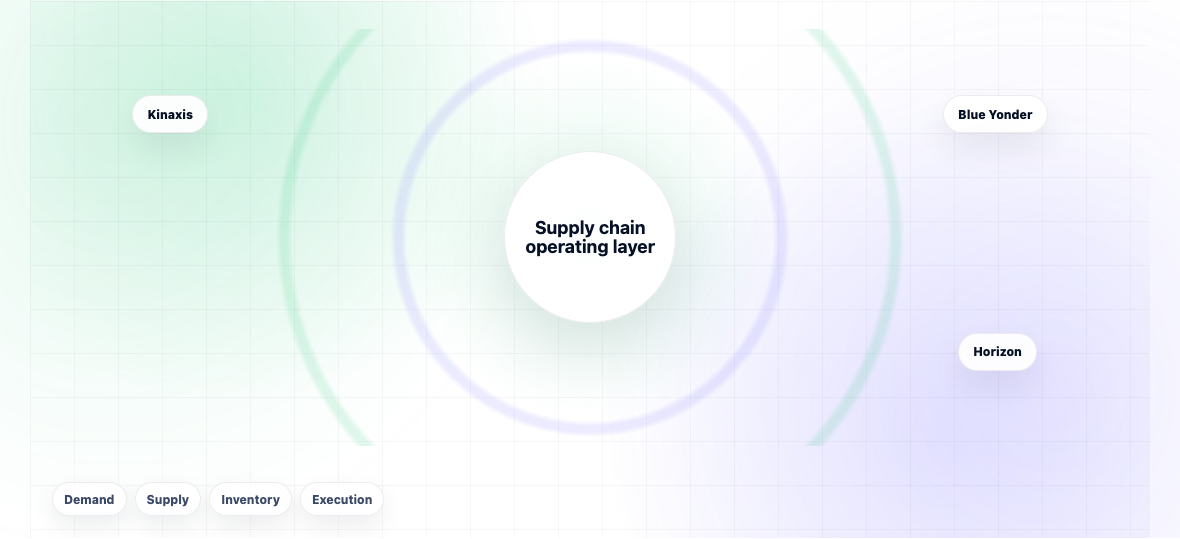
Horizon doesn't compete with Blue Yonder or Kinaxis at enterprise scale. Fortune 500 manufacturers with $3B+ revenue, complex global operations, and enterprise budgets are better served by Blue Yonder (for CPG/retail-heavy) or Kinaxis (for multi-industry multi-region) than by Horizon. We're explicit about this rather than pursuing mis-fit deals.
Where Horizon competes effectively: mid-market manufacturers ($100M-$3B revenue) considering Blue Yonder or Kinaxis because they appeared on analyst shortlists. For these companies, both enterprise platforms typically deliver more capability than mid-market scale can use, at enterprise TCO disproportionate to the scale. Horizon delivers similar functional scope at scale-appropriate cost with faster deployment.
The decision framework we use: $3B+ CPG-heavy with retail channel → Blue Yonder fits, we don't pursue. $3B+ multi-industry multinational → Kinaxis fits, we don't pursue. $100M-$3B mid-market → we'll show why Horizon typically fits better than enterprise platforms at your scale. Companies between these profiles ($2-4B with growing complexity) genuinely could fit either tier — we'll be honest about the trade-offs.
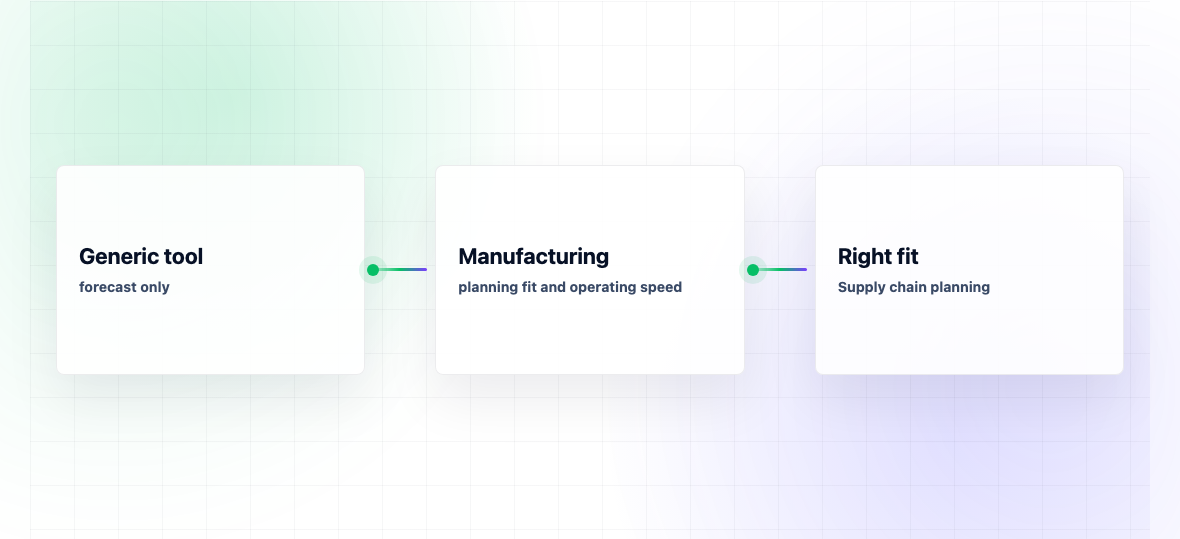
Blue Yonder and Kinaxis are both enterprise SCP leaders but optimize for different buyer profiles. Blue Yonder's strength is CPG and retail-heavy operations with deep trade promotion management, retail point-of-sale integration, and execution platform integration. Kinaxis's strength is multi-region, multi-ERP operations with concurrent planning architecture supporting rapid scenario evaluation across complex global operations.
For CPG and retail enterprises, Blue Yonder typically wins on industry-specific depth. For non-CPG enterprises (automotive, electronics, aerospace, pharma, industrial), Kinaxis typically wins on multi-industry concurrent planning. Buyers who don't recognize this distinction often spend months in evaluation before realizing one platform genuinely fits their context better.
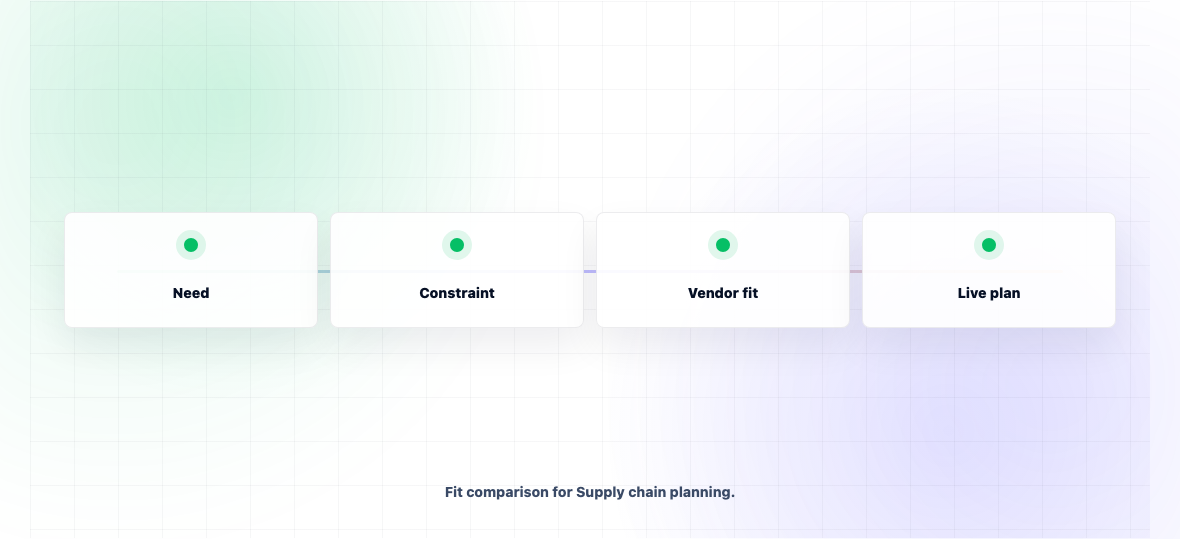
Best fit: $3B+ CPG and retail-heavy manufacturers with significant trade promotion management needs and retail channel exposure. Named Leader in 2026 Gartner Magic Quadrant.
Best fit: $3B+ multinational manufacturers with multi-ERP, multi-region operations across automotive, electronics, aerospace, pharma, and industrial. Concurrent planning architecture delivers most value at global complexity. Named Leader in 2026 Gartner Magic Quadrant for both Discrete and Process industries.
Best fit: mid-market manufacturers $100M-$3B revenue, 1-10 plants, 500-5,000 SKUs. Single platform across demand, supply, inventory, scheduling, IBP. Not built for global multinational complexity or $3B+ enterprise scale.
Deep CPG, packaged food, beverage, retail-heavy operations. Strong execution platform integration with retail point-of-sale data, store-level replenishment, trade promotion management.
Broad multi-industry: automotive, electronics, aerospace, pharma, industrial. Concurrent planning across complex global operations.
Broad mid-market across discrete, process, CPG, industrial, and distribution modes. Industry depth matches mid-market needs rather than enterprise depth.
Luminate platform with retail-grade demand sensing, trade promotion modeling, and execution platform integration. AI capabilities embedded across platform.
Concurrent planning architecture — all planning views (demand, supply, inventory) update together in real time when changes happen. Maestro AI layered on concurrent foundation.
Modern integrated planning sized for mid-market complexity. Ensemble forecasting with automatic per-SKU model selection. Decision execution layer proposes specific actions to planners.
Typical full deployment 12-18 months. Single module deployment 6-9 months.
Typical full deployment 12-18 months. RapidStart accelerators can compress single-area deployment.
6-10 weeks per module. Full integrated platform (demand, supply, inventory, scheduling, IBP) typically live in 6-9 months.
Three-year TCO for mid-market: $2.5-5M. For Fortune 500 enterprises: $5-15M+.
Three-year TCO for mid-market: $2.5-5M. For Fortune 500 enterprises: $4-12M.
Three-year TCO for mid-market: $700K-$1.5M for same functional scope. 50-70% lower than Blue Yonder or Kinaxis at mid-market scale.