The common S&OP failure pattern: organization implements S&OP, runs it diligently for 6-12 months, executive engagement gradually declines, the rhythm becomes presentation-and-update meetings where status gets reported but decisions don't get made. By month 18, S&OP exists organizationally but operational decisions happen outside it.
This guide covers the structural design choices that distinguish S&OP rhythms that drive decisions from rhythms that become status reporting. The differences are knowable and addressable — most failures are design problems, not execution problems.
Horizon supports decision-driving S&OP through: integrated demand, supply, inventory, and financial reconciliation in one platform (single source of truth for executive review), scenario planning capability with consistent base assumptions across scenarios, decision execution layer tracking decisions through to operational implementation, role-specific views supporting different participants in the S&OP rhythm, audit trail on decisions and overlays supporting governance discipline.
The honest qualifier: platforms support effective S&OP/IBP but don't deliver it. The organizational work — executive engagement design, governance structure, decision discipline, sustained commitment — is the real source of effectiveness. Companies expecting platform investment to fix S&OP without addressing organizational dimensions are typically disappointed. Horizon makes the organizational work easier, not unnecessary.
S&OP that drives decisions delivers value. S&OP that becomes status reporting consumes time without delivering value. The difference compounds: decision-driving rhythms get more executive engagement, which makes decisions stick, which builds organizational confidence in the process, which sustains executive engagement. Status-reporting rhythms lose engagement, decisions get made outside the process, the rhythm becomes performative.
For mid-market companies ($100M-$3B revenue), effective S&OP/IBP typically delivers measurable benefit: 15-25% reduction in expediting cost, 10-15% improvement in service level consistency, 5-10% reduction in inventory volatility, faster response to market changes. Ineffective S&OP delivers some marginal benefit but consumes substantial time relative to value.
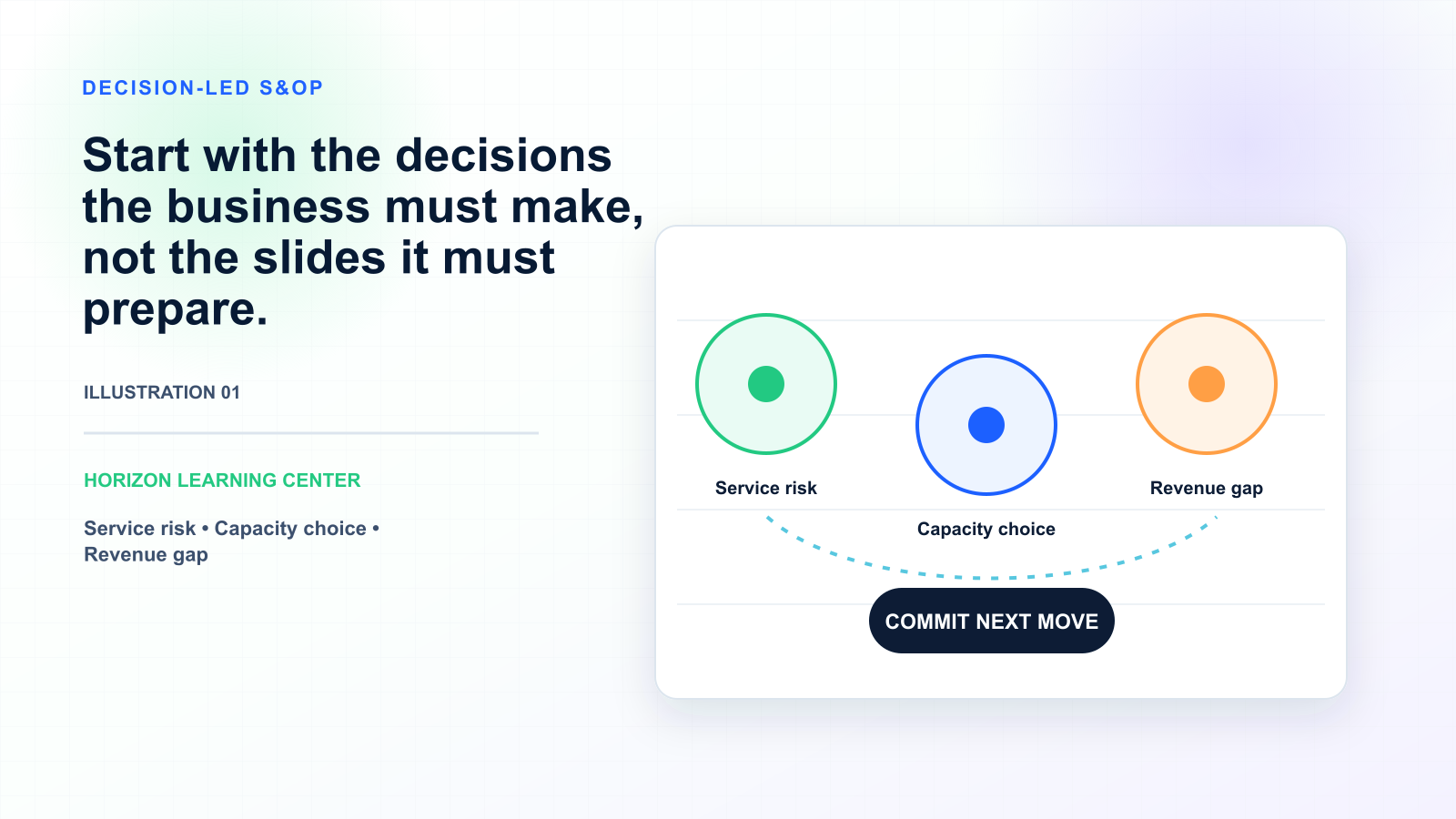
The first design question: what decisions is this S&OP rhythm responsible for? Different rhythms make sense for different decisions. Common decision categories: demand-supply balancing decisions (where capacity allocates to demand, what gets prioritized when capacity is constrained), inventory positioning decisions (how much to build for which periods and locations), capital and capacity decisions (whether to add capacity, when, where), customer commitment decisions (which customer commitments to make, on what terms), exception handling decisions (how to respond to specific disruptions, opportunities, or risks).
S&OP rhythms that don't clearly define what decisions they make tend to become information-sharing meetings rather than decision-making rhythms.
Executive engagement requires financial framing. Pure operational metrics (units, capacity utilization, fill rate, days of supply) increasingly fail to maintain executive attention because executives operate in financial language. The fix: translate operational metrics to financial impact in the S&OP rhythm. Volume forecasts × margin = revenue impact. Inventory levels × carrying cost rate = carrying cost impact. Service level variance × estimated lost sale value = revenue at risk.
This translation isn't dumbing down for executives — it's meeting them in their decision language. Executives make resource allocation decisions in financial terms; S&OP that doesn't speak that language doesn't drive resource decisions.
Single-point forecasts insufficient for executive decision-making. Mature S&OP runs scenarios: base case (most likely outcome), upside case (favorable conditions), downside case (adverse conditions), specific stress tests (loss of major customer, supplier disruption, demand surge). Each scenario shows operational implications and financial impact. Executive decisions get made with awareness of range and probability rather than false precision.
Scenario planning capability exists natively in modern platforms. Excel-based scenario planning is possible but typically struggles with consistency across scenarios as base assumptions update.
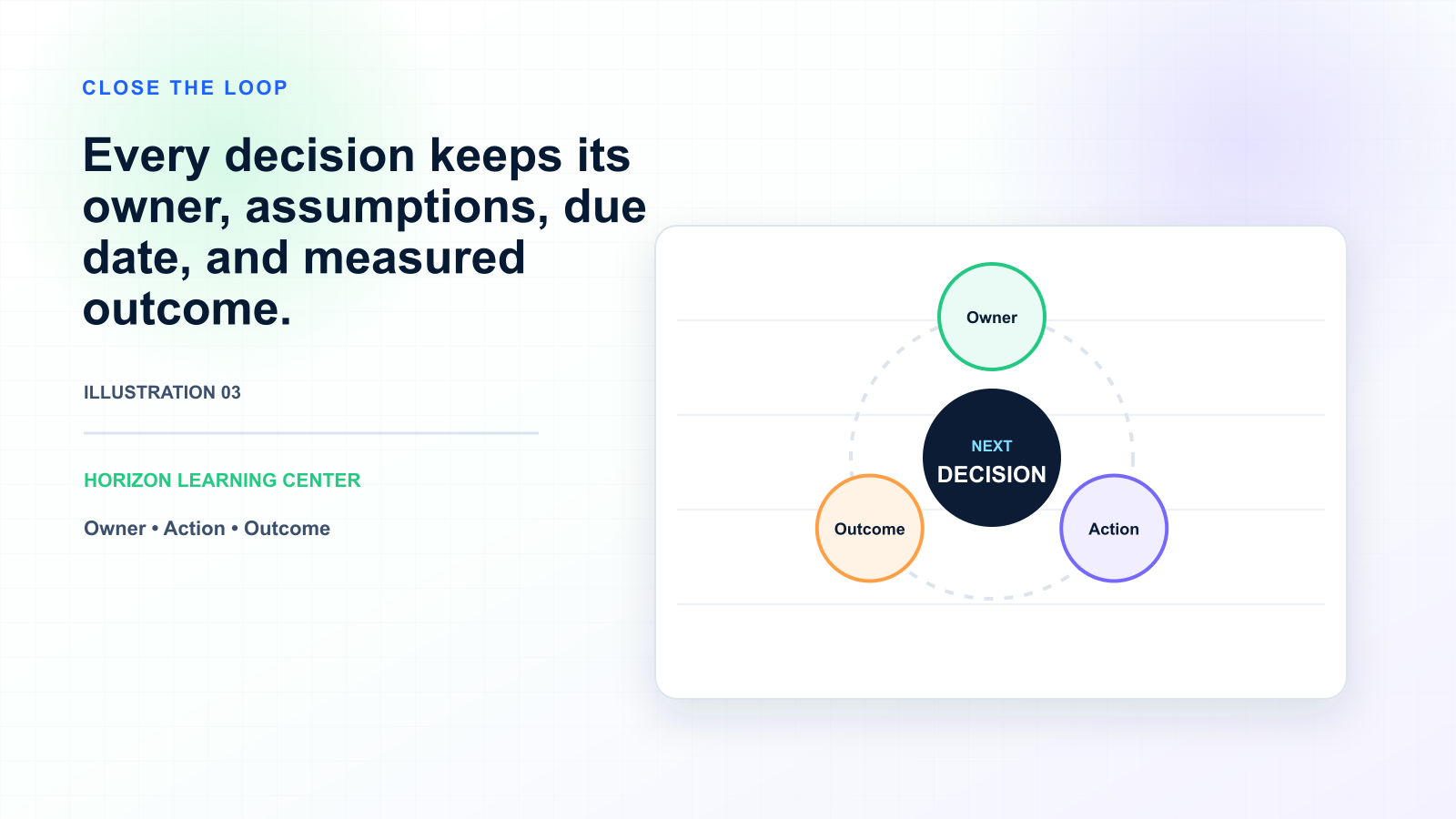
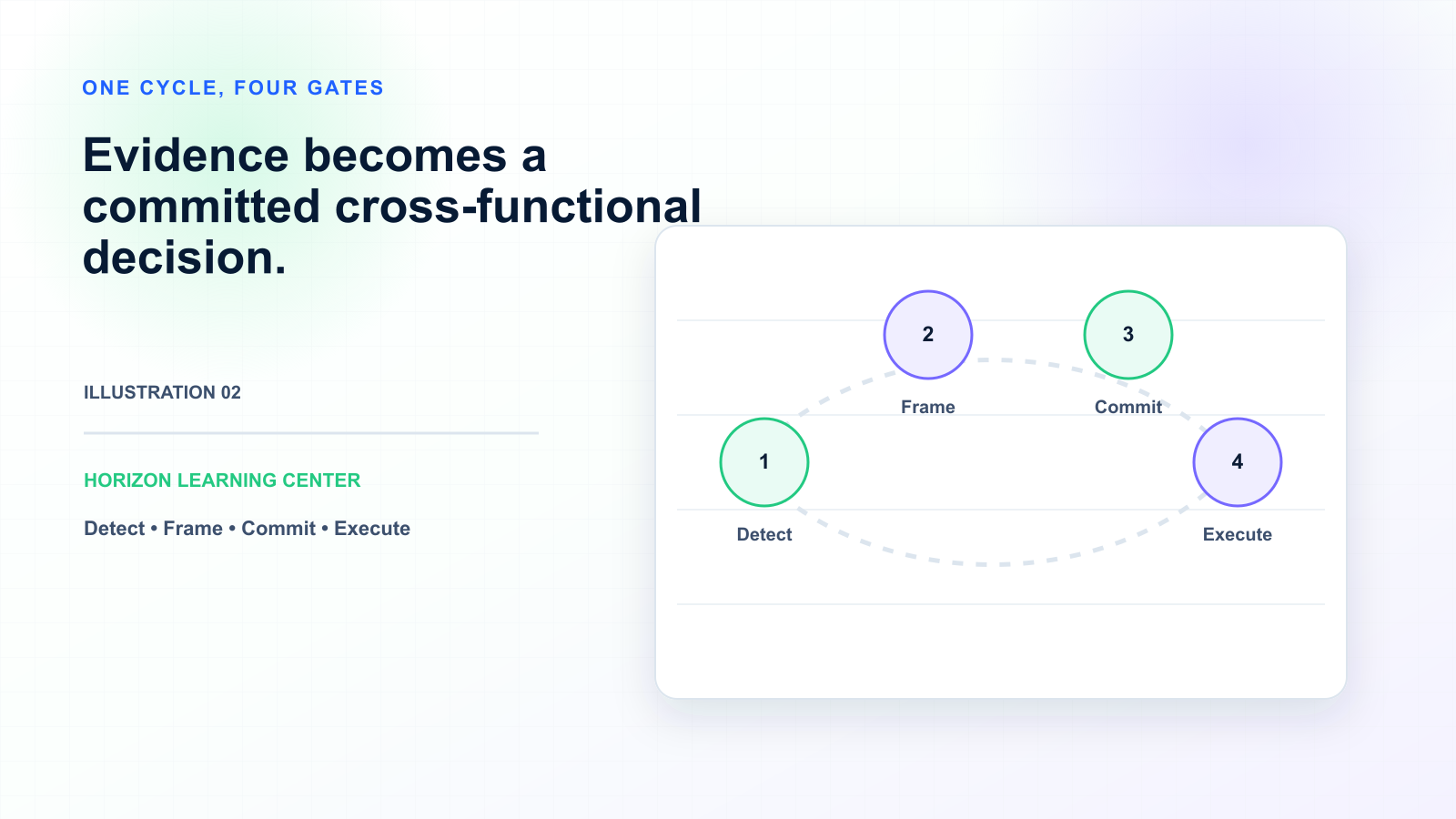
Traditional S&OP produces decisions in meetings that operational teams implement separately. Effective S&OP/IBP builds decision execution into the rhythm: decisions identified explicitly, owners assigned, deadlines set, tracking established. The next meeting reviews progress on previous decisions, not just new analysis.
This shift requires platform support — decisions and their tracking need to live somewhere persistent rather than getting buried in meeting minutes. Modern platforms increasingly include decision execution layers; traditional platforms produce reports but don't track decisions through to completion.
S&OP that drives decisions has clear governance: who chairs the rhythm (typically COO or equivalent for supply-chain-led, CFO for finance-led), who attends (representatives with decision authority for their function, not delegates), what decisions are made at each level (operational at planning, tactical at S&OP, strategic at IBP), how decisions get escalated when consensus can't be reached. Without clear governance, S&OP becomes the meeting where decisions get delayed rather than made.
Monthly remains the right governance rhythm for most strategic operational decisions. Supplement with: weekly cross-functional reviews for high-volatility periods, daily executive briefings during disruptions, exception-triggered reviews for specific events. The mistake to avoid: trying to reproduce monthly meeting format weekly — executive attention won't sustain. Faster cycles should be shorter, more focused, more decision-oriented.
Warning signs that S&OP is becoming status reporting: meeting attendance declining or shifting to delegates, the same decisions appearing in multiple consecutive meetings without resolution, operational decisions getting made outside the rhythm, executive engagement requiring CEO reminder, presentation polish increasing while substance decreases, action items from previous meetings unresolved month after month. When these signs appear, the rhythm needs redesign — not just better execution of current design.
S&OP effectiveness requires sustained leadership commitment. Companies that implement S&OP successfully treat it as multi-year organizational capability development, not as software deployment. Leadership turnover, executive priority shifts, and operational pressure all erode S&OP discipline over time. Sustainable S&OP needs: executive sponsorship that survives leadership changes, succession planning for key S&OP roles, embedded process discipline that doesn't depend on any individual, periodic redesign to address changing operational needs.