Most "state of the industry" reports are vendor marketing dressed as research. This isn't that. The goal is to give an honest read on where supply chain planning is in 2026 — what's genuinely changed since 2024, what hasn't despite the hype, and what the next 12-18 months realistically look like for buyers evaluating platforms or extending existing ones.
The picture is more nuanced than the AI-everywhere narrative suggests. Real progress has happened on specific capabilities. Other areas haven't moved much. And the mid-market versus enterprise gap is widening in interesting ways — not closing the way some analysts predicted in 2023.
Horizon is mid-market-focused (manufacturers $100M-$3B revenue, 1-10 plants, 500-5,000 SKUs) and is one of the platforms participating in the decision execution shift mentioned above. The platform's design center matches the mid-market patterns described — ensemble forecasting with automatic per-SKU model selection, configuration-driven deployment, decision execution layer proposing specific actions.
Where Horizon fits in 2026: mid-market manufacturers evaluating integrated SCP with modern architecture and faster deployment than enterprise platforms. Where Horizon doesn't fit: $3B+ enterprises (need enterprise platforms), pure distribution (often need distribution specialists), finance-led organizations (need Anaplan or finance-led platforms), or operations with very unusual constraints (low-code platforms like More Optimal often fit better).
Companies making SCP platform decisions in 2026 are committing to 5-10 year operational consequences. Decisions made on outdated market understanding (which is most decisions) result in misaligned platform investments. The patterns we describe below are based on customer conversations, deployment outcomes, and vendor capability development through 2025 and into 2026 — not analyst projections about what should be happening.
The single most important takeaway: AI capability is real but more selective than vendor positioning suggests. The platforms genuinely delivering AI-driven value have specific characteristics. The platforms positioning AI without that foundation deliver less than they promise. Buyers who can distinguish between these patterns make better decisions.
The 2023-2024 period produced significant AI capability development across SCP vendors. By 2026, real differentiation has emerged. The platforms with architectural AI foundations (knowledge graph in o9, ensemble methods with automatic per-SKU model selection in modern platforms, demand sensing with deep learning models) deliver measurable forecast accuracy improvements over traditional statistical methods. The improvement isn't uniform — typically 2-5 percentage points of MAPE improvement for portfolios with sufficient data, larger gains for specific patterns (promotional uplift, new product introduction, demand sensing on short-cycle products).
The platforms positioning AI as marketing layered on traditional architecture deliver smaller, less consistent gains. Buyers can identify these patterns by asking specific questions in evaluations: what specific AI models are running, what training data they require, what accuracy improvements are typical and over what baselines. Vague answers signal marketing-led AI; specific answers signal genuine capability.
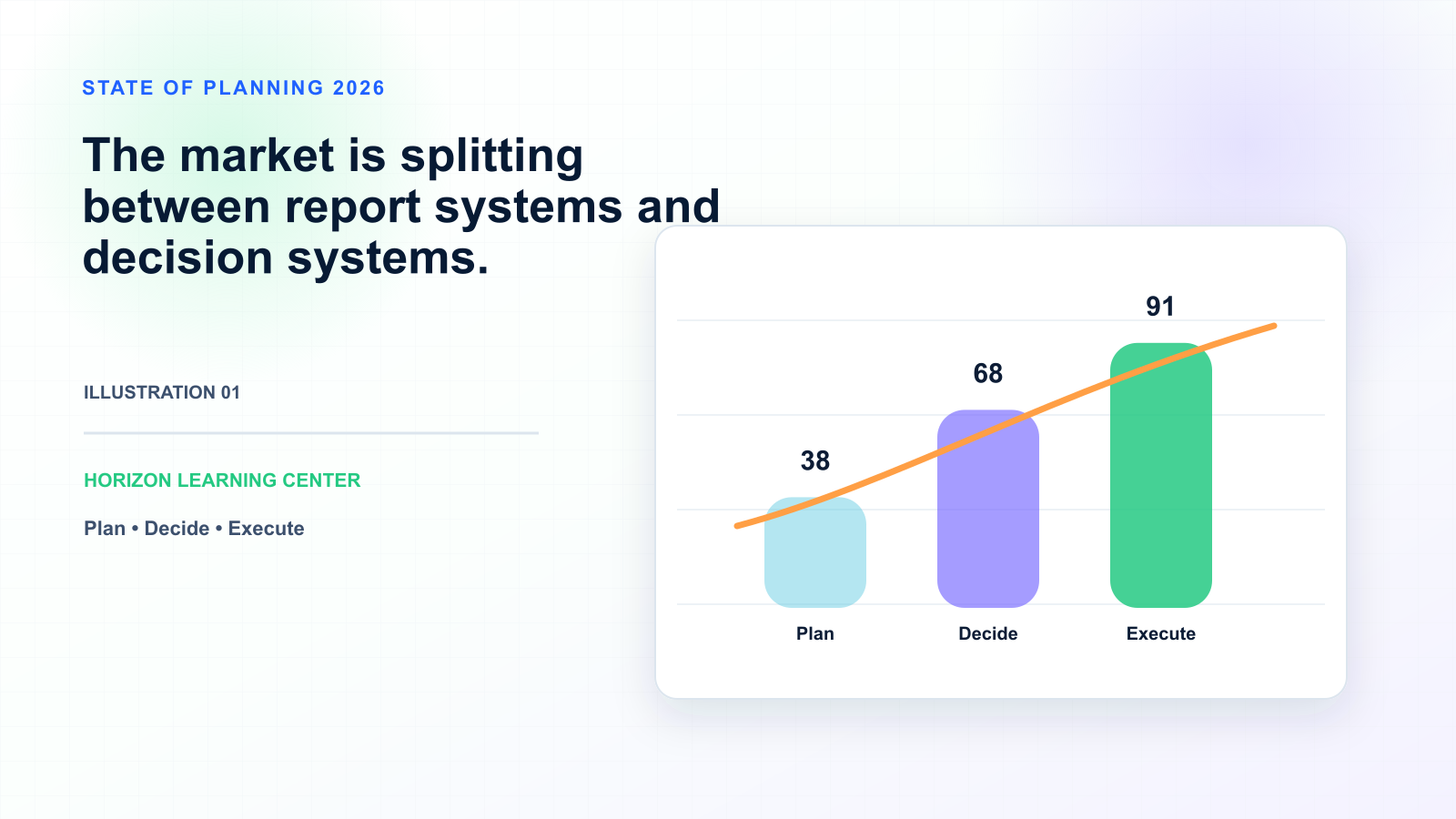
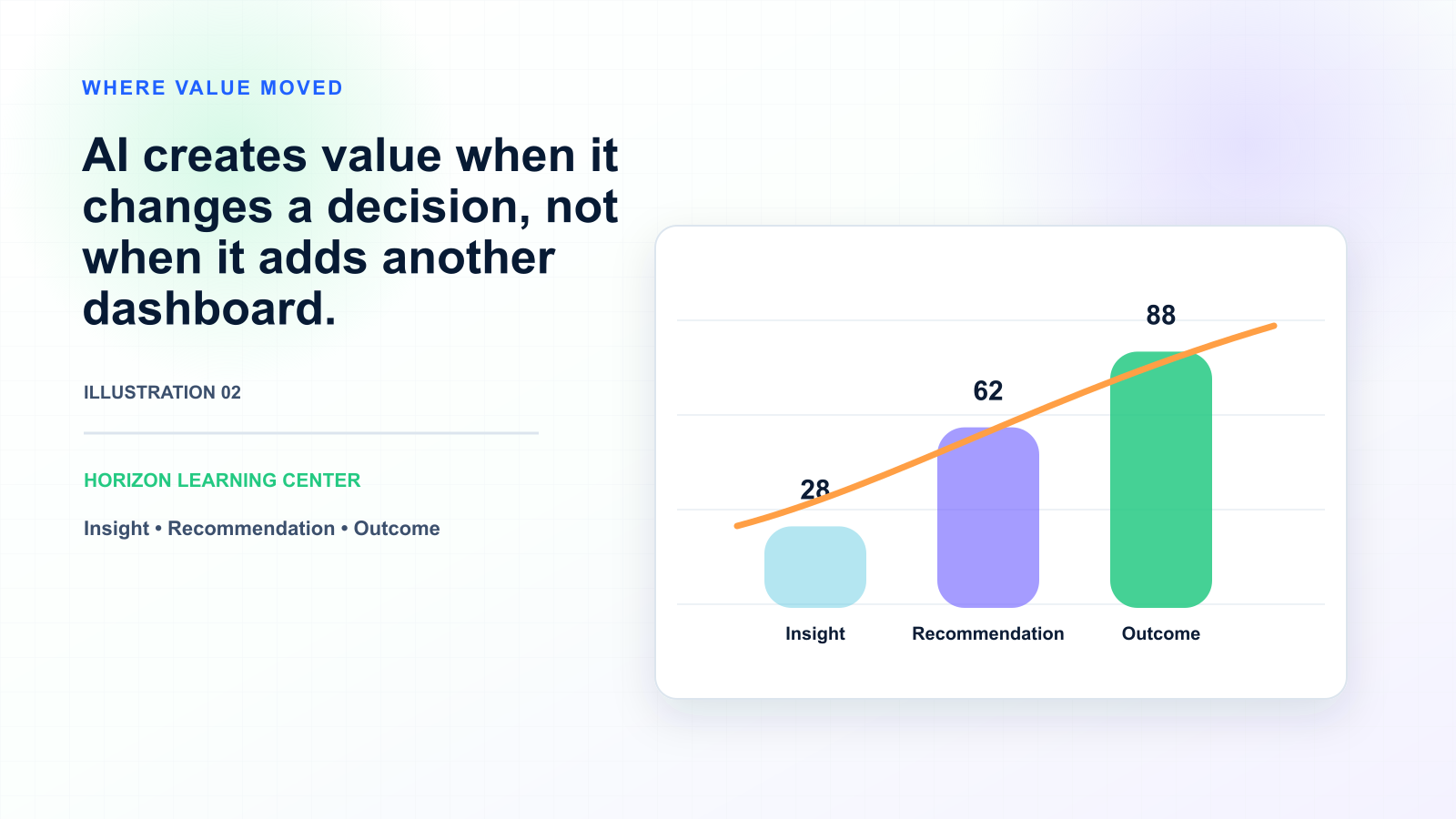
2024 SCP platforms produced reports, dashboards, and analytical views. 2026 SCP platforms increasingly propose specific operational actions — expedite this PO, reallocate this capacity, adjust this forecast, communicate this change to this supplier. The shift matters operationally: planning teams without analyst depth (typical of mid-market) get more value from action proposals than from analytical output requiring interpretation.
The decision execution shift is most visible in modern mid-market platforms (Horizon, Flowlity) and select enterprise platforms (Kinaxis with Maestro AI, o9 with knowledge graph reasoning). Legacy platforms updated their interfaces but haven't restructured their output around action proposals.
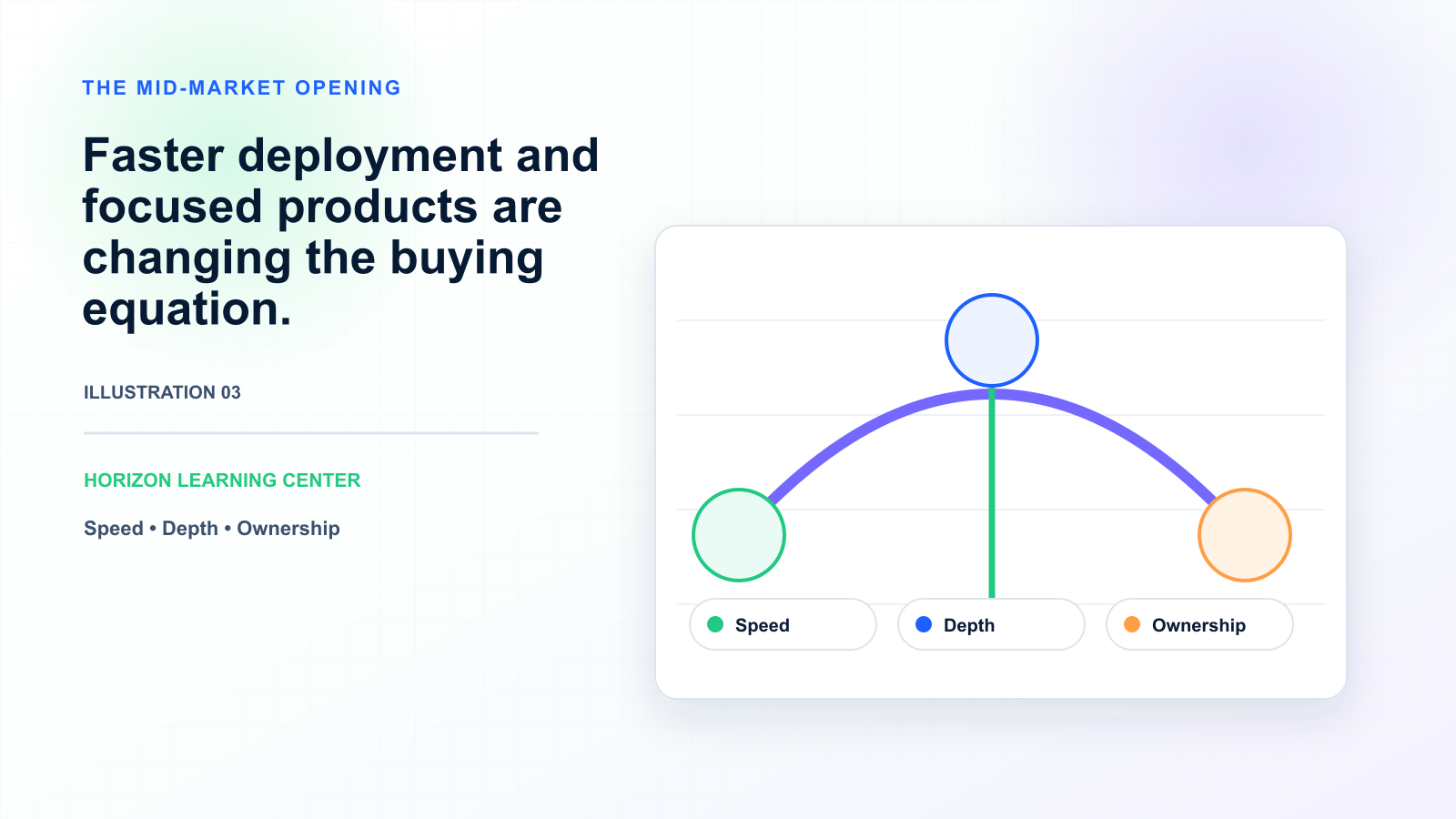
2023 analyst projections predicted convergence — mid-market platforms gaining enterprise capability, enterprise platforms becoming mid-market accessible. The reality through 2025-2026 has been divergence. Enterprise platforms (SAP IBP, Kinaxis, o9, Blue Yonder, OMP) have invested in capabilities that require enterprise-scale data, integration, and operational complexity to extract value (knowledge graph reasoning, concurrent multi-region planning, deep execution platform integration). Mid-market platforms (Horizon, Logility, RELEX) have invested in capabilities that deliver value at mid-market scale (faster deployment, decision execution, configuration-driven flexibility).
The implication: the wrong-tier platform decision is more costly in 2026 than it was in 2023. Mid-market companies buying enterprise platforms are more disconnected from the platform's design center. Enterprise companies buying mid-market platforms are more clearly under-served. The "borderline" zone where either tier works is narrower than it used to be.
SAP APO mainstream maintenance ended in 2027 timeline became operationally real through 2025-2026. Migration evaluations are active across thousands of APO customer organizations. The destination patterns: SAP IBP remains the default for SAP-centric enterprises, but mid-market APO customers are increasingly evaluating alternatives. This pattern will continue through 2027-2028 as extended maintenance windows close.
The line between S&OP and IBP continued blurring. The trend: traditional supply-chain-led S&OP rhythms increasingly incorporate financial reconciliation, scenario planning, and cross-functional governance characteristic of IBP. Organizations that resisted this shift in 2023-2024 increasingly accepted it in 2025-2026 as executive engagement required financial framing. Pure S&OP without IBP elements is becoming rare among $500M+ organizations.
Forecast accuracy improved but not dramatically across the industry. Despite AI capability gains, average industry forecast accuracy moved only 1-3 percentage points overall — most improvement concentrated in companies with strong data foundations and analytical capability. Companies expecting AI to fix forecast accuracy without addressing data quality were disappointed.
Implementation timelines didn't compress significantly. Enterprise platforms still typically deploy in 12-24 months; mid-market platforms typically 6-12 months. Vendor positioning around "rapid deployment" rarely delivered the dramatic compression suggested in marketing. The configuration-driven approach (Horizon, modern mid-market platforms) did deliver genuinely faster module-level deployment (6-10 weeks) but full integrated platform deployment still requires multiple modules and organizational adaptation.
Three trends to watch. First, decision execution depth across more platforms — what started in modern mid-market platforms is expanding to enterprise platforms. Second, more honest vendor positioning as buyers got better at distinguishing AI marketing from AI capability. Third, mid-market segment growth as more enterprise-leaning mid-market companies realize over-buying enterprise platforms and right-size to mid-market alternatives.