Demand sensing is a short-horizon forecasting technique that uses near-real-time signals point-of-sale data, channel inventory levels, weather, web traffic, social signals to refine the demand forecast over a 1-4 week window. It complements rather than replaces traditional medium-term forecasting, which operates on a monthly cycle.
The term gets used loosely. Vendors sometimes apply it to any short-term forecast adjustment. The technically correct definition is narrower: demand sensing models specifically use leading indicators that traditional statistical methods don't consume, and they refresh on a sub-weekly cadence so the operational supply chain can react before the medium-term forecast cycle would.
This page covers what demand sensing actually does, where it adds value (and where it doesn't), and what the implementation realistically requires.
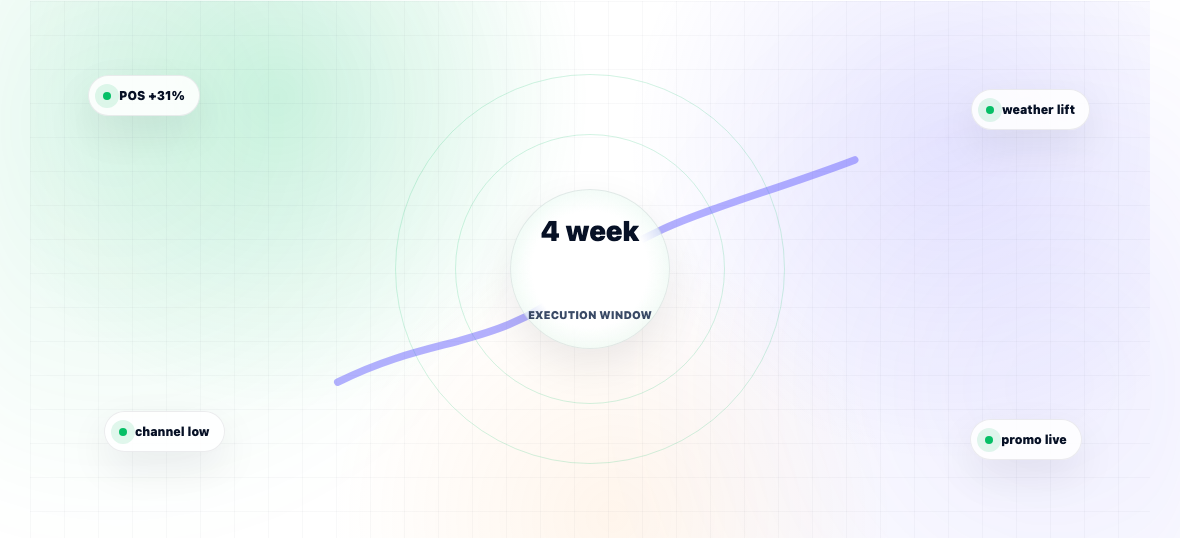
Horizon supports demand sensing as a configurable short-horizon layer on top of the medium-term forecast. The medium-term forecast (monthly, 12-24 months) is generated as usual. The demand sensing layer refreshes daily or weekly, consuming POS, channel inventory, and other configured signals, and produces refined forecasts for the next 1-4 weeks. The two layers coexist the medium-term anchor isn't disturbed by short-term noise.
The refined short-horizon forecast feeds the inventory and production scheduling modules, so deployment and short-term scheduling decisions reflect the latest signal. The governance what demand sensing can adjust, what it can't is explicit in the configuration rather than implicit in the model.
The honest qualifier: Horizon's demand sensing implementation depends on the customer having usable POS or channel inventory data. For B2B manufacturers without channel visibility, the demand sensing layer adds limited value we'll tell you that in the first call rather than after a failed pilot.
Traditional demand planning runs on a monthly cycle. Sales last month feed into the model this month, which produces a forecast covering the next 12-24 months. This works well for medium-term capacity, inventory, and financial planning. It works poorly for short-term execution the next 1-4 weeks because by the time monthly planning sees a demand shift, the supply chain has already missed the window to respond.
A practical example. A consumer goods manufacturer sees POS data three days after sales happen. Their monthly forecast cycle aggregates last month's sales and produces a refreshed plan mid-month. If a SKU starts selling 30% above forecast in week 1, the manufacturer won't refresh the production schedule until week 3 or 4 of the following month meaning roughly 6 weeks pass between the demand signal and the supply response. Stockouts during those 6 weeks are nearly guaranteed.
Demand sensing closes this gap. By consuming POS, channel inventory, and other near-real-time signals on a daily or weekly basis, it produces a refined short-horizon forecast that the operational supply chain can act on. The medium-term forecast doesn't change; the short-term execution gets sharper.
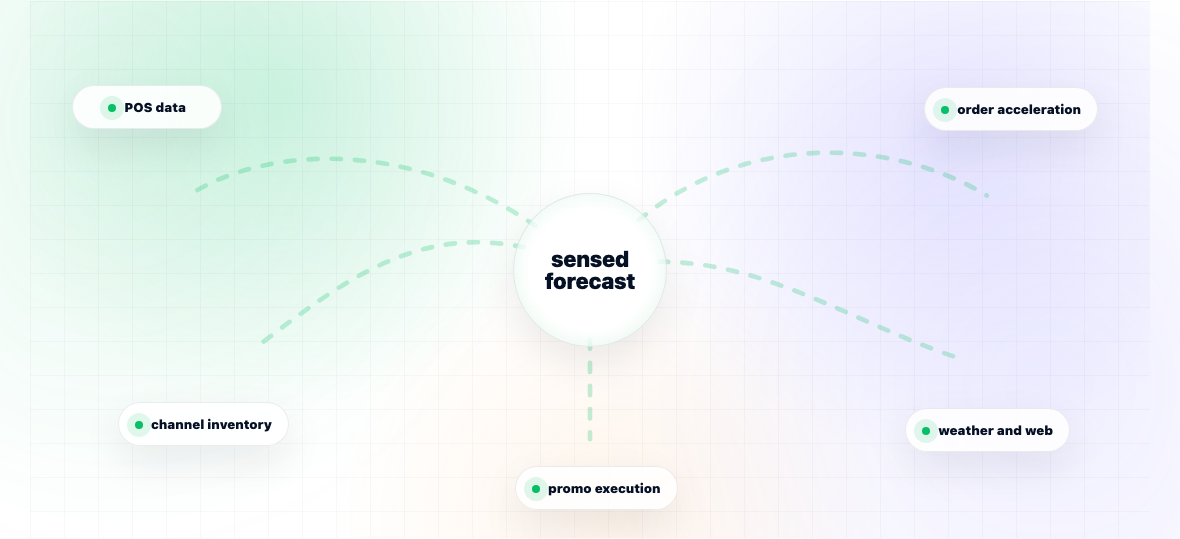
Different demand sensing implementations use different signals depending on industry and channel structure:
Demand sensing typically uses a hybrid model: take the medium-term statistical forecast as a baseline, then layer on a short-horizon adjustment based on real-time signals. The adjustment model is usually ML (gradient-boosted trees or neural nets) trained on the relationship between leading indicators and short-term demand shifts.
Importantly, the medium-term forecast remains the anchor. Demand sensing adjusts the next 1-4 weeks; it doesn't change the next 12 months. This separation matters because the noise in short-term signals would destabilise medium-term planning if it leaked through.
Demand sensing only adds value if the refreshed forecast actually drives action faster than the monthly cycle would. This typically means daily or twice-weekly refresh, with the refreshed forecast feeding into:
If the operational supply chain can't act on a weekly refresh, demand sensing produces interesting reports without any operational benefit.
Demand sensing is most valuable in three contexts:
Three contexts where it's typically not worth the investment:
That's exactly how Horizon separates the two: the medium-term forecast stays untouched while a daily-refreshing sensing layer on the demand planning side handles just the next 1-4 weeks, though it only adds value if the customer actually has usable POS or channel data to feed it.