Distribution planning software decides how to move product through the distribution network from plants to central DCs, from central DCs to regional DCs, from regional DCs to customers. It optimizes against freight cost, lead time, service level targets, and capacity constraints across the network. The output is the deployment plan: which inventory moves from where to where, when, in what quantities.
The category overlaps with adjacent functions but has its own focus. Inventory optimization sets how much to hold at each location; replenishment planning decides when to reorder; distribution planning handles the physical flows that connect everything. In simple networks, these can be handled as one function. In complex multi-tier distribution networks, distribution planning becomes a distinct discipline.
This page covers what distribution planning software does, how it integrates with adjacent planning functions, and when it's most valuable.
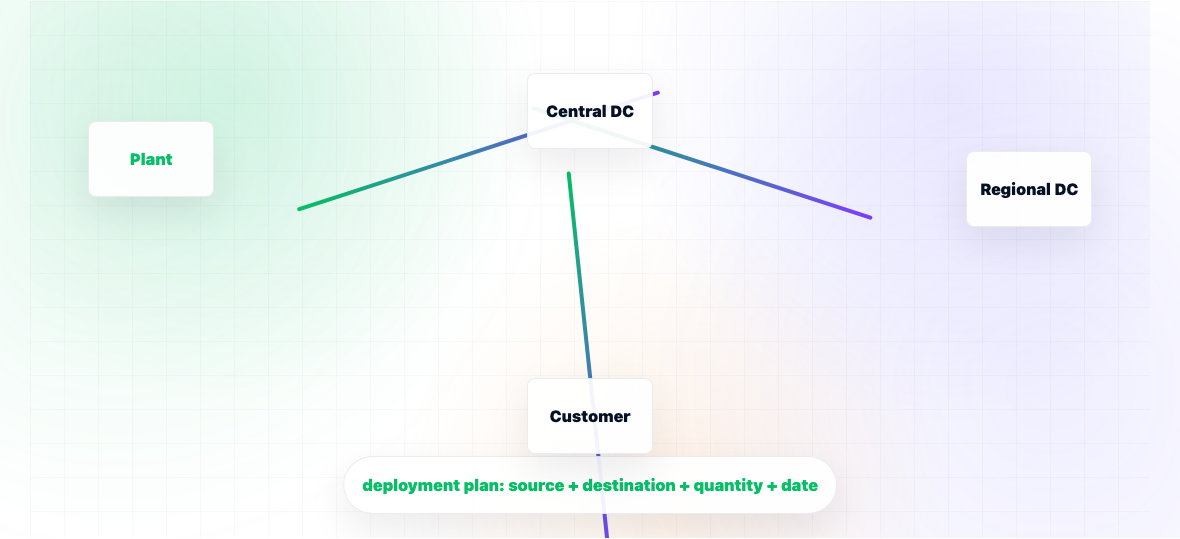
Horizon's distribution planning module handles network flow optimization, sourcing decisions, deployment planning, and transportation mode selection. The optimization engine uses mixed-integer programming for tractable problems and metaheuristics for very large networks. Multi-tier networks are supported natively plant to central DC to regional DC to customer location, with optimization across all tiers simultaneously.
Integration with adjacent modules is direct. The demand forecast from demand planning feeds regional demand. Inventory targets from optimization define position requirements. Production plan from supply planning provides supply availability. The distribution plan flows to execution as deployment orders, transfer orders, and replenishment recommendations.
For network design analysis evaluating new DCs, closing existing ones, or restructuring flows scenario analysis runs interactively. Compare alternative network configurations on freight cost, inventory cost, service level, and total network cost. Decisions can be approved within the platform and tracked over time.
The transportation layer integrates with major TMS systems for execution. Distribution planning produces strategic and tactical flow decisions; TMS handles the operational load building and carrier selection.
The honest scope: Horizon's distribution planning is built for manufacturers and distributors with multi-tier networks of moderate complexity typically 2-10 plants, 3-30 DCs, multiple regions. Very large retail networks (1,000+ stores) often need specialized retail distribution tools. We'll be explicit about that fit in early conversations.
For simple distribution networks one plant, one DC, customer delivery distribution planning is implicit in the broader supply plan. Inventory moves directly from plant to DC to customer. There's no real choice to optimize.
At scale, the situation changes. A manufacturer with multiple plants, central DCs, regional DCs, and customer locations faces real distribution decisions: which plant supplies which DC? Should the regional DC pull from the central DC or directly from a plant? When demand emerges in Region X, do we ship from the closest DC (faster) or the DC with most inventory (lower stockout risk elsewhere)? When freight costs spike, can we consolidate shipments differently?
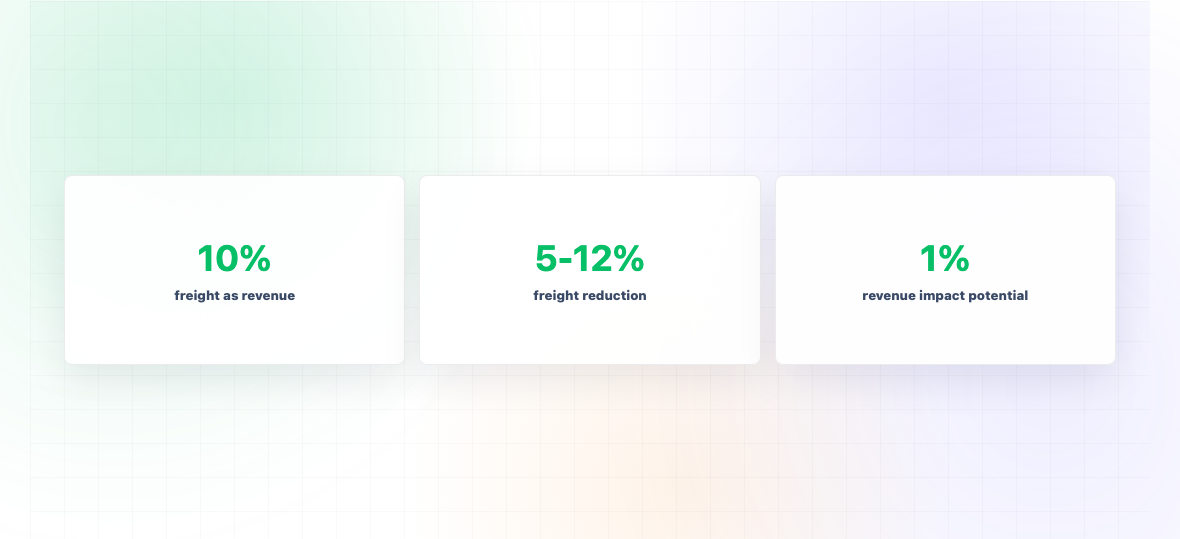
These decisions, made well, affect freight cost (often 5-15% of revenue), customer service (lead time from DC to customer), and working capital (how much inventory needs to sit at each level). Made badly, they produce high freight costs, inconsistent service, and inventory imbalances across the network.
The reason distribution planning becomes a distinct software function at scale is that the decisions are too complex for manual or rule-based methods. With 5 plants × 10 DCs × 50 regions × 1,000 SKUs, the combinatorial complexity exceeds what spreadsheets or ERP-based logic can handle. Dedicated optimization is required to find the cost-effective flow patterns.
Given the production plan, demand by region, available transportation modes, and inventory at each network node, determine the optimal flow pattern which source supplies which destination, by which transportation mode, in what quantities. The optimization minimizes total network cost (freight + holding + handling) subject to service level constraints.
For each demand point, which network source (plant, central DC, regional DC) should supply it? Sourcing decisions consider cost, lead time, available inventory, capacity constraints, and strategic allocation rules. Multi-sourcing rules (when to use primary vs secondary source) handle the operational dynamics.
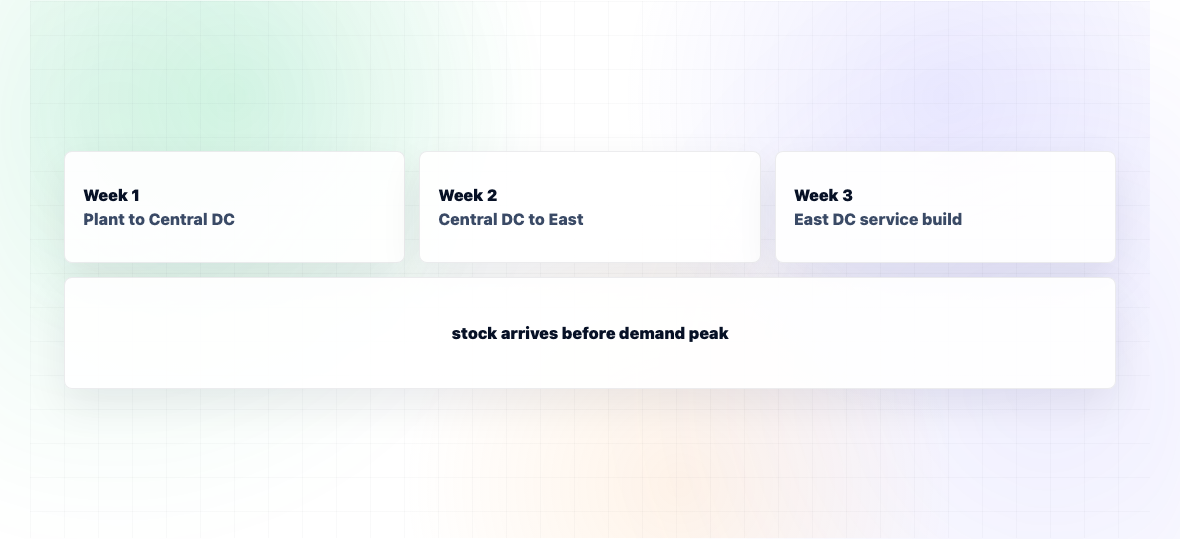
How should inventory be positioned across the network ahead of expected demand? Deployment planning considers demand forecast, current inventory, lead times between nodes, and transportation cost. The output is a deployment schedule when to move inventory between locations to position it for upcoming demand.
For each shipment, which transportation mode is optimal? Truck vs rail vs ocean vs air, full truckload vs less-than-truckload, dedicated vs shared. The decision considers transit time, cost, reliability, and the service requirements at the destination.
Transportation has capacity constraints: truck availability, freight slot bookings, port capacity, 3PL capacity. Distribution planning respects these as constraints, producing plans that are executable rather than optimal-but-infeasible.
Distribution costs vary with freight rates, fuel prices, network changes. Distribution planning supports scenario analysis: what happens if we add a DC in Region X? If we close DC Y? If freight rates rise 15%? The analysis informs strategic network decisions.
Demand planning produces the regional demand forecast. Distribution planning consumes it and decides how to position inventory to meet it. The integration is direct: forecast accuracy at the regional level affects how much safety stock distribution planning needs to position.
Inventory optimization sets the target inventory levels per location. Distribution planning executes the flows that achieve and maintain those targets. They integrate: optimization sets what each location should hold, distribution plans the movements that get there.
Supply planning produces the production plan what's made at each plant in each period. Distribution planning consumes that and decides how to move it through the network. The two are sequential: supply plan first, distribution plan second.
Distribution planning makes the strategic and tactical decisions: which flows, what modes, what frequency. TMS executes load building, carrier selection, tracking, freight payment. Distribution planning is upstream of TMS, deciding what TMS executes.