Supply chain planning software is a category of applications that decides what to make, when to make it, how much inventory to hold, and how to move product through the network across a planning horizon ranging from days (production scheduling) to years (capacity and strategic planning). It is the decision layer that sits between transactional systems (ERP, MES) and execution.
The category is broader than any single function. It covers demand planning, inventory optimization, supply and production planning, distribution planning, and the S&OP/IBP rhythm that ties them together. Modern platforms cover all of these in one workspace; older approaches used separate tools per function with integration between them.
This page explains what each of the five core modules does, how supply chain planning software differs from ERP and execution systems, and how to think about whether to buy an integrated platform or best-of-breed tools.
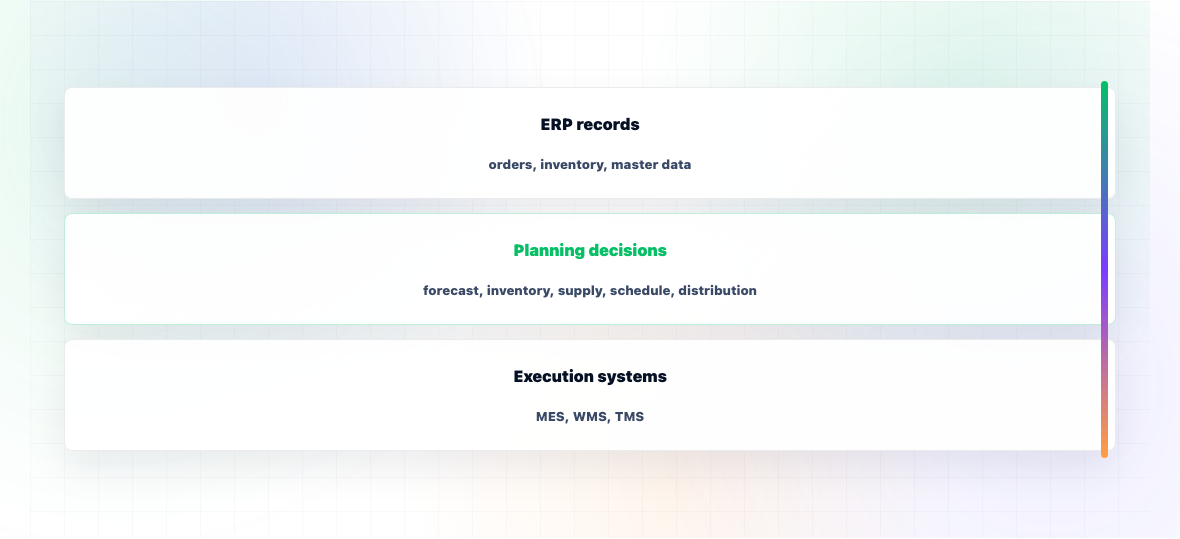
Horizon is an integrated supply chain planning platform covering demand planning, inventory optimization, supply and production planning, production scheduling, and distribution planning in a single workspace. The S&OP and IBP rhythm runs in the same platform.
The architectural choice is single-data-model: all modules read from and write to the same data, so the demand plan in S&OP is the same demand plan operations is using, and the production schedule that drives the shop floor is consistent with the supply plan that drives procurement. This eliminates the integration overhead and reconciliation work that comes with best-of-breed approaches.
Horizon is built specifically for mid-market and enterprise manufacturers (typically $200M-$3B revenue range, 500-5,000 active SKUs). Implementation timelines are 6-10 weeks for the first module, 4-9 months for full multi-module deployment. The honest scope: companies with 50,000+ SKUs or extremely specialised constraints (apparel, fashion, perishables with complex shelf-life management) may need specialised tools instead we'll be clear about that fit in early conversations.
See how Horizon covers the five core planning modules in one workspace, including demand planning.
The reason supply chain planning software exists as a category rather than being built into ERP is structural. ERPs are systems of record. They track what happened: orders placed, inventory received, production completed. Their data models are optimised for transactional integrity, audit trails, and reporting. They are not optimised for the math required to decide what should happen next.
Supply chain planning decisions are math problems. Forecasting customer demand requires time-series and ML models. Optimising inventory across a network requires multi-echelon mathematical optimization. Scheduling production with sequence-dependent setups requires constraint programming or metaheuristics. None of these fit inside an ERP's data model or computational engine. They live in dedicated planning systems that read master data and transactions from ERP, run the math, and write recommended decisions back.
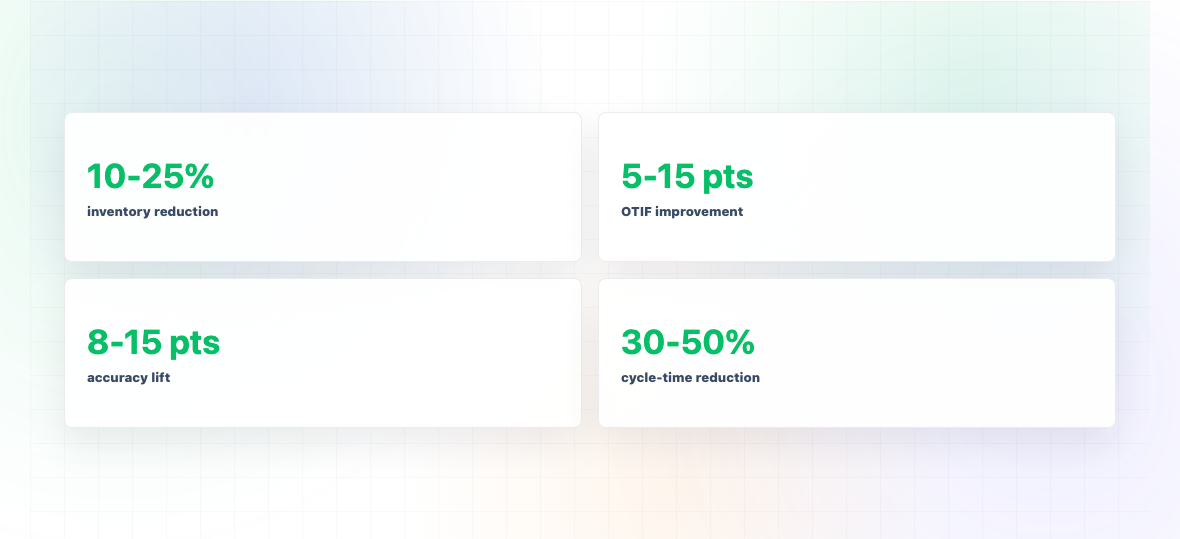
The trap many mid-market companies fall into is assuming the ERP's basic planning module is sufficient. For very simple businesses (small SKU count, stable demand, single plant, single warehouse), it can be. Beyond that, the ERP's planning module typically caps at a level of sophistication that costs the business 10-25% of working capital and 5-15 percentage points of forecast accuracy compared to dedicated tools.
Forecasts future customer demand at SKU, customer, channel, and region levels. Uses statistical methods, ML, and structured overlays from sales and marketing. Outputs the consensus forecast that drives every downstream decision.
Inputs: Sales history, customer data, promotion calendar, marketing inputs. Outputs: Demand forecast by SKU/customer/channel/period.
Decides how much inventory to hold at each SKU-location, accounting for demand variability, lead time, service level targets, and cost. Uses mathematical optimization, often multi-echelon for networks with multiple stocking locations.
Inputs: Demand forecast (with variability), lead times, service level targets, cost structures. Outputs: Safety stock targets, reorder points, replenishment policies.
Translates demand into a feasible production plan. Decides which products to make in which plants and when, accounting for capacity, materials, and lead times. Generates the master production schedule (MPS) and material requirements plan (MRP).
Inputs: Demand forecast, current inventory, plant capacities, BOMs, supplier lead times. Outputs: Production plan, material requirements, capacity utilisation.
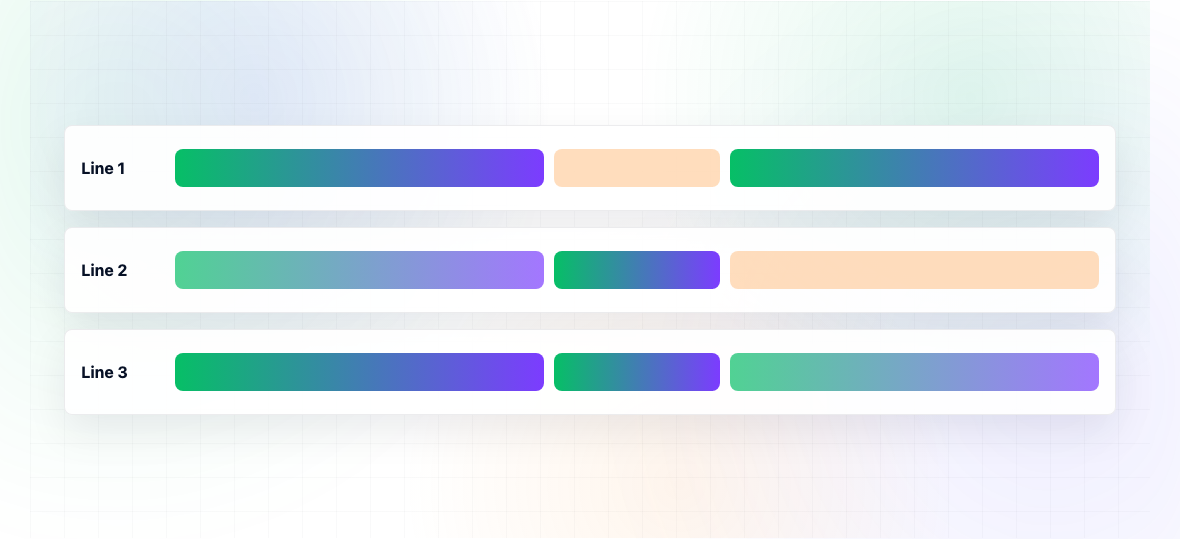
Sequences specific work orders on specific resources at the shop-floor level, accounting for sequence-dependent setups, labour, tooling, and maintenance. Operates on a shorter horizon (days to weeks) than supply planning.
Inputs: Production plan, current shop status, machine constraints, labour availability. Outputs: Gantt-chart schedule with start/end times per work order.
Decides how to move product through the distribution network from plants to DCs to customers and when to replenish each location. Optimizes against freight cost, lead times, and service level targets.
Inputs: Demand forecast, plant production plan, DC inventory, transportation network. Outputs: Replenishment orders, deployment plans, freight requirements.
Above the five operational modules sits the S&OP or IBP rhythm the monthly executive cadence that approves the consolidated plan, reconciles to financial targets, and aligns the organization. Modern integrated platforms make this rhythm a workflow in the same tool that runs the operational planning, rather than a separate exercise.
ERP (Enterprise Resource Planning): Records transactions, manages master data, handles financial accounting. Plans transactionally but doesn't optimize. Examples: SAP S/4HANA, Oracle ERP, Microsoft Dynamics 365, NetSuite, Infor.
MES (Manufacturing Execution System): Executes the shop floor in real time dispatches work, tracks production, manages quality and downtime. Consumes the production schedule that planning produces.
WMS (Warehouse Management System): Executes warehouse operations receiving, putaway, picking, shipping. Consumes the distribution plan.
TMS (Transportation Management System): Executes transportation load building, carrier selection, tracking. Consumes the freight plan.
Supply chain planning software sits above all of these, creating the plans they execute.
The category historically split into best-of-breed (separate tools per function, e.g. Logility for demand, ToolsGroup for inventory, Quintiq for scheduling) and integrated platforms (one tool covering all functions, e.g. Kinaxis, o9, SAP IBP, Horizon).
For most mid-market manufacturers ($200M-$2B), integrated platforms now win on TCO and time-to-value. Modern integrated tools cover each function deeply enough that the best-of-breed advantage has narrowed. The integration overhead of running separate tools (typically 15-30% of implementation cost and significant ongoing reconciliation effort) usually outweighs the marginal capability advantage.
Best-of-breed remains the right choice for large enterprises with very specific functional requirements that no integrated platform handles well e.g. fashion retailers needing extreme SKU complexity, or process manufacturers with unusual constraint structures.