
Demand planning collaboration that turns cross-functional input into one consensus plan
Planners turn sales, marketing, and finance input into one consensus number on Horizon, instead of trading spreadsheet versions by email. Forecast Value Add (FVA) tracks whose input actually helped.
Horizon gives your planning team one plan for sales, marketing, and finance input
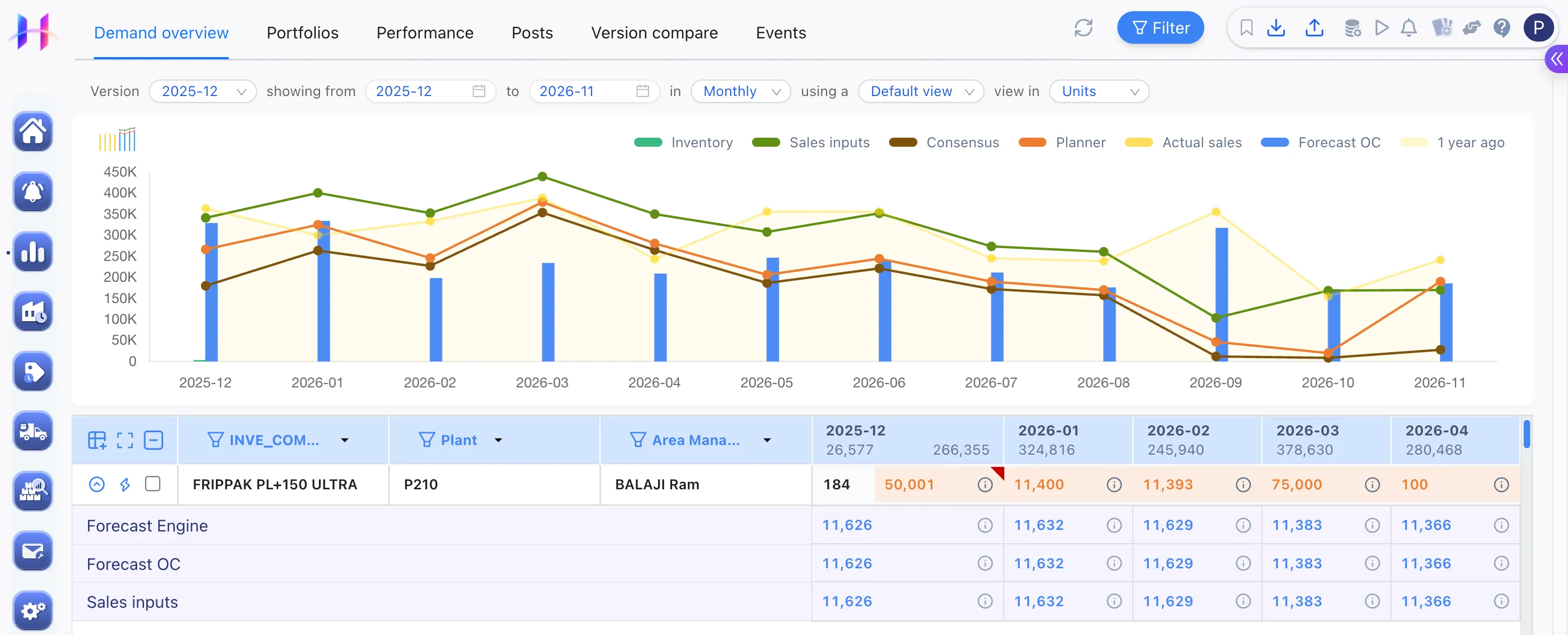
- Sales adds its own read on customer-level risk and upside, account by account, instead of folding every customer into one blended number.
- Marketing feeds in promotion, launch, and market-shift assumptions, since it knows about these changes before they ever show up in the sales numbers.
- Finance checks the demand outlook against budget and the latest financial estimate on the same plan sales and marketing are already working from.
Horizon brings customers onto the same plan
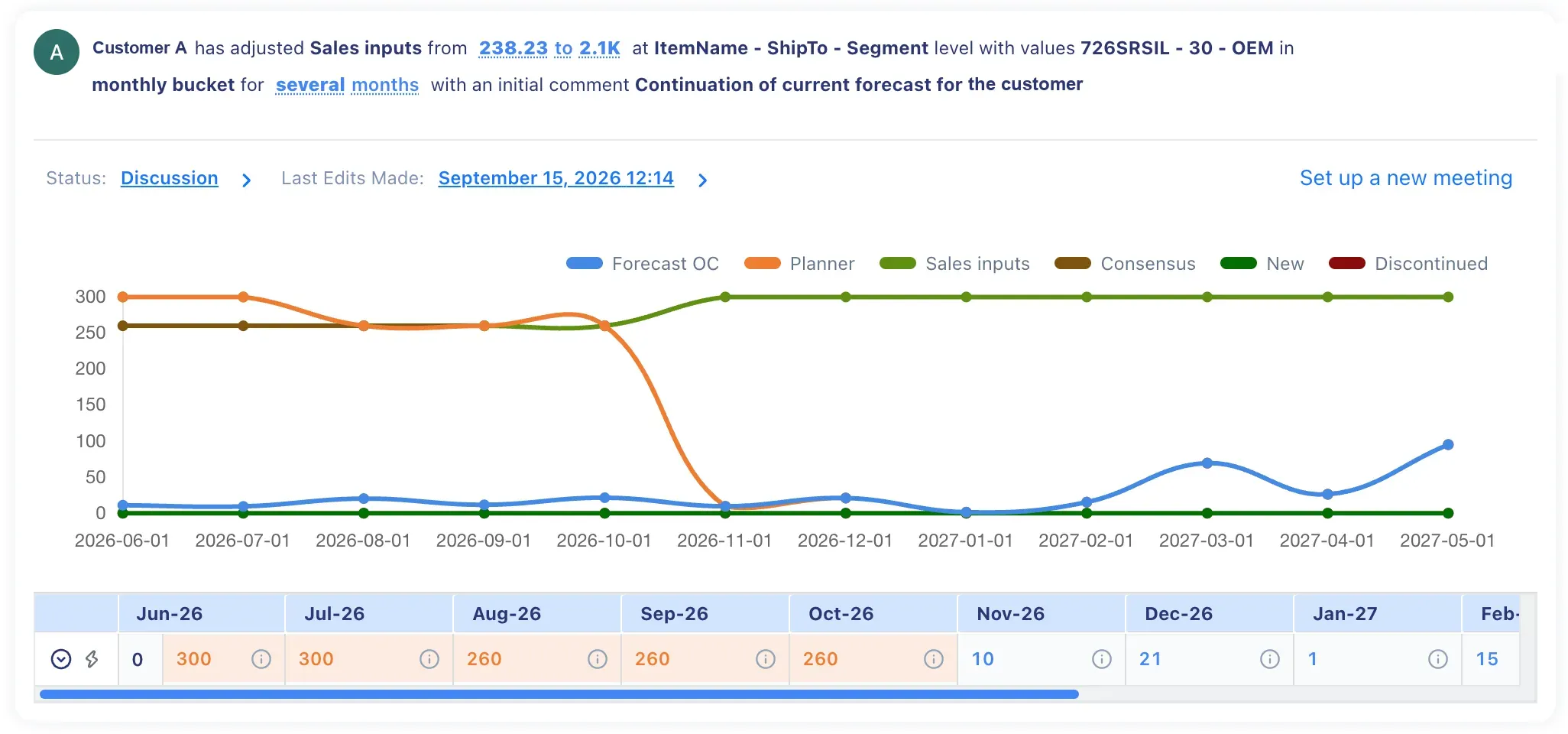
- Customers log into the same platform your planning team uses and see their own demand and order data there, not a static file someone emailed them last week.
- When a customer confirms or changes something, it lands directly in the plan. Nobody on your team has to retype it from an email thread.
WhatsApp Collaboration captures a customer's update without ever asking them to log in
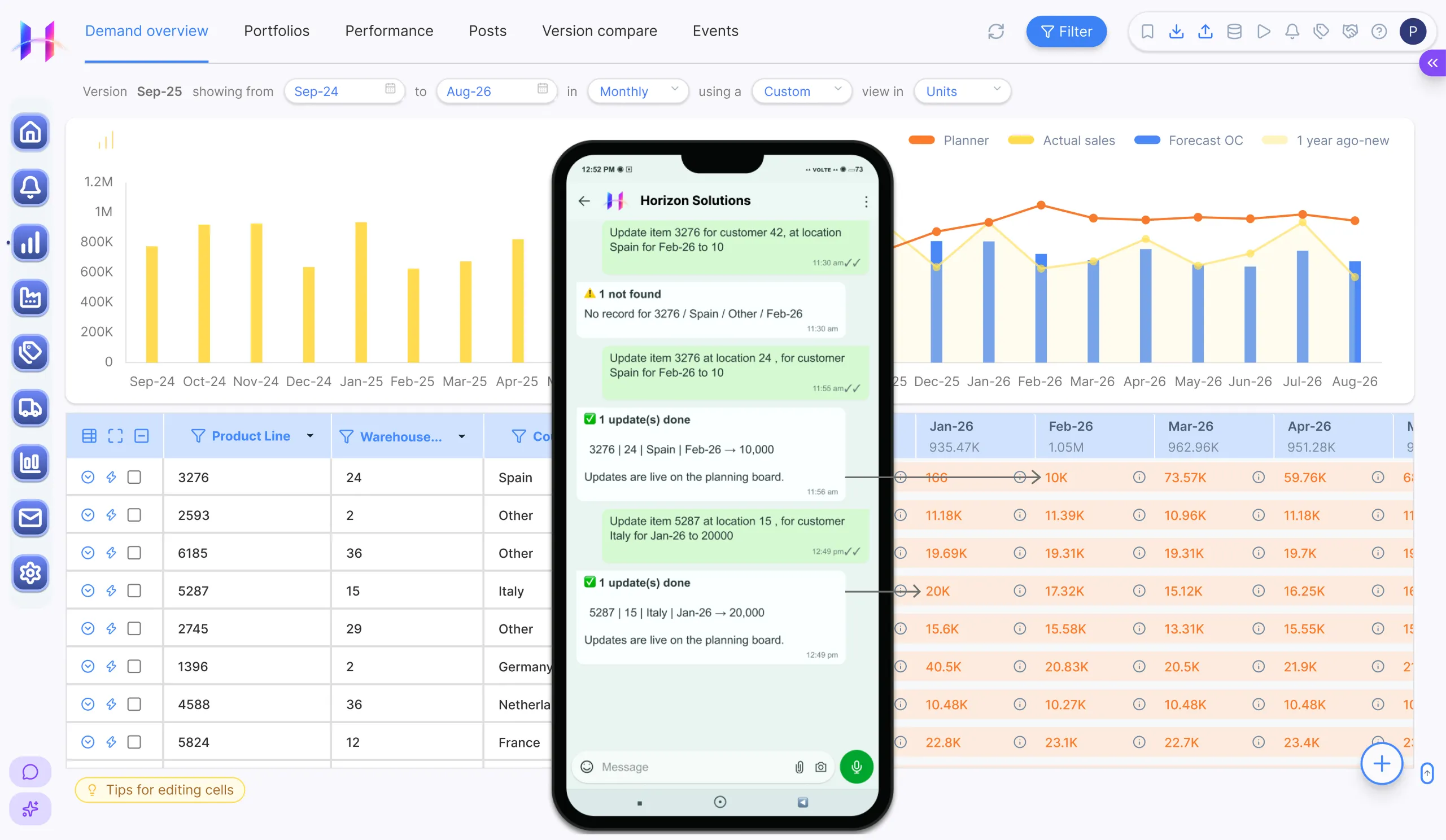
- A customer can text an update over WhatsApp in plain language, for example "Update item 5287 at location 15, customer Italy, Jan-26 → 20,000," without logging into the platform.
- Horizon checks the update against the plan immediately and flags it back if the item or location doesn't exist.
- Horizon confirms a valid update as live on the planning board right away. Nobody has to remember to open it later and re-key it as a separate change.
Forecast Value Add (FVA) shows exactly whose input is making the plan better
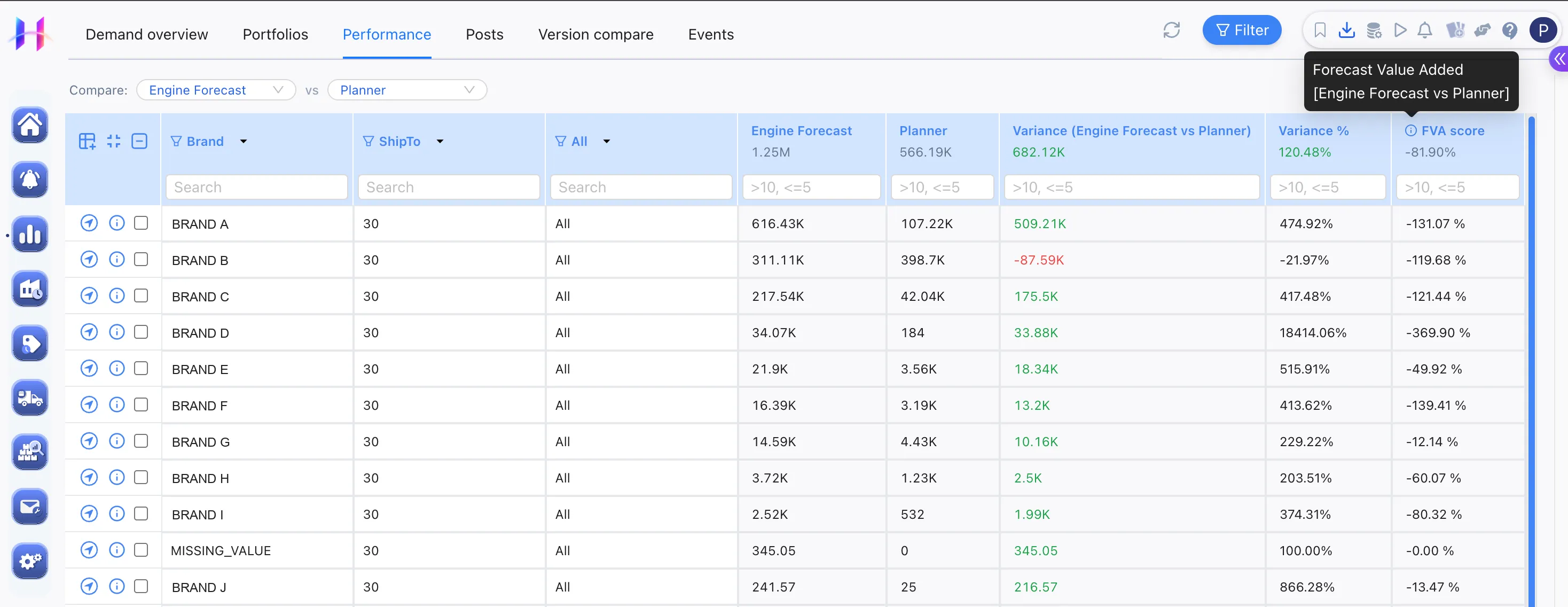
- Horizon tags every input to the contributor who made it, instead of folding it into an anonymous bulk adjustment.
- Each contributor sees their own FVA, whether their past inputs have historically improved accuracy or hurt it. That same number doubles as ongoing performance tracking.
- When two inputs disagree on the same SKU, Horizon doesn't silently average them. It surfaces the conflict as an exception for the planning team to resolve.
- Horizon flags a contributor with persistently negative FVA, so the conversation happens before the same pattern repeats every cycle.
Horizon manages access down to the individual role, page, and saved view
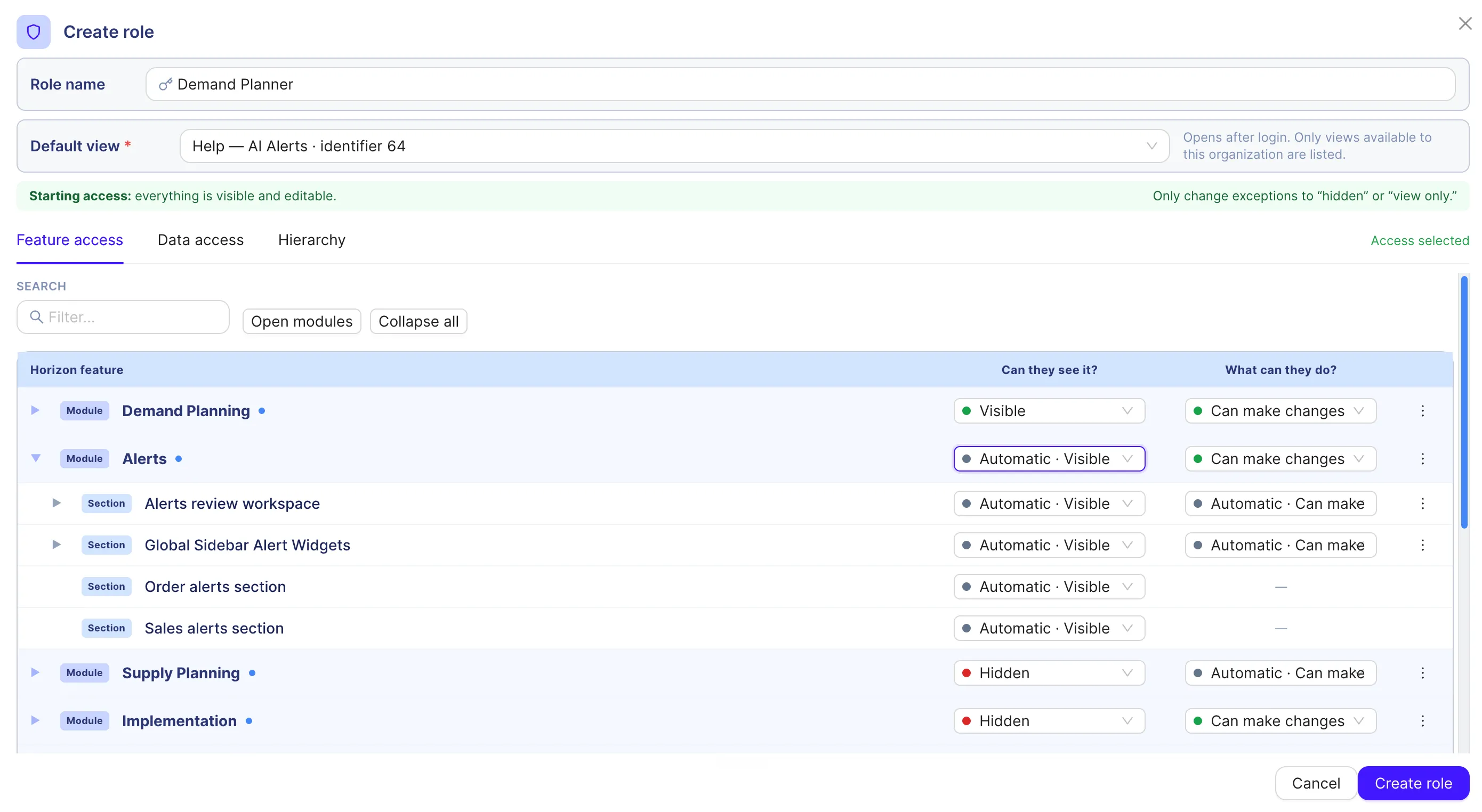
- Horizon lets a new role, like Customer, inherit from a base access level instead of being built from scratch. Permissions then pass down that hierarchy automatically, parent to child.
- Your planning team decides whether each module or page is visible, hidden, or view-only, right down to who's actually allowed to make a change there.
- Customers log in under their own account type, distinct from the accounts your internal team uses, and see only their own demand and order data.
- Planners can also save their own personalised, favourite views, a layer on top of role-based access rather than a substitute for it.
Why supply chain planning leaders recommend us
Real stories from supply chain planning leaders who've faced the same stockouts, inventory waste, and manual workarounds you have.

Furniture Manufacturer
“Impressed by the knowledge and fast results of Horizon. Together we turned plans into action in no time.”

Olivier Van HoefSupply Chain Manager at Ahrend

Business Consulting and Services
“After 40+ years of implementing different planning tools, Horizon is by far the easiest to set up and adapt. It combines strong models with a flexibility we haven't seen elsewhere.”

Alex YoungDirector at Demand Integration

Urban Gardening Retailer
“What stood out was how quickly our team could use Horizon and how easily it was integrated with our current systems: the planning team saw the impact on their day-to-day immediately, and it improved collaboration and decision-making from a management perspective.”

Siddhant BhalingeCEO at Ugaoo
Frequently Asked Questions
Find quick answers to the most common questions about forecast collaboration.
