

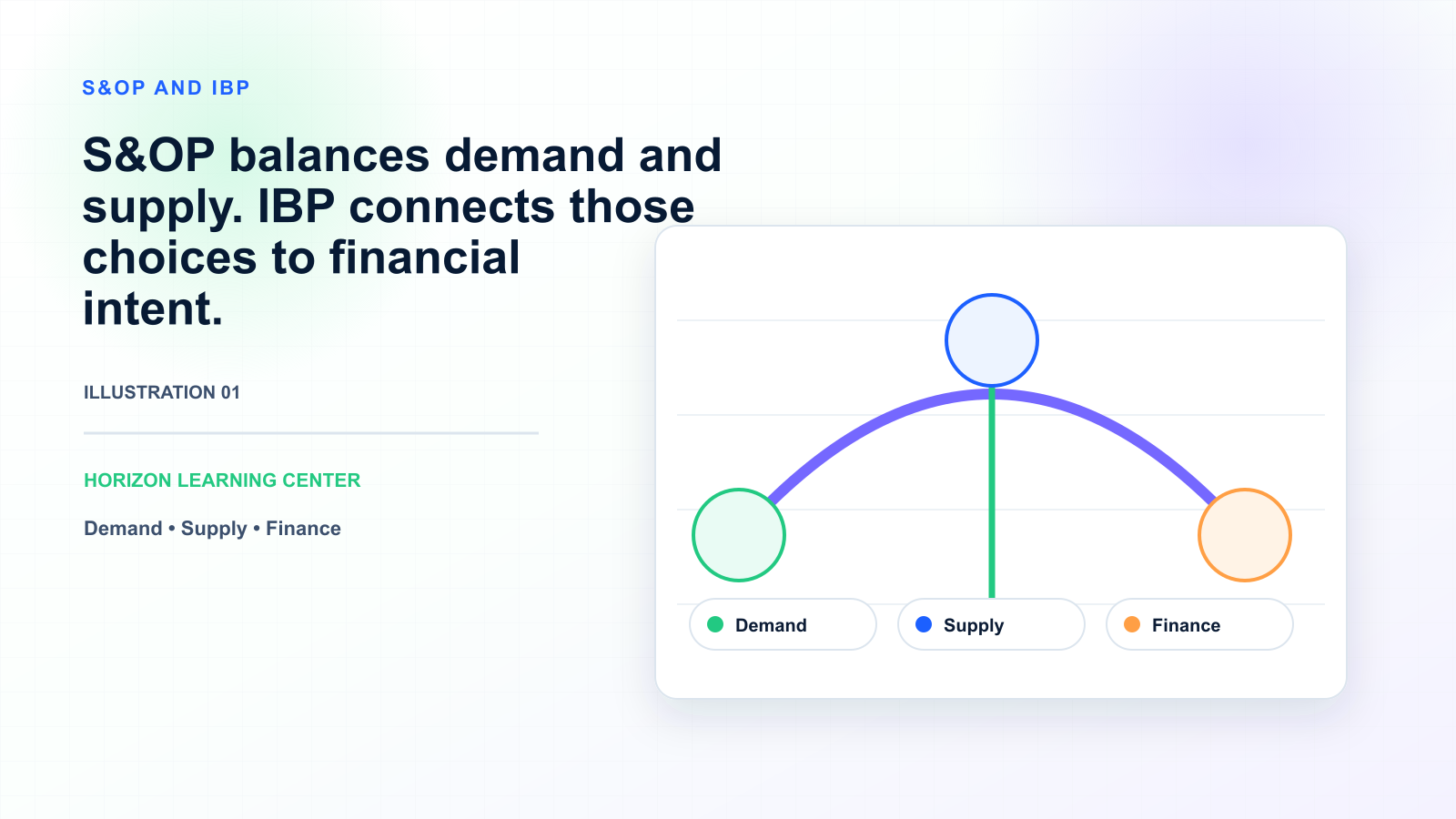
Sales and Operations Planning (S&OP) and Integrated Business Planning (IBP) are cross-functional rhythms aligning demand, supply, inventory, financial, and strategic decisions. This guide covers the concepts that matter most for understanding modern S&OP/IBP practice.
The line between S&OP and IBP has blurred substantially. The concepts below apply to both, with notes where there are meaningful distinctions.
Author :
Ben Van Delm
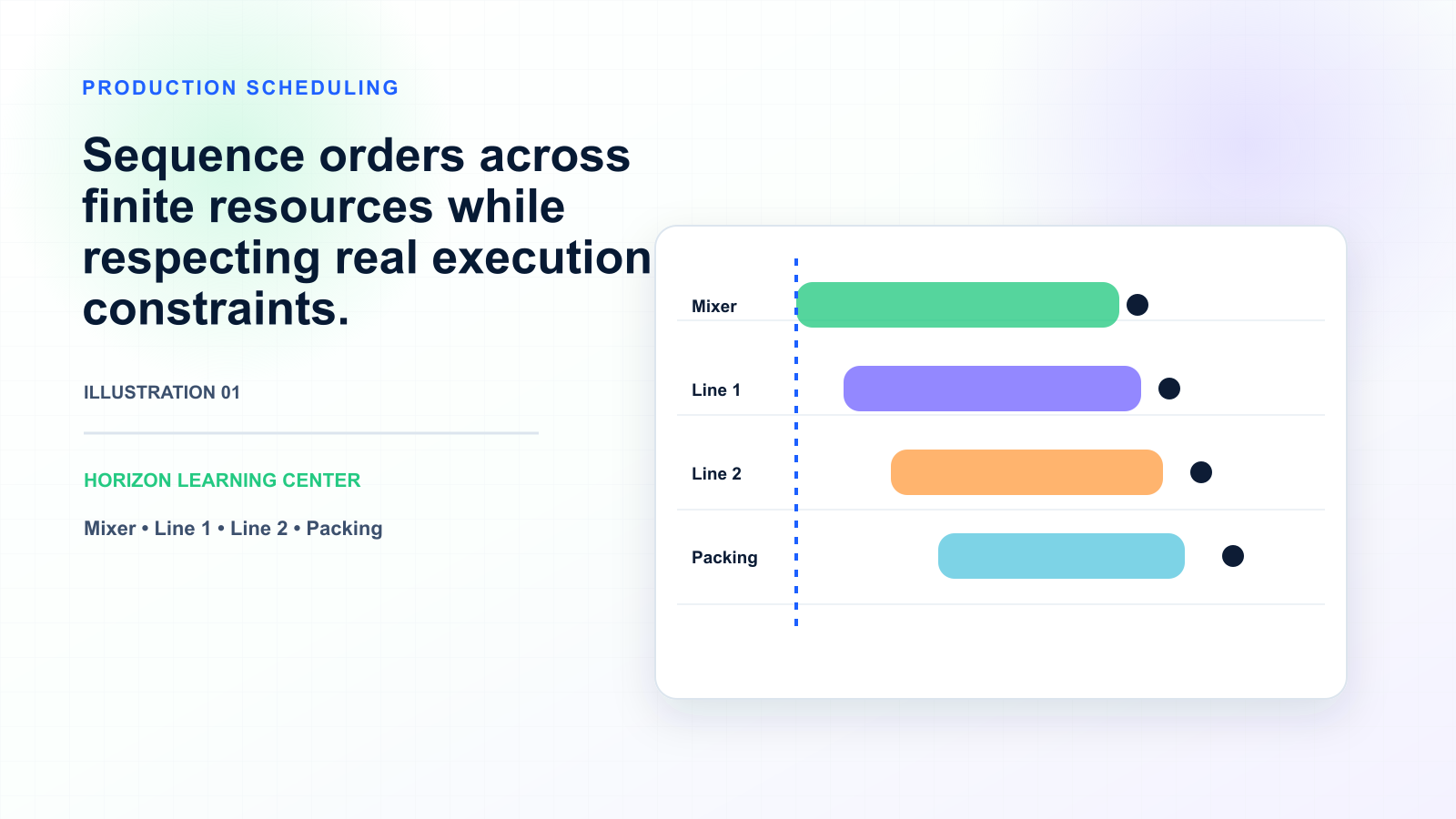
Production scheduling sequences work orders on specific resources (machines, lines, work centers) over short horizons (typically days to weeks). It's distinct from supply planning (longer horizon, less detailed) and from execution (real-time shop floor management). This guide covers the concepts that matter for understanding modern production scheduling.
The concepts apply differently across industries: process industries (chemicals, food, pharma) emphasize sequence-dependent setup and campaign planning; discrete manufacturing emphasizes finite capacity and bottleneck management; mixed-mode operations apply concepts from both.
Author :
Ben Van Delm
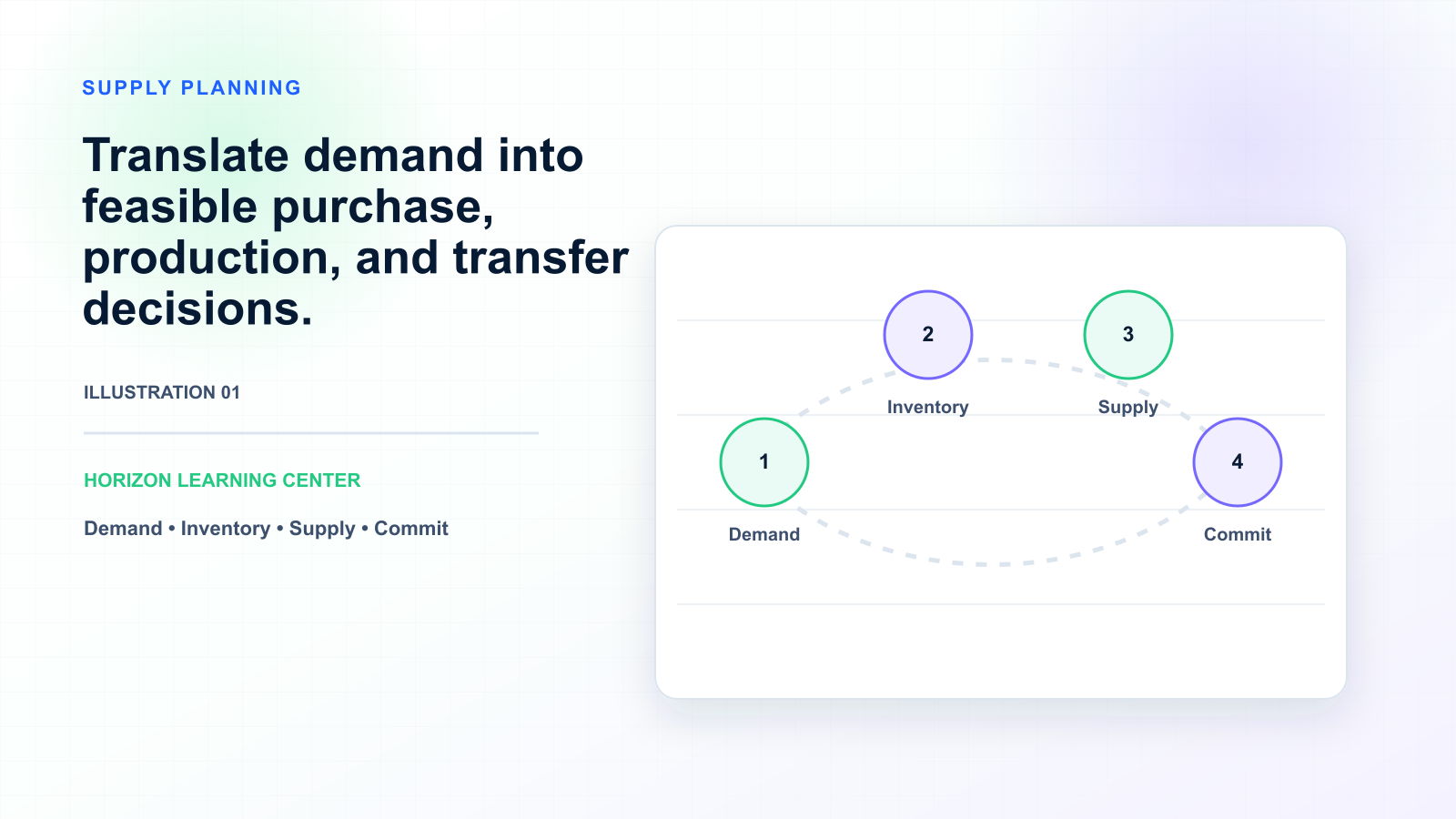
Supply planning translates demand forecasts into feasible production and procurement plans considering capacity, materials, and lead time constraints. This guide covers the concepts that matter most for understanding modern supply planning — what they mean, how they work, when they apply, and how they interact.
The concepts are presented in approximate operational sequence — from foundational (MRP, lead time) through inventory math (safety stock, service level, MEIO) to coordination concepts (ATP, CTP, bullwhip effect).
Author :
Ben Van Delm
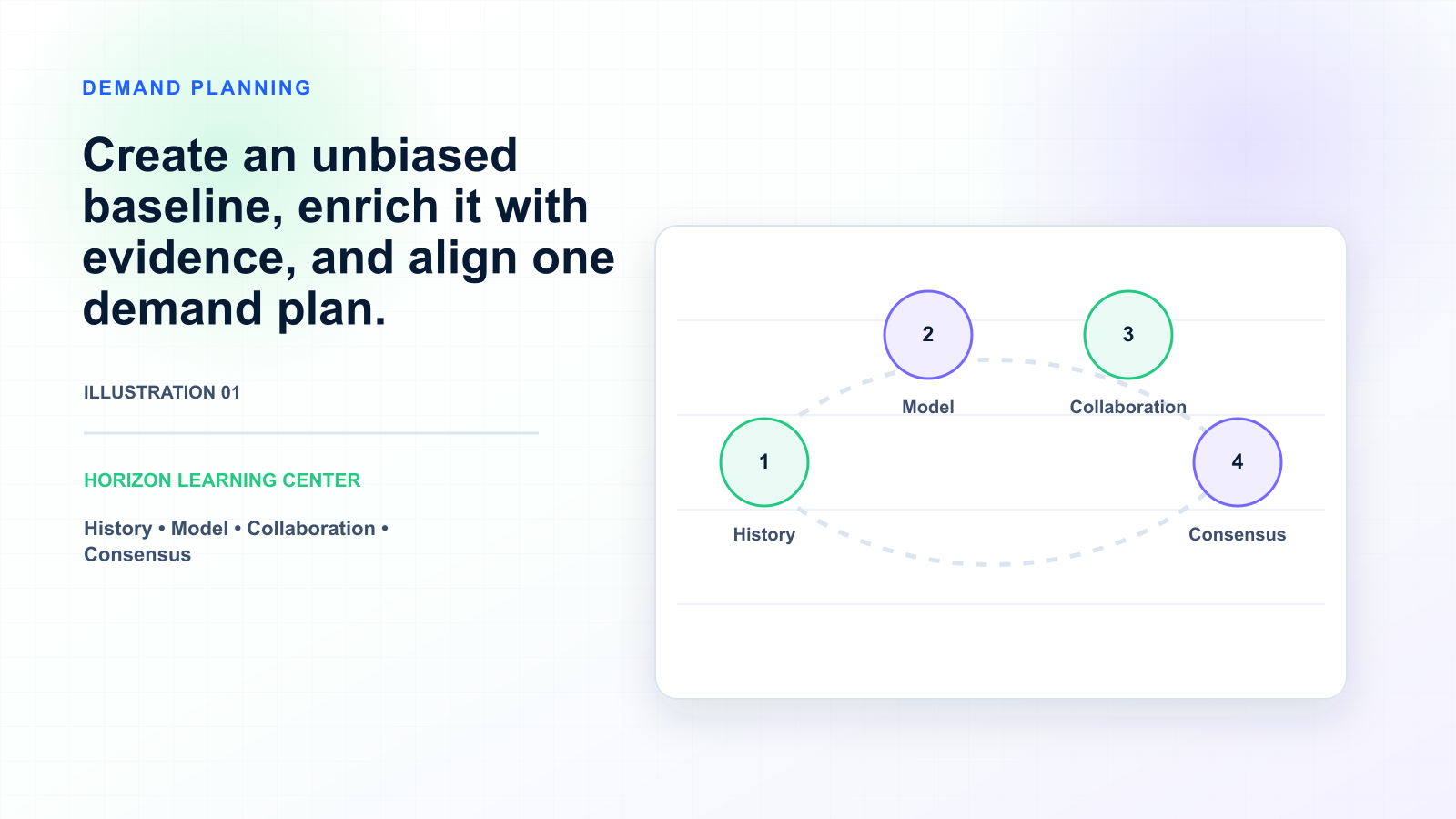
Demand planning has accumulated specialized concepts over decades of practice. This guide covers the concepts that matter most for understanding modern demand planning — what they mean, how they work, when they apply, and how they interact. Each concept gets substantive treatment, not just dictionary definition.
The intended use: read sections relevant to your current questions, or work through the whole guide for comprehensive understanding. The concepts are presented in approximate operational sequence — from foundational (accuracy, bias) through methodology (models, ensemble) to advanced (demand sensing, FVA, NPI).
Author :
Ben Van Delm
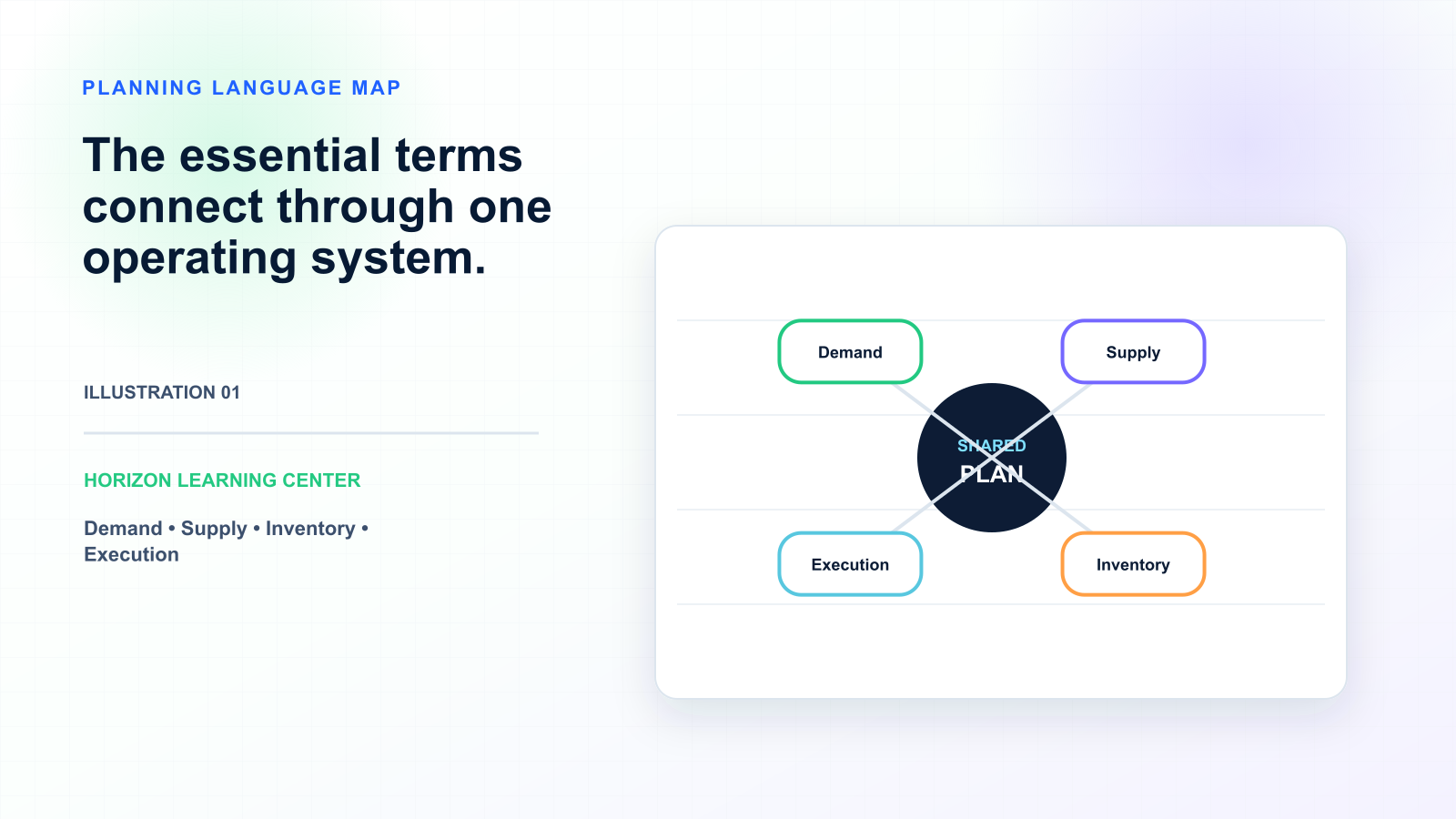
Supply chain planning has accumulated specialized terminology over decades of practice. This glossary covers the terms that appear most frequently in platform evaluations, vendor conversations, and operational discussions. Each entry provides concise definition plus practical context — what the term means in operational reality, not just textbook definition.
For deeper treatment of specific topic areas, see the thematic concept articles on demand planning, supply planning, production scheduling, and S&OP/IBP linked throughout.
Author :
Ben Van Delm
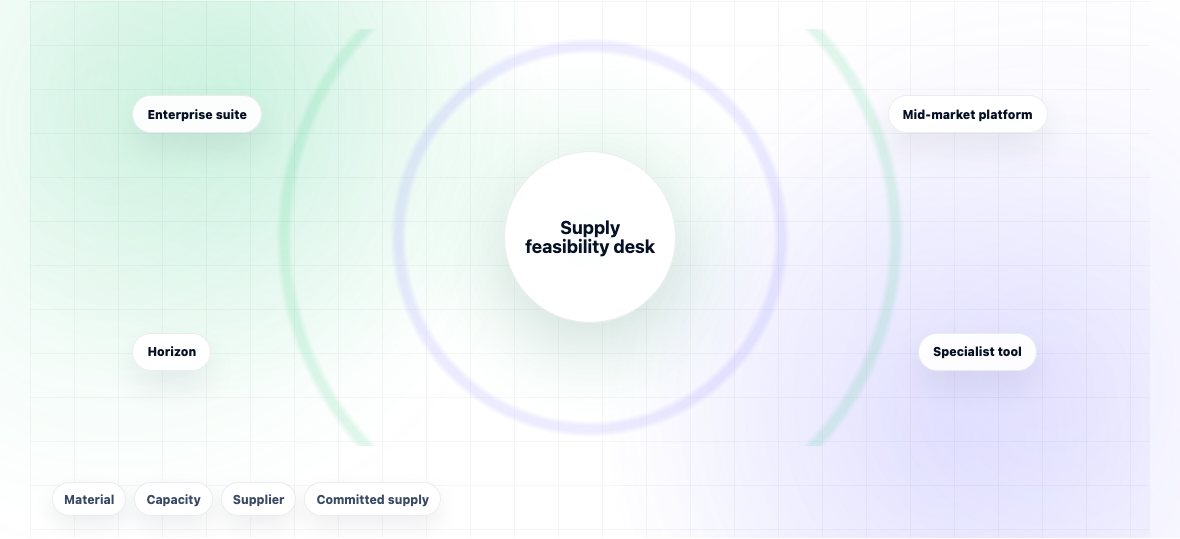
Supply planning translates the demand plan into a feasible production plan � what to make, when, where, and how much. Done at the right horizon (typically 3-18 months rolling), supply planning prevents the late operational surprises that come from supply plans assuming resources or materials that don't exist. The math handles finite capacity, multi-stage propagation through BOMs and routings, supplier lead times, and feasibility constraints that infinite-capacity MRP ignores.
The platforms that fit manufacturer supply planning vary by manufacturing mode (discrete, process, CPG) and integration scope. This page covers the main categories with honest fit guidance.
Author :
Ben Van Delm
Supply chain planning for industrial manufacturers extends beyond demand to cover supply planning with finite capacity, multi-echelon inventory across complex networks, production scheduling for mixed MTO/MTS operations, and S&OP/IBP rhythms supporting B2B customer commitments. The complexity comes from portfolio heterogeneity (standard products, configured equipment, aftermarket parts each need different planning), customer concentration (B2B operations with significant volume from major customers), and multi-tier supplier networks.
This page covers SCP platforms for industrial manufacturers across sub-segments � equipment, machinery, components, capital goods � with honest fit guidance by scale and complexity.
Author :
Ben Van Delm
Supply chain planning for chemical manufacturers extends beyond demand planning to cover supply planning across campaign-based production, multi-echelon inventory with shelf-life constraints, finite capacity for shared facilities, scheduling with sequence-dependent setups, and S&OP/IBP rhythms with financial reconciliation. The complexity is significantly higher than discrete supply chain planning because each function interacts with chemistry, equipment-sharing, and process-industry constraints.
The platforms that handle chemical SCP fall into two camps: process-industry specialists with deep chemistry awareness, and general SCP platforms that handle process constraints adequately. This page covers both with honest fit guidance about which fits which buyer.
Author :
Ben Van Delm
Chemical manufacturing demand planning operates under process-industry constraints that differ from discrete manufacturing. Campaign-based production creates dependencies between SKUs that share equipment � when Product A runs, the shared facility is unavailable for Product B for the campaign duration. Shelf-life and stability constraints affect inventory positioning. Cross-product demand correlations are stronger than in discrete (customers buying Product A often buy Product B from the same product family). Specialty versus commodity dynamics differ � commodity chemicals follow more volatile pricing patterns; specialty chemicals follow more customer-specific patterns.
The platforms that fit chemical demand planning are typically those with process-industry depth or strong general capability that handles process constraints well. This page covers both with honest fit guidance.
Author :
Ben Van Delm
"Industrial manufacturing" is a broad category covering industrial equipment, machinery, components, capital goods, construction equipment, agricultural equipment, and industrial fluids and materials. Demand patterns vary substantially across these sub-segments � capital equipment has long, project-driven cycles; industrial components have flow-through demand from downstream manufacturer customers; aftermarket parts have long-tail service demand from installed bases. The common thread: B2B customer relationships dominate, customer-specific demand patterns matter, and supply chain extends through complex multi-tier supplier networks.
This page covers demand planning platforms for industrial manufacturers across the sub-segments, with honest fit guidance by scale and complexity.
Author :
Ben Van Delm

