

"Automotive demand planning" covers very different problems depending on where the company sits in the supply chain. OEMs (Ford, GM, Stellantis, Toyota, BMW, etc.) plan production volumes against forecast consumer demand, dealer orders, and fleet sales � multi-billion-dollar planning at global scale. Tier 1 suppliers plan against OEM call-offs that can swing dramatically week-to-week. Tier 2 and Tier 3 suppliers plan against Tier 1 schedules that themselves depend on OEM volumes. Aftermarket parts distributors plan against installed vehicle demand patterns spanning decades of vehicle lifetimes.
The platforms that fit each segment differ significantly. This page covers all segments with honest fit guidance � including being clear about where Horizon fits (mid-market suppliers and aftermarket) and where it doesn't (OEMs).
Author :
Ben Van Delm
Medical device manufacturing operates under structural constraints that differ from both pharma and general manufacturing. Long product lifecycles (5-15 years versus 2-5 years for many industries) mean demand patterns evolve through clear lifecycle phases � launch, growth, maturity, decline � with different forecasting needs in each. Regulatory environments (FDA QSR, EU MDR, ISO 13485) require traceability, change control, and validated environments for systems affecting product release. Customer-specific configurations are common, particularly in implants and capital equipment. Service parts demand for installed bases adds long-tail SKU complexity that pure-manufacturing platforms often handle poorly.
The platforms that fit medical device demand planning are a subset of the broader category � specifically those with audit trail depth, lifecycle-aware forecasting, configuration management, and service parts capability. This page covers that subset.
Author :
Ben Van Delm
If you're researching o9 versus Kinaxis, you're evaluating two of the strongest AI-positioned enterprise supply chain platforms. Both have genuinely different architectures: o9 emphasizes knowledge graph reasoning with AI embedded throughout; Kinaxis emphasizes concurrent planning architecture with AI added through Maestro AI. Both are credible enterprise choices and the decision often depends on architectural preference and data engineering maturity.
Horizon enters this comparison for the same reason as other three-way pages: a meaningful share of buyers researching o9 vs Kinaxis are actually mid-market manufacturers considering enterprise platforms because of analyst recommendations rather than scale fit. For genuine enterprise buyers, the comparison is o9 vs Kinaxis and Horizon is irrelevant. For mid-market buyers stuck in enterprise evaluation, knowing that mid-market alternatives exist saves evaluation time.
Author :
Ben Van Delm
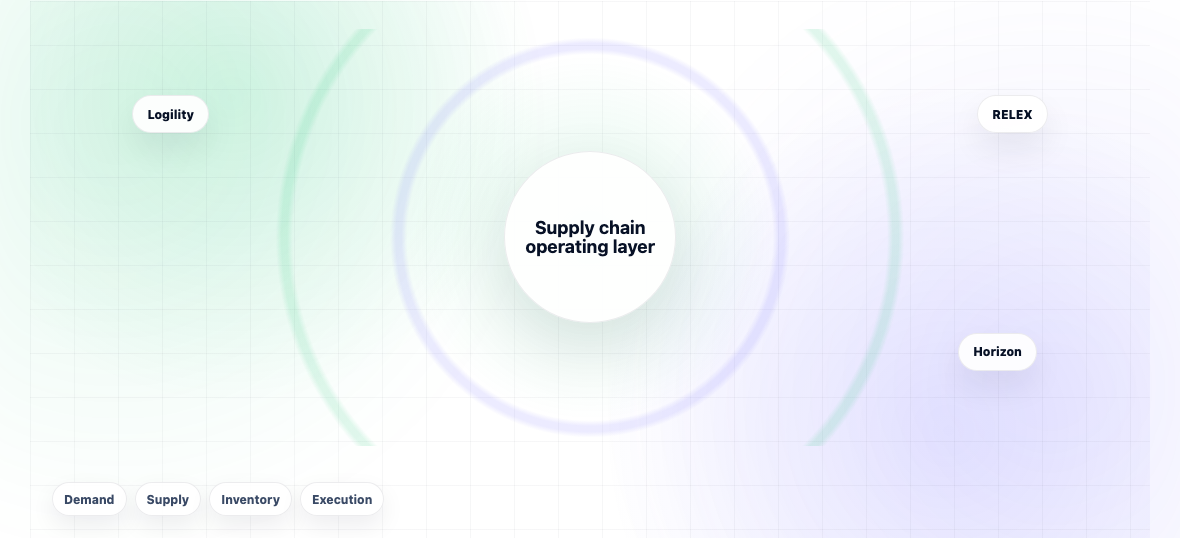
If you're researching RELEX versus Logility, you're evaluating mid-market platforms with different industry positioning. Both serve CPG and consumer goods well but with distinct emphases: RELEX leads in retail-heavy CPG with European reference base; Logility leads in established mid-market integrated SCP with longest category presence. Horizon enters this comparison as a third mid-market option with modern architecture and decision execution.
This is genuine mid-market peer evaluation — all three platforms serve $100M-$3B manufacturers. The framing throughout: which mid-market approach fits which buyer profile.
Author :
Ben Van Delm
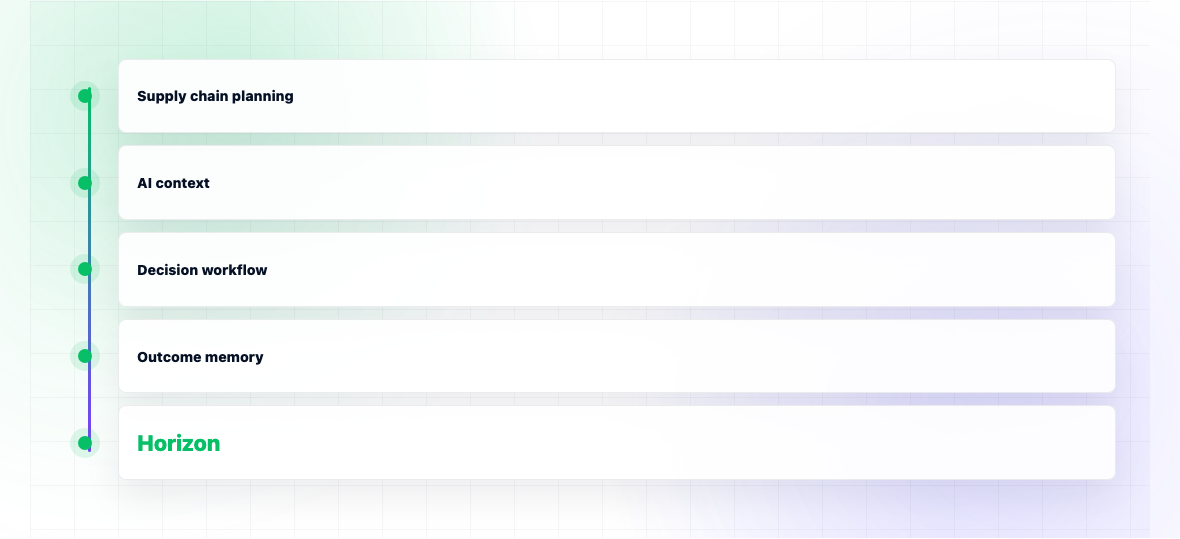
If you're researching Logility versus ToolsGroup, you're evaluating mid-market supply chain planning approaches. Both serve mid-market manufacturers but optimize differently: Logility offers established integrated SCP across demand, supply, inventory, and S&OP; ToolsGroup offers probabilistic forecasting and inventory optimization as focused specialty. Horizon enters this comparison as a third mid-market option with modern integrated architecture and decision execution capability.
Unlike enterprise comparisons where Horizon doesn't compete, this is a genuine three-way peer evaluation at mid-market scale. The framing throughout: which mid-market approach fits which buyer profile.
Author :
Ben Van Delm
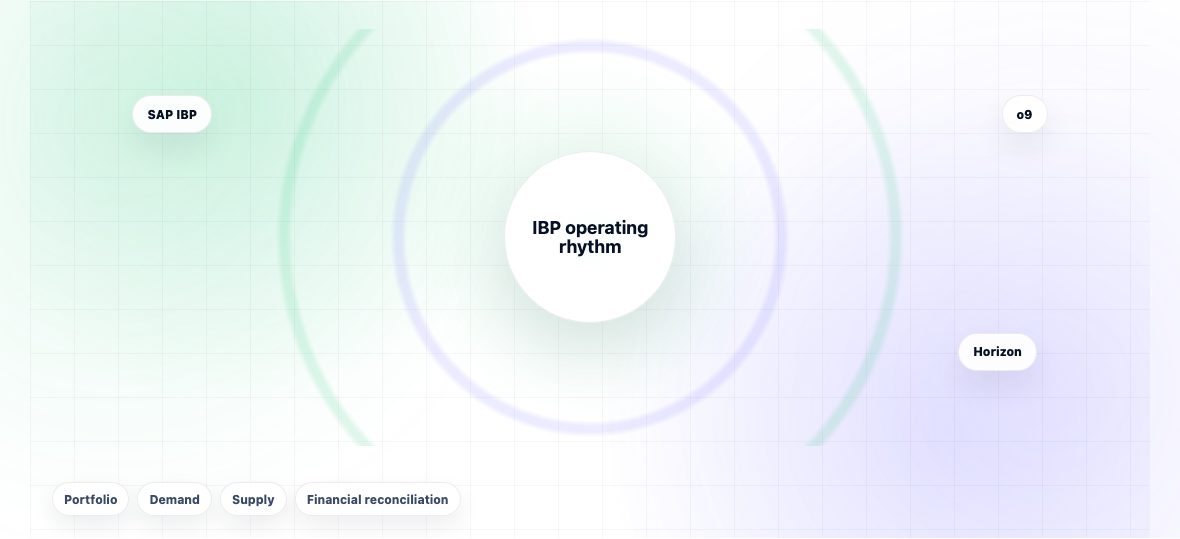
If you're researching o9 versus SAP IBP, you're probably evaluating enterprise platforms for supply chain planning. Most three-way comparisons from vendors are self-serving, but the case for including Horizon here is genuine: a meaningful share of buyers researching o9 versus SAP IBP are actually mid-market manufacturers ($100M-$2B) considering enterprise platforms because they appeared on analyst recommendations — not because enterprise scale fits.
For those buyers, Horizon as a mid-market alternative is useful information. For buyers who are actually enterprise scale ($3B+ revenue, mature data engineering capability), both o9 and SAP IBP are better choices than Horizon, and this comparison should help you choose between them based on AI architecture preference and SAP ecosystem investment.
The framing throughout: when does o9 fit, when does SAP IBP fit, and when does neither fit because you're actually mid-market?
Author :
Ben Van Delm
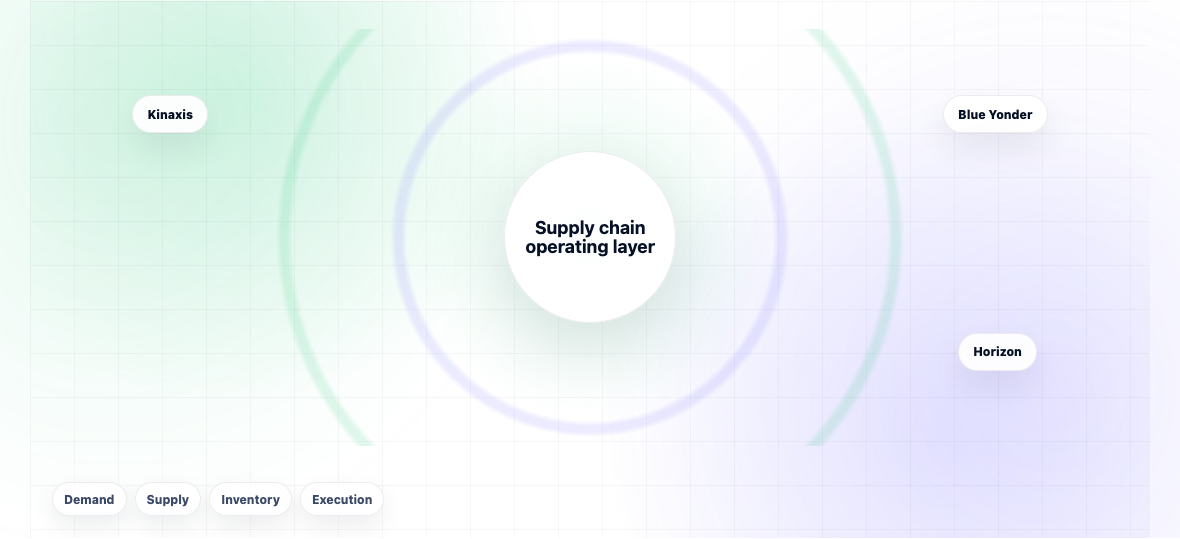
If you're researching Blue Yonder versus Kinaxis, you're probably evaluating enterprise supply chain planning platforms. Most three-way comparison content from vendors is self-serving, but there's a genuine case for including ourselves here: a meaningful share of buyers researching Blue Yonder versus Kinaxis are actually mid-market manufacturers ($100M-$2B revenue) considering enterprise platforms because they appeared on analyst recommendations — not because enterprise scale genuinely fits.
For those buyers, Horizon as a mid-market alternative is genuinely useful information. For buyers who are actually enterprise scale ($3B+ revenue, multi-region operations), Blue Yonder and Kinaxis are both better choices than Horizon, and this comparison should help you choose between them based on industry focus and architecture.
The framing throughout: when does Blue Yonder fit, when does Kinaxis fit, and when does neither fit because you're actually mid-market and would be better served elsewhere?
Author :
Ben Van Delm
o9 versus SAP IBP is the comparison enterprise buyers face when evaluating modern AI-driven planning against established SAP-centric planning. Both target $3B+ enterprises but optimize for different things: o9 for AI-driven supply chain planning through knowledge graph architecture; SAP IBP for native SAP ecosystem integration with mature enterprise SCP.
The decision typically depends on SAP ecosystem investment and AI architecture preference. SAP-centric enterprises with mature S/4HANA deployment often find SAP IBP's native integration delivers more value than o9's AI sophistication. Enterprises prioritizing AI-driven planning with mature data engineering capability often find o9's knowledge graph approach delivers value SAP IBP's AI extensions can't match.
Author :
Ben Van Delm
Logility versus ToolsGroup is the mid-market comparison that surfaces when buyers evaluate integrated planning versus specialist tools. Logility offers established integrated SCP across demand, supply, inventory, and S&OP at mid-market scale. ToolsGroup offers probabilistic forecasting and inventory optimization as focused specialty with deep mathematical depth.
The decision depends on whether you want integrated planning across the full supply chain or specialist depth in forecasting and inventory. Both serve mid-market manufacturers but answer different questions — the choice often reveals what kind of planning capability you actually need.
Author :
Ben Van Delm
o9 versus Anaplan is the comparison that emerges when enterprises evaluate AI-driven planning and connected planning approaches. Both deliver enterprise-scale planning but optimize for fundamentally different things: o9 for AI-driven supply chain planning through knowledge graph architecture; Anaplan for finance-led connected planning across multiple functions through Hyperblock modeling engine.
The decision usually reveals organizational realities about planning ownership rather than just feature preferences. Supply-chain-led organizations typically gravitate toward o9 because the platform is built around supply chain operational depth. Finance-led organizations typically gravitate toward Anaplan because the platform fits connected planning across non-supply-chain functions.
Author :
Ben Van Delm

