

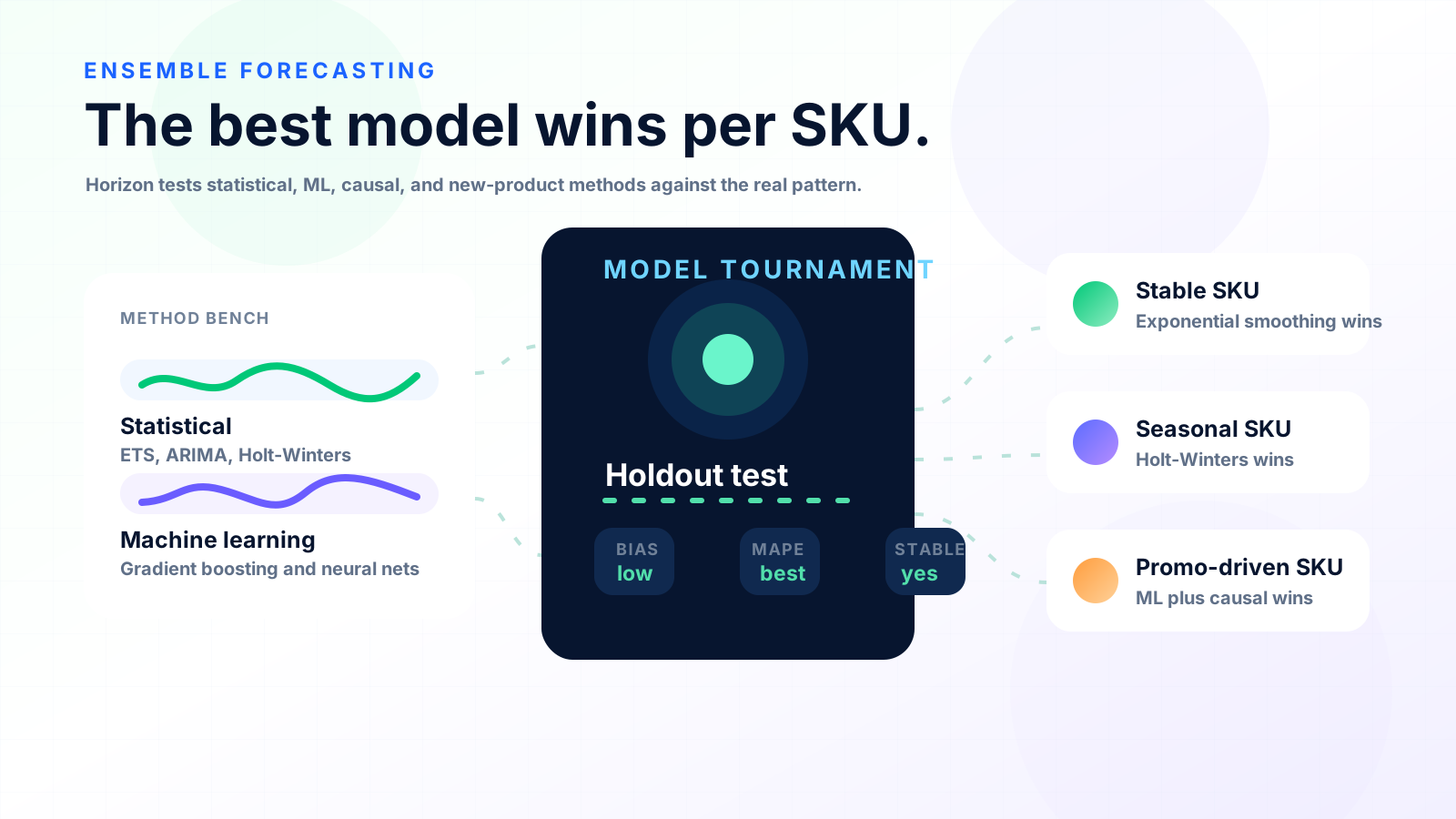
Ensemble forecasting is the practice of combining multiple forecasting methods instead of relying on a single model. In demand planning, this matters because no single forecasting method is best for every SKU, customer, location, or lifecycle stage.
Author :
Ben Van Delm
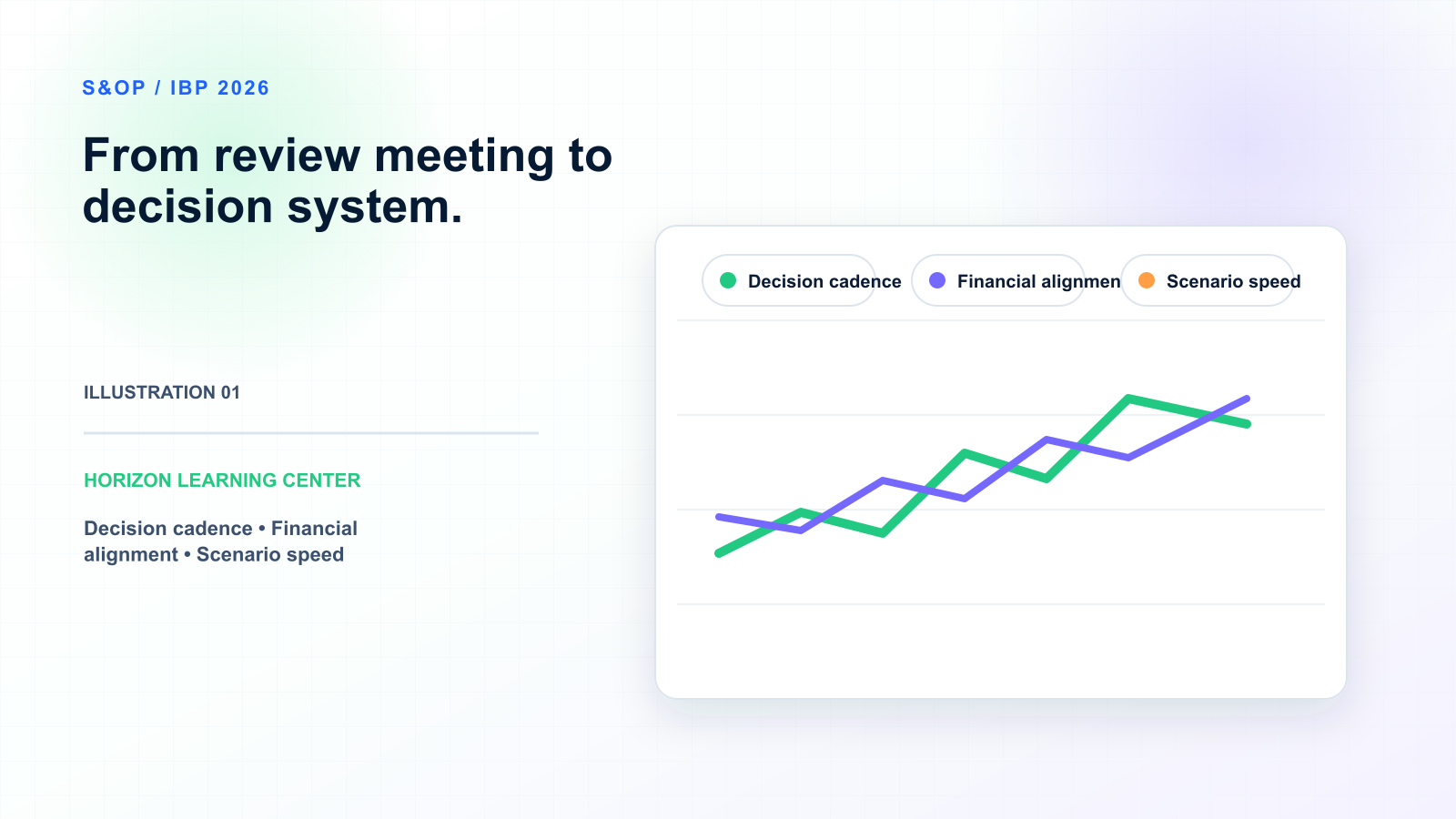
S&OP and IBP have been in continuous evolution since the 1980s, but the patterns through 2024-2026 are particularly worth understanding. The line between S&OP and IBP continued blurring. Executive engagement patterns shifted. Financial reconciliation moved from optional to expected. Decision execution became as important as analytical review.
The trends below are based on observed customer S&OP/IBP rhythms through 2025 — what mature organizations actually do, not what consulting frameworks recommend. The reality is messier and more interesting than the frameworks suggest.
Author :
Ben Van Delm
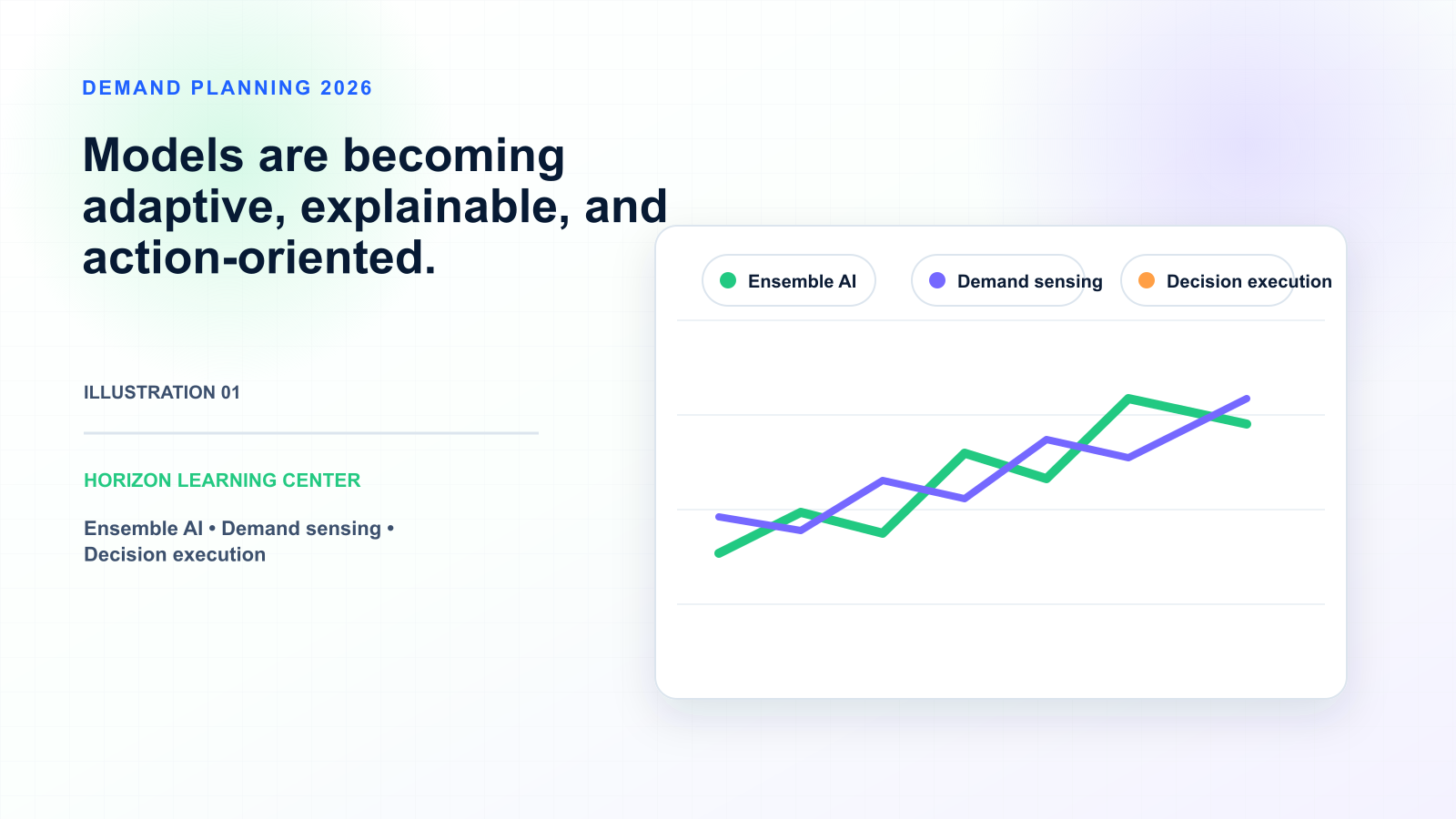
Demand planning has been one of the most active areas of SCP investment over the past three years. The trends we describe below are based on observed customer behavior and platform capability development through 2025 — not analyst projections about what should be happening.
The headline: demand planning practice in 2026 looks meaningfully different from 2023, but not in the ways most analysts predicted. AI capability is real but more selective than positioning suggests. Some traditional capabilities (ensemble forecasting, FVA tracking, demand sensing) matured significantly. Other promised capabilities haven't delivered the dramatic improvements vendor positioning suggested.
Author :
Ben Van Delm
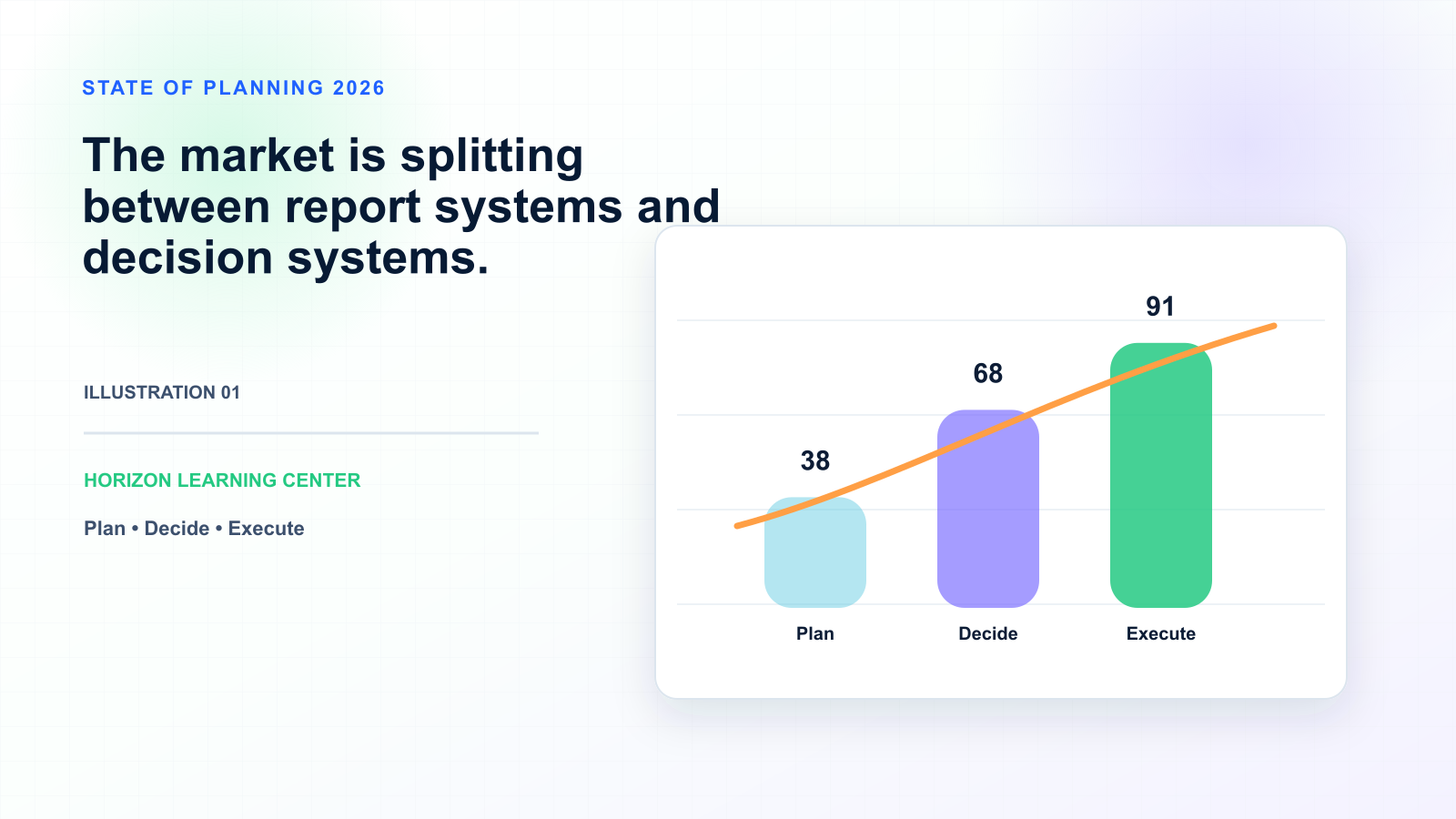
Most "state of the industry" reports are vendor marketing dressed as research. This isn't that. The goal is to give an honest read on where supply chain planning is in 2026 — what's genuinely changed since 2024, what hasn't despite the hype, and what the next 12-18 months realistically look like for buyers evaluating platforms or extending existing ones.
The picture is more nuanced than the AI-everywhere narrative suggests. Real progress has happened on specific capabilities. Other areas haven't moved much. And the mid-market versus enterprise gap is widening in interesting ways — not closing the way some analysts predicted in 2023.
Author :
Ben Van Delm
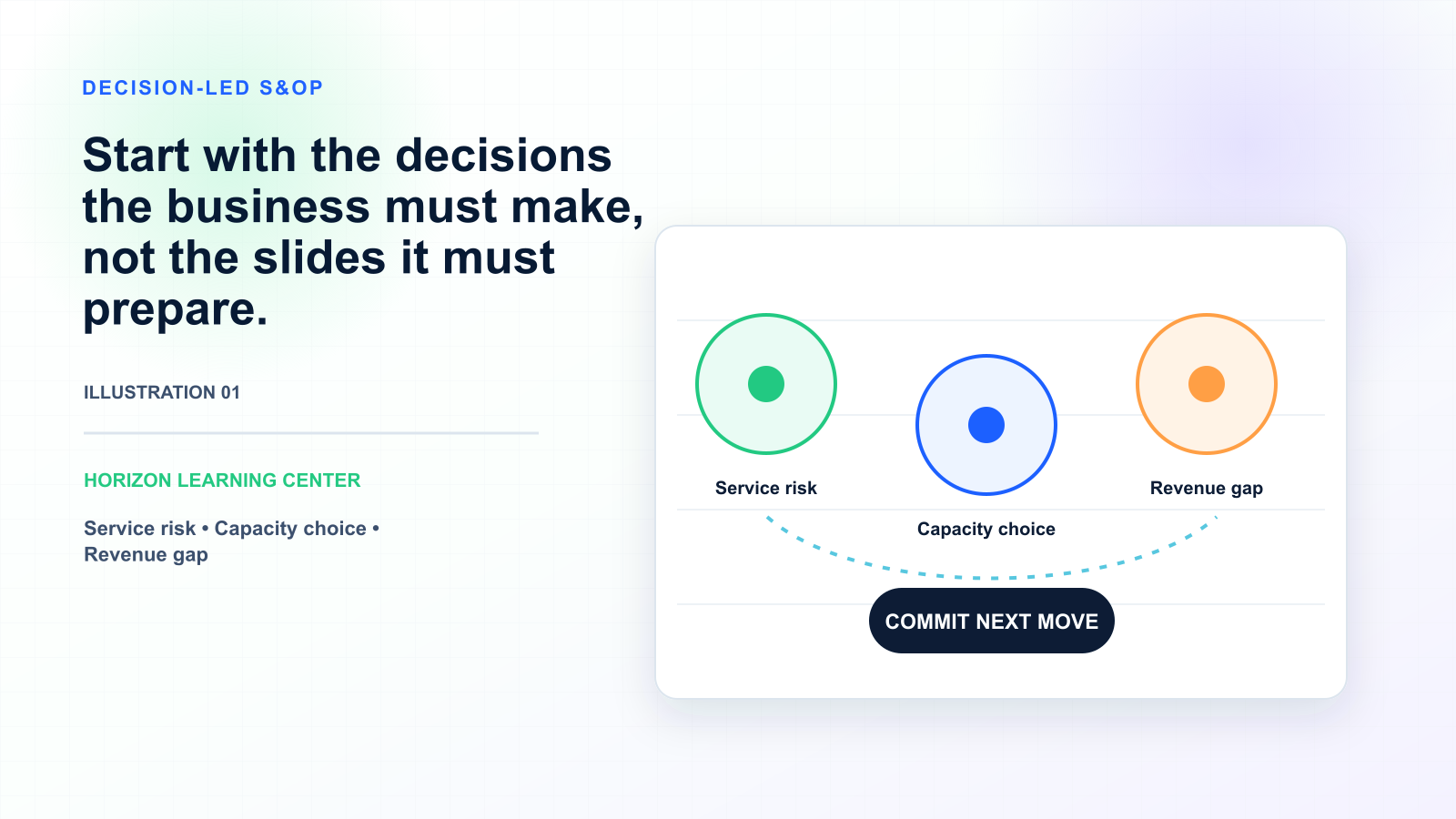
The common S&OP failure pattern: organization implements S&OP, runs it diligently for 6-12 months, executive engagement gradually declines, the rhythm becomes presentation-and-update meetings where status gets reported but decisions don't get made. By month 18, S&OP exists organizationally but operational decisions happen outside it.
This guide covers the structural design choices that distinguish S&OP rhythms that drive decisions from rhythms that become status reporting. The differences are knowable and addressable — most failures are design problems, not execution problems.
Author :
Ben Van Delm
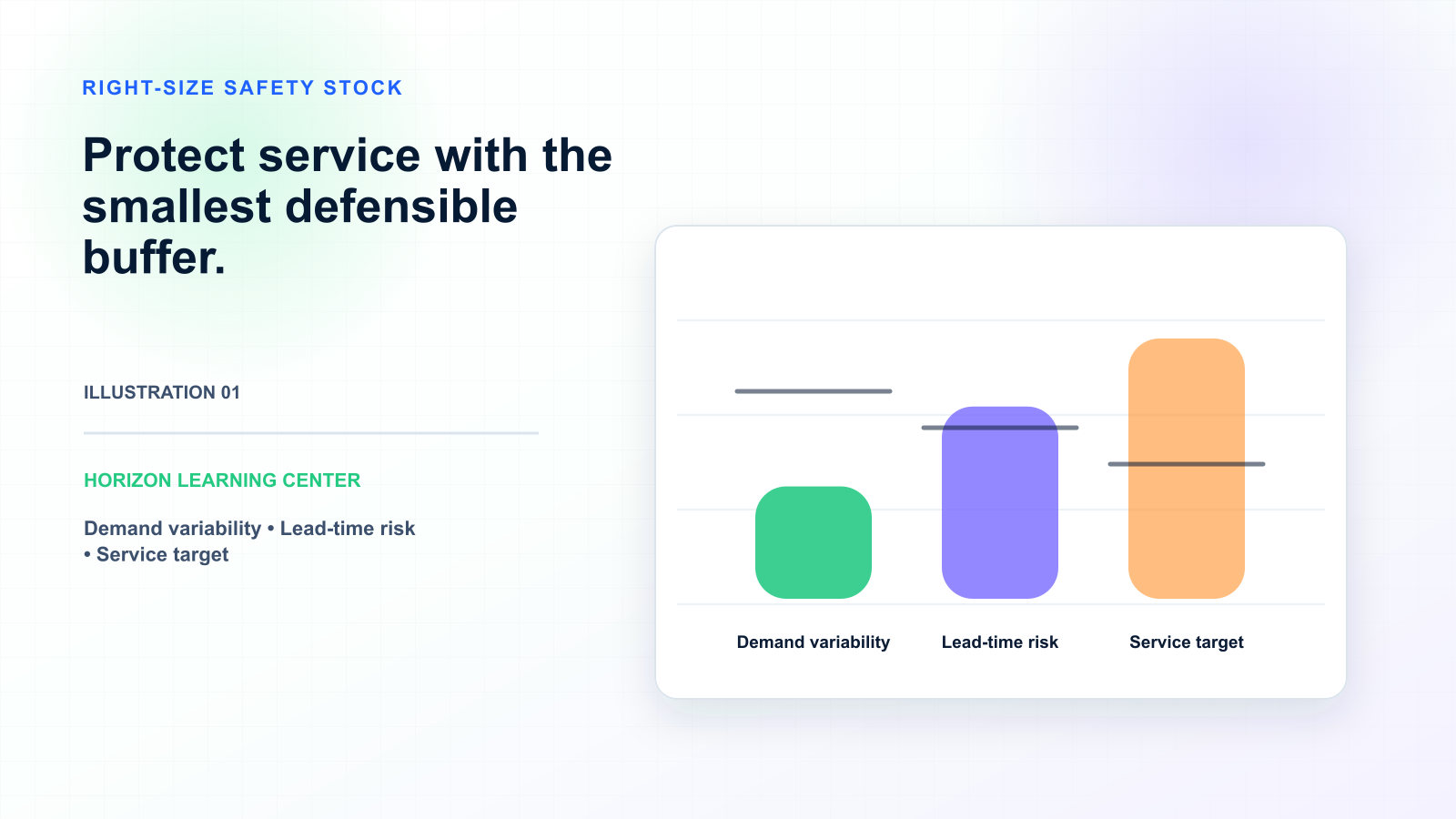
Most mid-market manufacturers and distributors size safety stock using simplified formulas — often Excel-based, often deterministic, often based on assumptions that don't match operational reality. The result: safety stock that's systematically too high for some SKUs and too low for others, with both over-investment in inventory and service failures occurring simultaneously.
Right-sizing safety stock requires methodology that matches the actual demand and supply variability patterns. The math is more sophisticated than common formulas but not impractical — modern platforms include it natively, and even Excel-based implementations can do better than typical practice.
Author :
Ben Van Delm
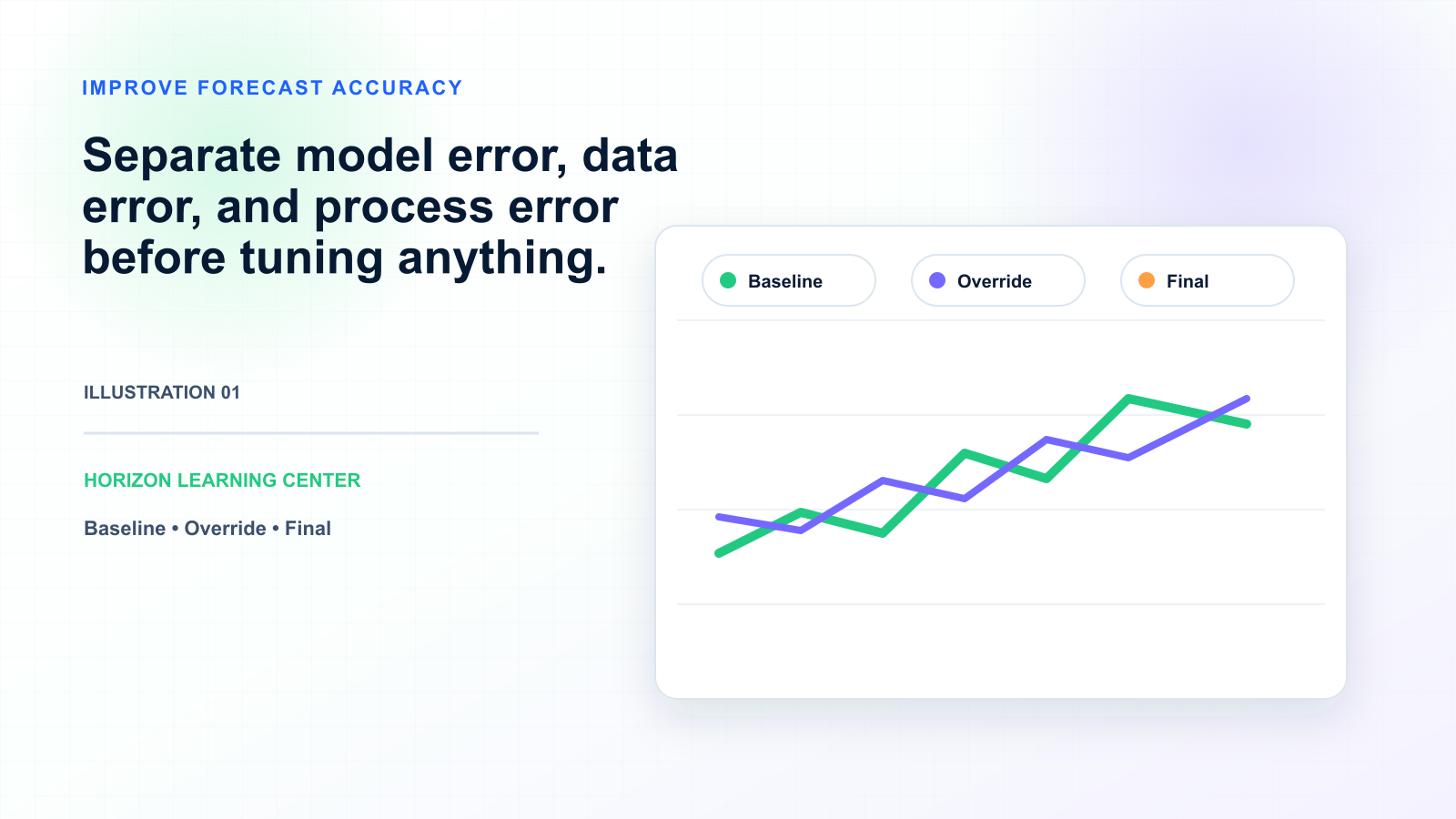
Companies typically have realistic forecast accuracy improvement potential of 5-15 percentage points of MAPE from their current baseline. The improvement requires disciplined work across multiple dimensions — not a single fix. The honest framing: forecast accuracy is bounded by inherent demand variability, and no platform makes uncertain demand certain. But most companies operate well below their achievable accuracy because they haven't done the methodical work.
This guide covers the practical work that delivers improvement. The techniques apply across platforms — they're methodology, not vendor-specific features.
Author :
Ben Van Delm
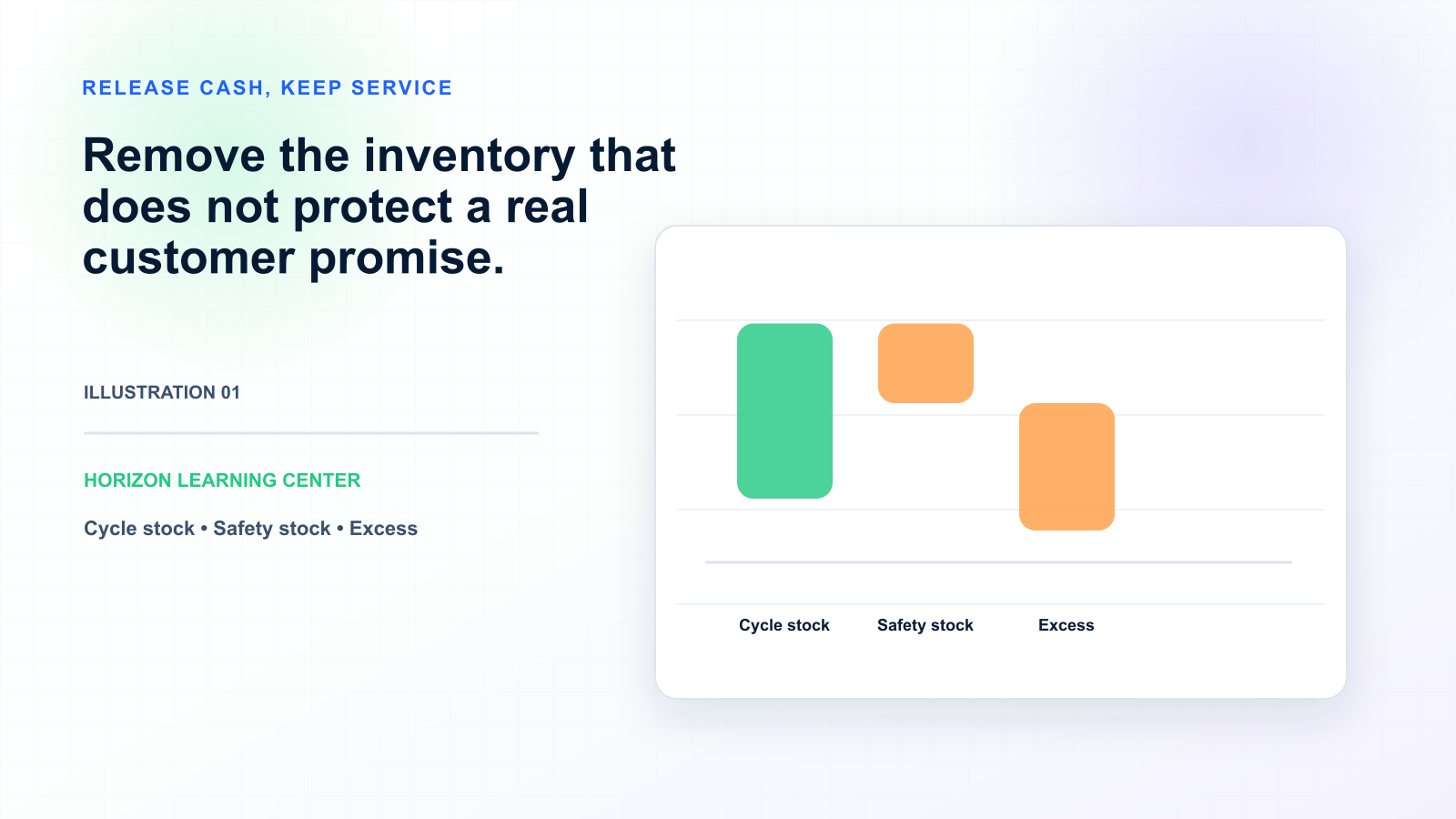
Most mid-market manufacturers and distributors have meaningful working capital tied up in inventory that doesn't need to be there — but cutting it carelessly damages service levels and creates worse problems. The question isn't whether working capital can be reduced; in most companies, it can. The question is how to reduce it without service consequences.
This guide covers practical approaches to working capital reduction that preserve or improve service levels. The techniques apply across platforms — they're methodology, not vendor-specific features.
Author :
Ben Van Delm
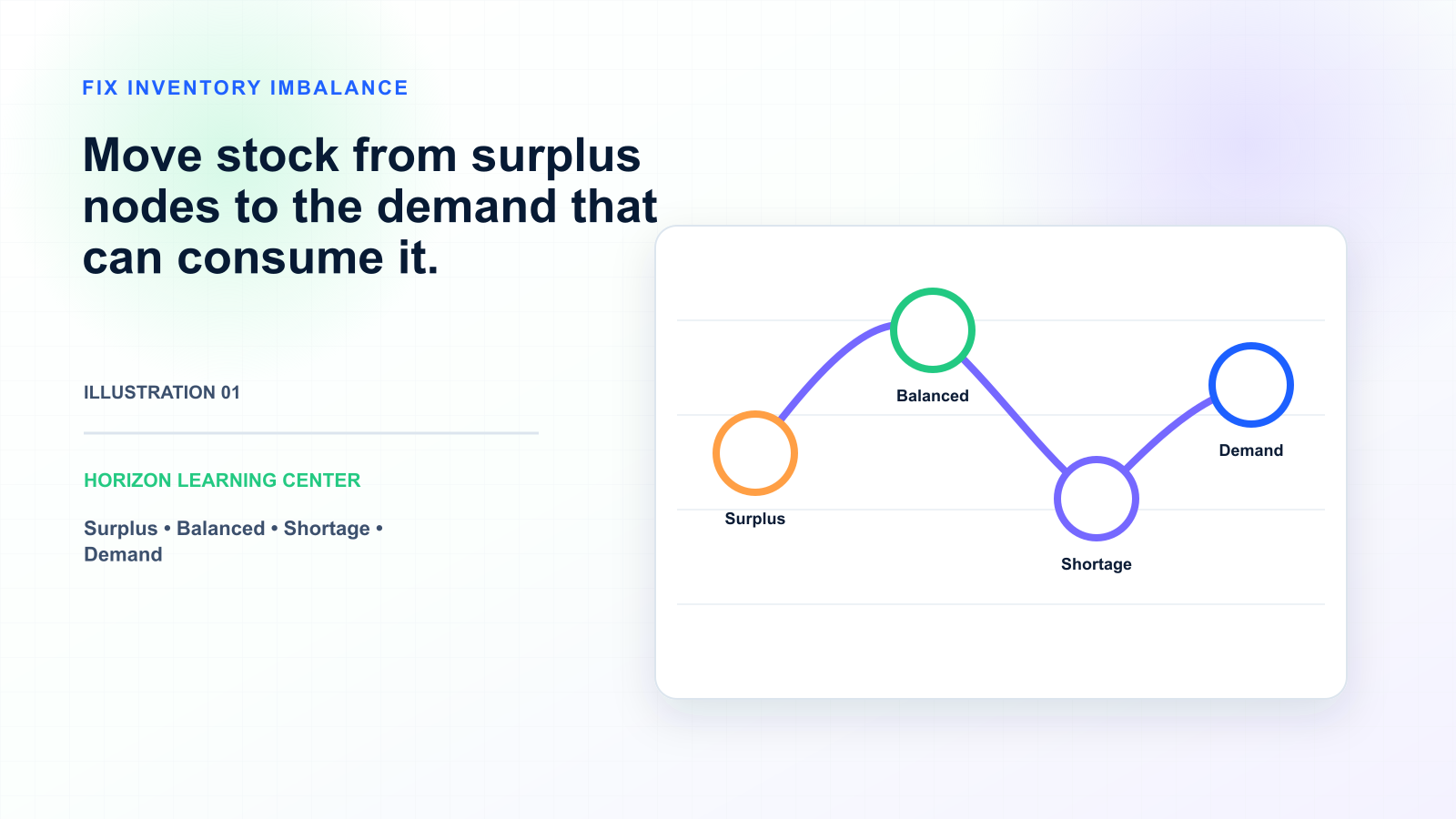
Companies running multi-location operations almost always face inventory imbalance — too much in some locations, too little in others, despite (theoretically) similar demand patterns and service levels. The symptoms are familiar: stockouts in some locations while other locations have months of supply, frequent inter-location transfers, working capital tied up in slow-moving stock in one warehouse while another stockouts of the same SKU.
The honest framing: inventory imbalance is rarely a problem that can be solved by better inventory math alone. It's a symptom of underlying issues — forecast accuracy by location, lead time variability handling, service level segmentation, or distribution network design. This guide covers practical diagnostic approaches and the underlying fixes.
Author :
Ben Van Delm
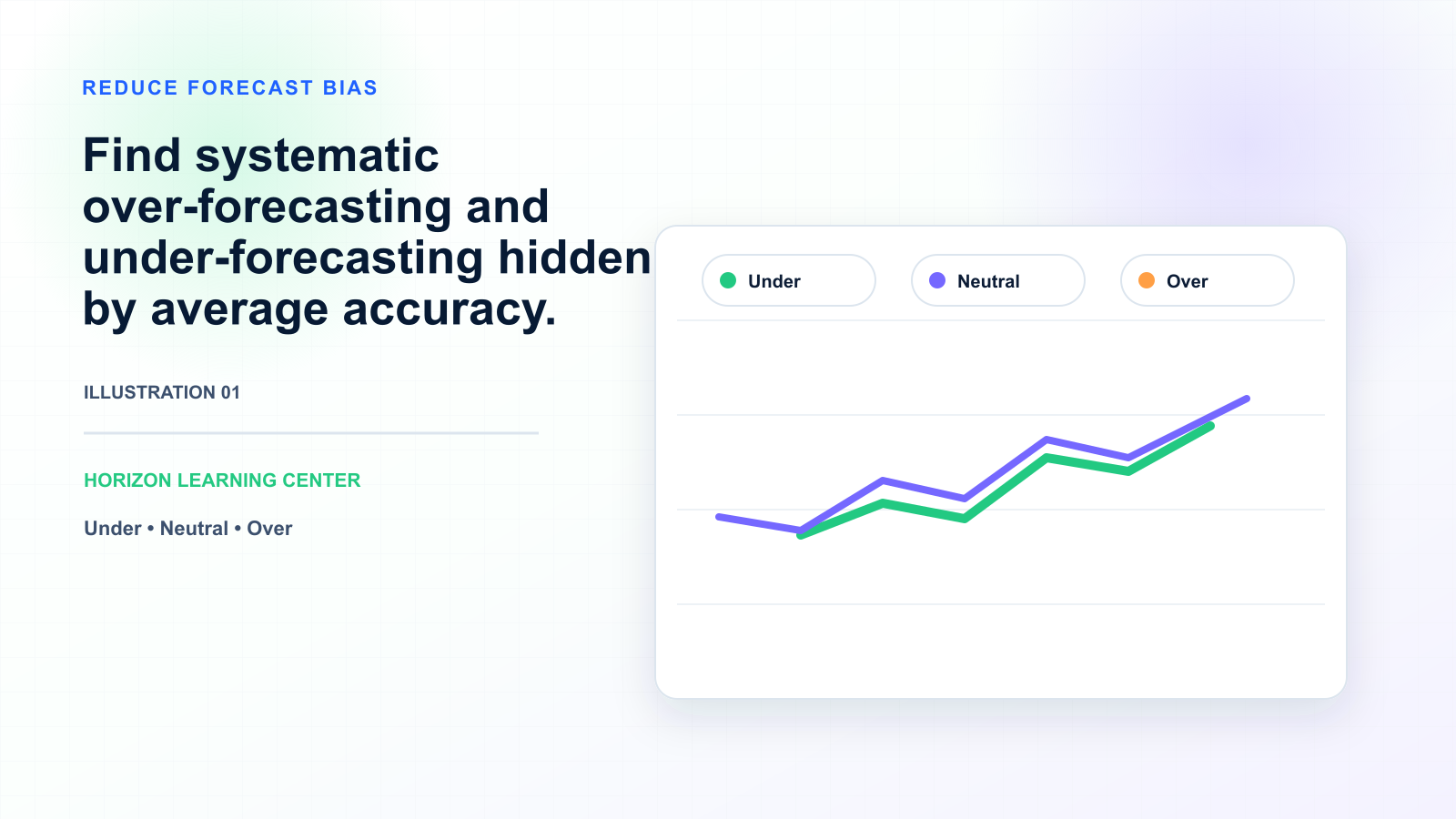
Forecast bias — systematic over- or under-forecasting — costs companies real money through inventory waste, service failures, and capacity misallocation. Unlike forecast accuracy issues from random error (which is inherently limited by demand variability), bias is structural and can be reduced through disciplined practice. The honest message: most companies have more bias than they realize, and most of it traces to behavioral patterns rather than algorithmic limitations.
This guide covers practical approaches to identifying bias, understanding why it happens, and reducing it through better forecasting practice. The techniques work regardless of platform — they're methodology, not vendor-specific features.
Author :
Ben Van Delm

