

Inventory optimization is the category with the strongest measurable ROI in supply chain software — working capital release is direct and immediate, and a $500M manufacturer achieving 20% inventory reduction frees up roughly $16M of cash within 6-12 months. The buying decision matters because the gap between "we have inventory optimization" and "we have multi-echelon optimization with real risk-pooling math" is large, and the wrong choice means the working capital opportunity stays unrealized.
This page does not rank platforms 1-10. Vendor leaderboards published by content sites are mostly marketing artefacts. Instead, it categorizes the platforms most buyers will encounter by who they're built for, what they're strong at, and where they struggle.
The lineup is drawn from Gartner Peer Insights, the 2026 Gartner Magic Quadrants for Supply Chain Planning Solutions, and platforms that appear repeatedly in real inventory optimization evaluations. The goal: help a supply chain or finance leader narrow a shortlist from "everyone in the category" to "3-4 platforms that genuinely fit our profile."
Author :
Ben Van Delm
Supply chain planning software is one of the most over-marketed categories in enterprise software. Nearly every vendor claims AI, fast deployment, and dramatic working capital improvement — and the gap between what the marketing says and what the platform actually does is wider here than in most categories. This page does not rank the "top 10" platforms. Vendor leaderboards conflate companies of wildly different scope and target market, and the result is rankings that aren't useful for any specific buyer.
Instead, this page categorizes the platforms most manufacturers will encounter by who they're built for, what they're strong at, and where they struggle. The lineup is drawn from the 2026 Gartner Magic Quadrant for Supply Chain Planning Solutions (both Discrete and Process industries), Gartner Peer Insights, and platforms that appear repeatedly in real mid-market and enterprise evaluations.
The goal is to help a supply chain leader narrow a shortlist from "everyone in the category" to "3-4 platforms that genuinely fit our profile."
Author :
Ben Van Delm
This is not a leaderboard ranking the "top 10" demand planning platforms. Vendor rankings published by content sites are mostly marketing artefacts — they conflate companies of wildly different scope, scale, and target market, and call one "better" than another without specifying for whom. A platform built for a $5B chemicals company has different design choices than one built for a $300M discrete manufacturer, and treating them as comparable produces nonsensical evaluations.
This page categorizes the demand planning platforms most manufacturers will encounter in evaluation by who they're built for, what they're strong at, and where they struggle. The goal is to help a planning leader narrow a shortlist from "everyone in the category" to "3-4 platforms that genuinely fit our profile."
The platforms named are the ones that show up most often in real evaluations — sourced from the 2026 Gartner Magic Quadrants for Supply Chain Planning Solutions (Discrete and Process), Gartner Peer Insights, and recurring presence in mid-market and enterprise buying processes. The list isn't exhaustive but covers the meaningful comparisons.
Author :
Ben Van Delm
Distribution and wholesale operations have different demand planning problems than manufacturing. The SKU portfolios are typically broader (10,000-100,000 active SKUs is common in distribution; manufacturing typically runs 500-5,000), demand patterns are typically more dependent on customer ordering behavior than promotional or seasonal drivers, supplier lead times drive replenishment timing more than internal production capacity does, and the close coupling between demand planning and replenishment means inventory optimization integration matters more than in manufacturing.
This page covers the demand planning platforms that genuinely fit distribution and wholesale operations. The list is shorter than the manufacturing demand planning list because fewer platforms handle distribution-scale SKU portfolios and the close coupling with replenishment.
Author :
Ben Van Delm
Production scheduling software fits varies more by manufacturing mode than by company size. A scheduler built for discrete assembly handles different constraint structures than one built for process manufacturing, and both differ from job-shop or high-mix-low-volume operations. The math is genuinely different — sequence-dependent setups, batch and lot constraints, parallel resource availability, and shared facility scheduling all create different problem structures.
This page covers the production scheduling platforms manufacturers will encounter, categorised by manufacturing mode rather than by company size alone. The lineup is drawn from real evaluations across discrete, process, job shop, and high-mix manufacturing operations.
Author :
Ben Van Delm
Demand planning in consumer goods (CPG) sits at the intersection of complex channel dynamics, heavy promotional activity, and increasingly fragmented retail. The same SKU often moves through grocery retail, mass merchant, club, drug, online, and direct-to-consumer channels — each with different demand patterns, promotional rhythms, and replenishment dynamics. Retail customer promotional calendars drive volume swings of 30-200% above baseline that need to be planned in detail. Brand and pack-size cannibalisation means moving promotional activity on one SKU affects demand on related SKUs across the same shelf set.
The platforms that fit consumer goods are those with mature trade promotion management capability, strong retail demand sensing, and channel-aware forecasting. This page covers that subset of the demand planning category.
Author :
Ben Van Delm
Demand planning in pharmaceutical manufacturing operates under structural constraints that don't exist in most other industries. Long manufacturing lead times — often 6-12 months for API to finished product — mean forecasts drive production commitments that can't be easily reversed. Regulatory environments require change control, audit trails, and validation for systems affecting product release. Patient demand is fundamentally inelastic — under-forecasting a critical medication has consequences far beyond commercial impact. Allocation logic during shortage scenarios requires defensible decisions that hold up to regulatory and ethical scrutiny.
The platforms that genuinely fit pharma are a subset of the general demand planning category — specifically the ones with validated environments, structured audit trail capability, integration with pharma-specific data sources (IQVIA, Pharma Status), and reference customers in the industry. This page covers that subset.
Author :
Ben Van Delm
Demand planning in food and beverage manufacturing is harder than the same function in most other industries, and the platforms that fit it well are a smaller subset of the general category. Shelf life turns forecast errors into write-offs faster than in any other manufacturing vertical — a 10% over-forecast of fresh dairy becomes a 10% scrap charge within days. Promotional volatility is large and largely customer-driven, with retailer promotion calendars often confirmed less than 8 weeks before execution. Seasonality runs deep, with annual cycles, holiday peaks, and weather-driven demand all overlapping. Channel mix shifts faster than in most industries as retailers, foodservice, and e-commerce compete for the same SKUs.
This page covers the platforms that genuinely handle these constraints, not the broader demand planning category. The lineup is drawn from real evaluations at food and beverage manufacturers ranging from regional dairies to international beverage brands.
Author :
Ben Van Delm
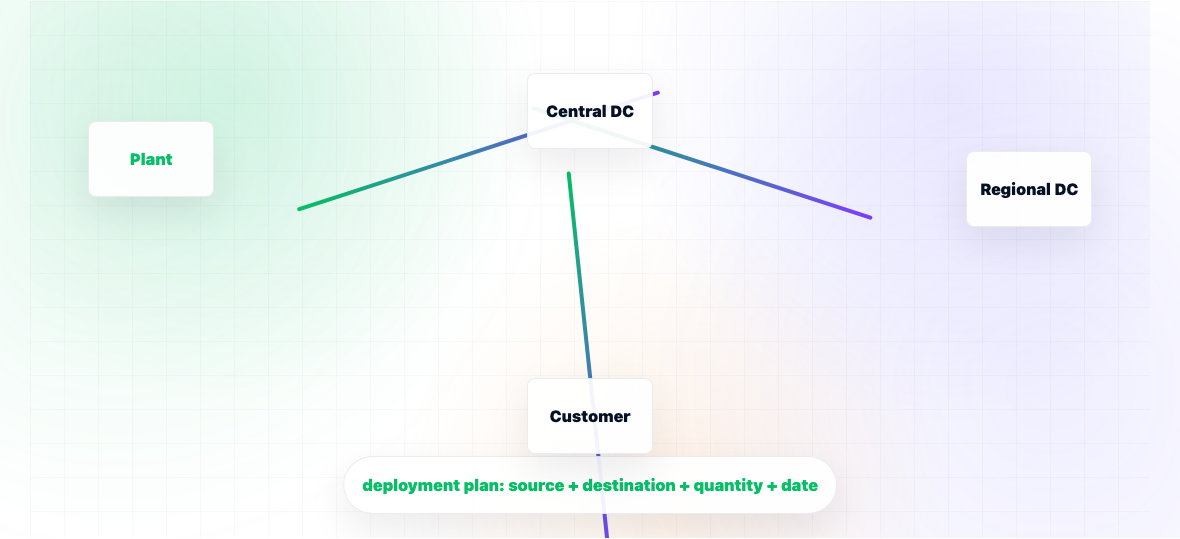
Distribution planning software decides how to move product through the distribution network from plants to central DCs, from central DCs to regional DCs, from regional DCs to customers. It optimizes against freight cost, lead time, service level targets, and capacity constraints across the network. The output is the deployment plan: which inventory moves from where to where, when, in what quantities.
The category overlaps with adjacent functions but has its own focus. Inventory optimization sets how much to hold at each location; replenishment planning decides when to reorder; distribution planning handles the physical flows that connect everything. In simple networks, these can be handled as one function. In complex multi-tier distribution networks, distribution planning becomes a distinct discipline.
This page covers what distribution planning software does, how it integrates with adjacent planning functions, and when it's most valuable.
Author :
Chinmay Narwane
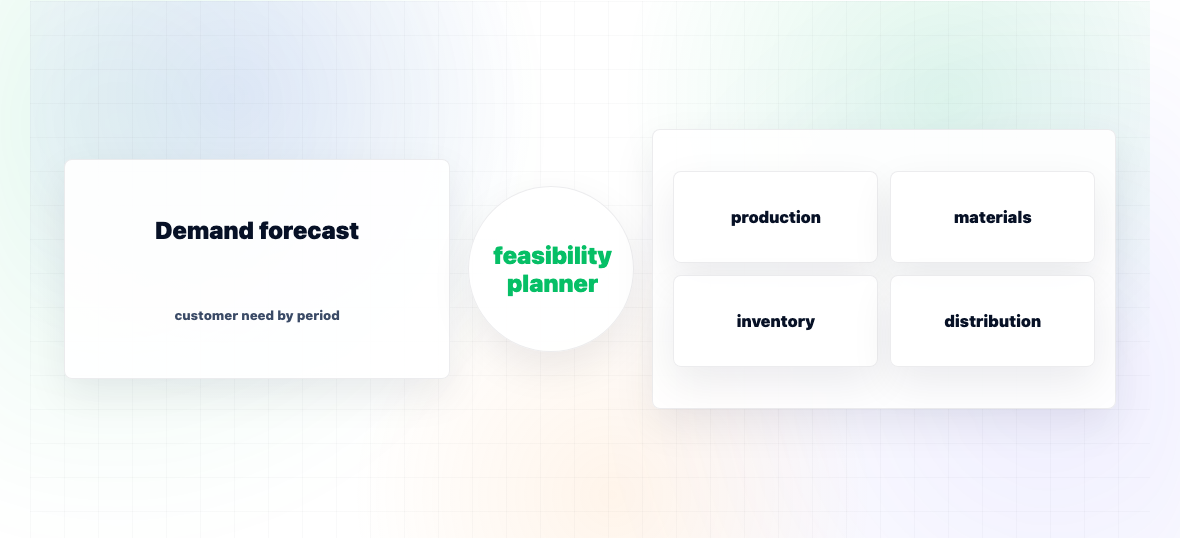
Supply planning software translates the demand forecast into a feasible plan covering production, raw materials, inventory positioning, and distribution. It's the function that decides how to meet demand what to make, when, where, with what materials versus demand planning's function of forecasting what demand will be.
The category sits between demand planning (which produces the forecast) and execution (production scheduling, replenishment, procurement). Supply planning consumes the forecast and produces the operational plans that drive what actually gets made and bought. It operates at multiple time horizons: the rough plan over 12-24 months, the master production schedule over 3-18 months, and the material requirements over the next few months.
This page covers what supply planning software actually does, how it differs from demand planning and from production scheduling, and the core capabilities that define modern tools.
Author :
Chinmay Narwane

